It can be a very scary feeling to watch the local TV stations and see an impending weather event heading your way. Mentally Preparing for a Weather Catastrophe is one small thing that is important for you to navigate the situation effectively.
In Wisconsin, we only have thirteen minutes max from when they declare a tornado warning until it would hit. That isn’t a lot of time to panic or prepare – really just enough time to hit the basement or lowest part of your home.
It is different for those that have to watch a hurricane heading their way on TV for several days, up to a week. Are they tracking the path correctly? Is the intensity going to be what they plan? Are shelves being cleared as people stock up on water and canned food?
How do the hardware stores look- is plywood vanishing as people are trying to board up windows? Are highways crowded as people move inland?
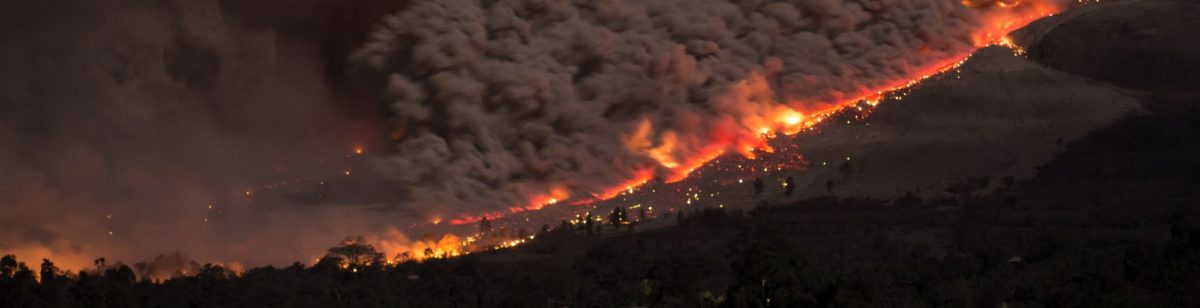
The wildfires of the west are tracked and people try to decide if they need to leave their homes and all of their belongings just because the wind shifts.
You can see how the mental strain of watching something possible come up leaves people with a feeling of helplessness – and as they look for a semblance of control there are some things to consider.
Mentally Preparing for a Weather Catastrophe
Yes, I said MENTALLY. The illusion of control is very important to people and that is why the cold war had a ton of “duck and cover” campaigns. Looking back now, we understand that “duck and cover” would do absolutely nothing for us in the event of a nuclear bomb hitting our area – but it gave people something to focus on.
Learn How to Not Panic
Panicking is the worst thing you can do in any survival situation. It doesn’t help anything at best, and at worst it hinders you greatly.
This goes against our natural fight or flight response, but a clear head can make all of the difference. You need to be able to handle dealing with the aftermath of natural disasters and that means pushing the panic aside.
After outside help arrives, or everything is back to normal, THEN you can fall apart. Let all of those adrenalin endorphins dump and breathe – but get through the first few moments first.
Understand the severity of your situation
Not every weather catastrophe is the end of the world. Hurricanes for example may be bad, but it’s not going to kill you if you do everything right.
Are they calling for an evacuation or are they saying to shelter in place? Can you safely board up windows and hunker down? Do you need sandbags? It is a category 1 or 5?
There are so many things to take into consideration, but you need a clear head to do it.
Mentally Preparing for a Weather Catastrophe: Look on the brighter side of things
After a disaster, it can be easy to wallow in what you’ve lost, but try to look on the bright side of what you’ve kept, such as family.
Everything can be replaced. Every. Single. Thing.
It may take time, may take money, and may not be exactly the same as what you had before, but it can be replaced.
People can’t.
Hug your loved ones and keep your chin up – you are still together!
Taking Steps Before a Disaster Can Put You at Ease
Knowing that you’re well stocked up and prepared to take on the disaster can make it a lot easier in your mind, making you less likely to panic. This is a good thing to get the kids engaged so they have that illusion of control that I mentioned. It will help keep them from feeling helpless.
Do better – BE better than the FEMA guidelines that suggest a 72-hour supply for everyone. Think weeks, if not months of food, water, and medical supplies.
It’s a well-known fact that when a crisis is raging, there’s often panic among the masses. One of these reasons is because the media will often hype up situations in order to drive up the ratings.
This works because what it does is whips people into a frenzy and they make a run on supplies. You’ve probably seen empty grocery store shelves during times of uncertain weather.
When this is going on, it will often create a state where the demand will exceed the supply, which in turn only fuels more panic. What retailers do in response to this panic is they will jack up the prices.
Mentally Preparing for a Weather Catastrophe: Food storage
When stocking up on food – try keeping track of what you normally eat, as a family for a month. Look at that list, and then try to find the shelf-stable equivalent for your food storage.
You don’t need to gather tons of freeze-dried items or even MREs but can work through canned food, your own dehydrated fruits, and veggies, and your own canned soups, stews, and meals.
I know we have a lot of “heat and eat” meals ready to go – that not only make beyond busy weeks a breeze but are there for when we have to use a grill in the backyard to heat up a pot of planned goodness to fill our bellies.
You’ll need to do this for every member of your family – including your pets. For your water supply, you’ll want to look for ones labeled emergency water pouches or survival water pouches if you are looking at short-term supplies.
Water storage:
I have talked about this a lot – from rain barrels to bottled water, this is the biggie we need to make sure we have enough of. Keep an eye out on sales and pick up a case of water here and there, slowly adding to your stash instead of being in the checkout lines with the panic shoppers when something wicked is heading your way.
First Aid Supplies:
Build that extensive first aid kit before an emergency. It is good to have everything from ace bandages to pain killers on hand for helping possibly wounded survivors. You won’t feel horrible stacking people in a triage situation where they have to lay in misery until outside help arrives.
You’ll see sales on holidays like Black Friday, Cyber Monday, and other days. Watch for the supplies you need to go on sale then, especially if they’re the more expensive items.
Watch the sales
Pay attention to in-store sales, discount sales, and bulk buying sales. You can usually find something on sale in every one of the categories on your list. Keep it handy (and updated) and carry it with you at all times just in case.
Survival and prepping is something every household should be doing, regardless of their level of income. Dire situations don’t discriminate when it comes to wreaking havoc on society, and you want to be just as ready as your neighbors (if not more so) when anything causes you to go into bug-out mode.
No amount of prepping is too small. If all you can buy is an extra 3-pound bag of rice, then do it. A couple of cans of soup here and there is also a start. Don’t wait until you have plenty of extra money to buy everything all at once.
Having a Radio Can Make a Big Difference
Hearing constant updates about the situation can put your mind at a lot of ease compared to just hoping it’s safe outside constantly. A Hand-crank weather radio will be your best friend, especially if you have no power.
That is great for hearing about what is going on but won’t let you communicate with others. For that, you’ll want to splurge on a communication device such as ham radio or world band radio. You might also want to consider a short-wave radio. Splurge on a decent antenna and a solar charging system.
Dealing with the Aftermath of Natural Disasters is something I feel isn’t often discussed – BEFORE an unsavory situation occurs. It doesn’t matter what kind of natural disaster we are talking about – we pretty much need to follow all of the same steps going forward. Think of it like dealing with the standard steps of grieving, you need to work your way through it all so you can move forward.
There are probably a few more steps in here that you might experience, I am just covering the big basics. The bottom line? If YOU have survived a natural disaster, you CAN move forward and get past all of this.
Dealing with the Aftermath of Natural Disasters
What constitutes a natural disaster? Natural disasters are catastrophic events with atmospheric, geological, and hydrological origins (e.g., droughts, earthquakes, floods, hurricanes, landslides) that can cause fatalities, property damage and social environmental disruption.
Whew- isn’t that a mouthful?
Basically, it is anything that the planet can throw at us that majorly disrupts our way of life.
Knowing that, we can plan ahead for only so much. We can have our first aid, food stores, water supply, and bug out bags – but depending on the situation? We may or may not have the access to all of that. Let’s look at what we might have to deal with:
Handling the Initial Shock
It can be very shocking at first when you see your home severely damaged by a storm, but you have to remain calm and collected.
I remember when tornadoes hit Stoughton Wisconsin in 2005. There was an F3 that leveled a few homes and farms – spreading contents everywhere. The local community pulled together and volunteers combed the area to help clean up and collect belongings for the original owners.
A mom brought her little girl along, maybe seven years old, thinking it would not only be a great service opportunity, but a lesson on nature, disaster preparation, and survival.
It backfired big time.
That poor kiddo was traumatized at seeing toys spread across a field, some speared by corn stalks. The mere thought of that happening to HER belongings was more than she could conceptualize and they had to leave.
She is probably still in therapy to this very day – the poor kiddo.
That is the thing to keep in mind though, it IS shocking to see the aftermath.
The remnants of your belongings scattered across an area.
The watermarks up to the second story of your flooded home.
Your yard covered in feet of sand and silt.
Your belongings under layers of rubble.
You need to be mentally prepared for WHAT you might be looking at after an extreme event – maybe watch a few videos, together as a family, to get an idea what might happen so there are no surprises.
Here is a great video on Earthquakes: Earthquakes 101 | National Geographic
Aftermath of Natural Disasters: Assess the Extent of the Damage
Sometimes storm damage can look worse than it really is. A few shingles missing from a roof isn’t really as bad as it seems, but broken windows or caved in structures can be quite bad.
It is important to decide if your structure is safe enough to actually stay in post-disaster. Can your windows be boarded up? Do you need to add a support beam or two for floors? Is everything soaked beyond belief?
Eventually, insurance will get involved, etc – but from the history of events in the United States? It can take months, if not years, for everything to be settled. Just look at the aftermath of Hurricane Katrina in New Orleans. That is the lack of efficiency at its best – with government fund mismanagement and insurance fraud.
It will also need to be defensible against rioters or looters – there might be other, more desperate people out there to be aware of.
You need to decide if your home is safe enough to live in right now, or not.
What to do if your house is gone
Severe disasters can sometimes completely level houses or damage them to a point beyond repair, so you will need to figure out if a shelter or temporary housing is the best option.
Rough it
If you have camping supplies, a tent, or even a pop-up camper, you can probably make it through without having to leave the area if the environment is safe enough. It certainly beats those FEMA trailers that turned out to not only be toxic but designed for a short-term living situation. We are talking six months or so.
Public Shelters
The Red Cross often sets up shelters in schools and community centers. This may be a viable option – but those are usually build on the cheapest land and that land gets hit the hardest. Schools are often leveled in an earthquake.
Friends and family
If none of those are workable options for you then seeing if there is a family couch you can surf might be the next best step. I know I could have stayed with my mom in an instant if I needed to – and have offered my sister in Florida a safe haven when hurricanes have invaded.
They will no doubt be the most understanding if there are a lot of personal items that are destroyed. You can try to regroup and look ahead for a brighter future.
Don’t Try to Deal with it All by Yourself
You should seek out help after a natural disaster to have your home at least somewhat restored. If a disaster is serious enough, many people around the world or country will donate, even the government at some points.
While this is true, it can take a LOT of time for the funds to trickle down to those who actually need it. Some insurance companies are awesome and set up “drive-thru” clinics to speed the process along.
People will come in droves to assist – usually bringing food, water, clothes, etc and then, the manpower will come. Even kids in church youth groups will arrive to help clear debris and restore some semblance of normalcy once an area is deemed safe.
This is where you can have some faith in humanity – they WILL pull together and help you, mostly the average Joe.
Aftermath of Natural Disasters: Tensions can be High
You’ll have a lot of emotions running through your head after a disaster, but learn to handle them rather than lashing out on people who couldn’t have done anything about it.
Everyone involved are going through some of the 7 stages of grief:
Shock and denial. This is a state of disbelief and numbed feelings.
Pain and guilt.
Anger and bargaining.
Depression.
The upward turn.
Reconstruction and working through.
Acceptance and hope.
While you do need to protect you and yours, you need to realize you are part of a larger community that is going through the same thing.
When downtown Sun Prairie exploded, I couldn’t believe all of the fundraisers and volunteers! I still see #SunPraireStrong bumper stickers and T-shirts to this day – and some of those who received help? They have gone on to pay it forward for other unfortunate incidents in our community.
The bottom line when dealing with the Aftermath of Natural Disasters? It is all about your mindset. Be ready for what you MAY experience and know that we can do anything, for a short period of time. If the people you love have survived, you have saved everything that is really the most important in life. You will be OK going forward, even if it is a rocky journey at times.
The best guns for any SHTF situation are the ones that you can rely on to perform when chaos is all around. This means that firearms with low recoil, high magazine capacity, and good accuracy are going to be your best bet.
We’ve compiled some of the best guns for this type of emergency below. Read on to discover which gun will work best for you!
A 12 Gauge Shotgun
The 12 Gauge Shotgun is a standard staple. This is a great all-around gun because it can fire pellets of different sizes and types depending on the situation. These shotguns are also very easy to use, which means that even beginners will be able to pick one up quickly in an emergency situation or SHTF event.
This makes it extremely versatile, inexpensive, and often very reliable.
The 12 Gauge Shotgun can be used to hunt anything from rabbits and birds to deer and even defend against bears just by using different rounds.
Here is the bonus: ammo is extremely common.
If you are looking for a reliable, versatile gun that is easy to use and won’t break the bank then this shotgun will be perfect.
Mossberg 500 12 Gauge Pump
The Mossberg 500 12 Gauge pump-action shotgun can also work well in an emergency situation or SHTF event because it has a higher firing rate than other shotguns – which means more pellets hitting your target. It also has a safety mechanism so it can be stored and used easily without accidentally shooting someone,
The Mossberg 500 12 Gauge pump-action shotgun is also lightweight – which means that you won’t have to worry about the gun weighing down your pack or bag when carrying it in an emergency situation or SHTF event.
9mm Pistol
A 9mm Pistol should be your second item to stock. Again, it uses a very common round, so you should be able to stockpile your ammo. It is also small enough to carry on you at all times.
That means it can easily be used against most attackers, assuming they’re not large animals like bears.
You will find a wide variety of prices on these guns ranging from high-end competition to bargain-bin pricing, yet functioning should all be roughly all be the same.
The Glock 19
The Glock 19 has a good reputation for reliability and is available in most areas.
It also comes with the added bonus of being lightweight, so it won’t slow you down when carrying it around during an emergency situation or SHTF event. There has got to be a reason the police use it.
“Finding one gun that can do everything may not be possible – but finding a few guns that can do most things is.”
The AR-15
If you have the funds for it, we recommend investing in an AR-15 or Similar Rifle. This rifle has many uses and will be reliable as long as it’s kept clean. It also comes with a variety of optics available to suit your needs, which makes it handy to be used against attackers at a longer distance.
The AR-15 is also good for hunting, as it can be used to take down a deer or other large game with ease.
Again, 5.56/.223 is widely available all over the US, so stocking up on ammo should be fairly easy.
Bolt-Action Rifles
If you’re looking for more of an all-around gun in the best shtf guns list: we recommend having two bolt action rifles on hand and plenty of shells (preferably .308).
The bolt action rifle is a great weapon for long-distance shots, as it will be able to take down most targets with one well-placed shot. It also requires less ammo and can fire off more rounds before needing to reload.
And if you’re in need of defense at closer ranges: the pump shotgun.
These are common for hunting, usually well built and suited for outdoor environments. They should be able to take some abuse from a survival situation and still work well.
Where can you hide your guns?
If you don’t have a gun safe but want your weapons stashed around your home? Get our FREE Printable list of places that will work for any SHTF situation. Please make sure ALL family members know the locations as well as how to handle the weapons safely.
Last, but not least, I want to mention a .22 Breakdown Rifle.
While a .22 isn’t particularly powerful and shouldn’t be your first choice when looking at the best guns for survival, but the ammo is very cheap, meaning you can get a lot of practice with it. The rifles can be used by the whole family due to low recoil, and the breakdown versions allow them to be easily stored.
These are great for small game hunting, and a good choice if you’re not going to be shooting at anything farther than 100 yards. They can take down lots of small game up to coyotes and can kill people if really needed in a split decision situation.
It’s also less expensive than other rifles due to the weapon being made of fewer parts, making it easier on your wallet in a SHTF situation or survival scenario.
If you’re looking for a rifle but have to keep a low profile in public, the Ruger Mini-14 is perfect for you. It can be discreetly carried and quickly drawn when needed without drawing attention as an AR-style weapon might.
Which one is the best gun for a prepper?
The best guns for any survivalist or prepper?
I always recommend trying out different firearms until one clicks with you so that you can make your own decision.
For some people, the feel and weight of a gun will be more comfortable than others.
What might suit someone with smaller hands better may not work for an individual with larger hands, so it’s important to try out different weapons until one clicks for you personally!
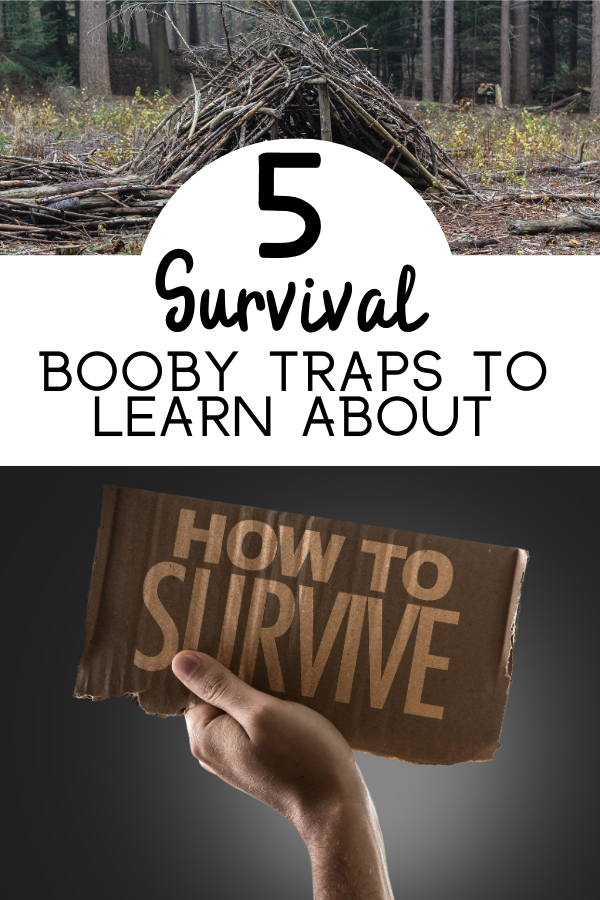
5 Survival Booby Traps to Defend Against Attackers? OK, some of these aren’t used for defense, but for survival as you use them to actually feed yourself in an emergency type of situation.
Yes, there will be times you need survival booby traps set around your home or bug-out area to make sure that you are safe from those who wish to do you harm.
5 Survival Booby Traps to Defend Against Attackers
Snares
Snares, or small game traps, come in various kinds in various sizes and can be used to catch animals and intruders from things the size of rabbits up to boars.
I could go on and on for a long time here, but let me keep a few things simple as there are entire books written on just this topic.
In a bug-out situation lasting more than a few weeks, you’re going to have to come up with a source of food quickly. Unless you know what fruits and berries are safe to eat around your area, getting your nutrition from meat is probably your safest bet.
However, not everyone has the patience or skill to sit around waiting for an animal to come into sight and hunt them with a gun or bow. Sometimes, trapping is the safest bet for catching food.
Trapping has been used to great extent for centuries all across the world because it has a few advantages over hunting – primarily that you can set up multiple traps and have them all set at once, while you can only hunt one animal at a time.
The first kind of trap is very simple and easy to use, though it’s not always guaranteed results. The Havahart One-Door animal traps work well for catching small game such as squirrels, rats, and chipmunks.
They’re very simple: it’s a cage with one side open, and when a pressure plate on the inside gets triggered, the door closes and the animal is trapped. You can place bait on the other side of the pressure plate to entice animals to enter, and when they try to walk over to the food, they’ll trigger the trap.
You can also place sticks and leaves around the outside of the trap so that it doesn’t stand out as much. The second kind of trap is harder to use, but works on a much wider range of animals and is more compact.
DakotaLine Snare Traps can trap anything as small as squirrels, up to something as big as a hog. The snare design of traps is one of the oldest and can be made from rope or wire.
These premade snares will snatch any prey that wanders through them. They’re almost undetectable to the animals until they’ve set off the trap. Finally, it might be easier for you to trap fish than land creatures.
Eagle Claw Minnow Traps can catch the smallest fish, crawfish, crabs, and even water snakes. Once fish enter, they can’t find their way out. Attach the trap to a rope, and attach the rope to a tree or something solid so that the trap doesn’t float away.
After a few days, the trap should have at least something in it. You can catch crawfish by placing smaller, dead fish in the traps, which will attract scavengers like crabs and crawfish.
If you really want to learn more about snares and traps, I found an excellent book to add to your library: The Trapper’s Bible
It contains lots of useful information on making traps that you can use to catch any possible predators before they reach you, also allowing you to catch food for survival. It is worth the investment!
Stake Pit
Steak pits, or spike pits, are nasty but very effective. It takes a bit of time to build one, and you may need more than one if you are looking at these for either defense to to catch a large animal.
These were used in Vietnam War, and are essentially a pit with sharpened bamboo sticks or wooden stakes sticking up from the bottom of the pit. The top of the pit covered in a thin layer of leaves, so anything that walks over it falls into a little spike pit.
Just. Ouch.
But it will stop a bad guy in his tracks.
Here is a video that gives you a better idea, even if it is animated.
Alarms
Occasionally, running away is a smart tactic for your situation. It pays to know when someone or something is coming though and that is where alarms come in handy.
Using tripwires and noise-making devices, you can be alerted to the presence of any intruders while potentially scaring them off. If you are eating canned goods – save those cans for your alarm or have other, smaller things at your location for future use like small bells that come in a package at your local dollar store or even flatware that you grab at your local thrift shop for pennies.
Bullet Trap
This is a fun one to google – because a bullet trap is also what a lot of shooting ranges use. That is NOT what I am talking about here and the instructions are almost impossible to come by.
Basically, it is like a landmine: an intruder steps on a metal tube mostly buried in the ground. Inside that tube with the rim sticking out is a shotgun shell, with the primer set against a nail. Stepping on it will cause the shell to go off, shooting the invader from below.
Just make sure YOU know where you have them all located as they are much smaller than a spike trap and it would be a bad thing to catch yourself or your family members in.
Bait-Related Traps
This is pretty straightforward as far as survival booby traps go. Setting out something desirable like a gun for a human in a survival situation or food for animals and rigging it up to hurt the person or animal that gets ahold of it is a great last-resort if you have tried your other options.
It has to be something that is attractive to the character that you are trying to trap – and something you must be OK with possibly losing.
Survival Tips for Females? As the fairer sex, there are so many things we need to consider when looking at any kind of emergency situation. The thing is though, many of them are the same things we have to deal with on a daily basis so it cracks me up to read what the men have to say about it.
I was reading articles from other survival blogs and get frustrated with the men talking about us ladies. They talk about us like we are commodities and how they need to be concerned with taking care of women if we have to go through some type of SHTF moment or time period.
We are fragile little flowers that everyone seems to be concerned with protecting. They talk about veritable bubble wrap to keep us safe from bad things or bad men.
I don’t know if it is the conservative collective thinking we are all helpless, or if they believe that we all need to be kept in our place, but today – we are going to talk about survival tips for females. From a female.
Five Survival Tips for Females
Not everyone feels comfortable with lethal force. Add that to varying concealed carry laws across different states and it can be a little confusing to figure out the best way to keep yourself save and prepare ahead.
Stay Vigilant at All Times
This is something every young girl is trained on – almost as a right of passage. Sadly. With one of every three females experiencing a sexual violation of some sort, this is a serious issue. One in five is actually raped.
The target age of victims is between the age of 12 and 34, at least according to statistics that are reported. Twelve years old.
Isn’t that insane?
As women, we learn always be on the lookout for an attacker. We park near street lights, walk in a crowd, keep our keys between our fingers, look inside our cars before unlocking them, keep a noise/alarm handy like a whistle or our key fob.
Sound familiar?
It’s much harder to defend yourself when they take you by surprise – and we make sure to drill that into every upcoming potential victim, hoping that knowledge is power and the key to preventing it from happening to them.
Carry Nonlethal Weapons for Self Defense
This is where you are going to step it up a little bit! Stun guns, pepper spray, and similar nonlethal weapons should be used to fight off attackers instead of trying to fight unarmed if at all possible.
Stun guns
A stun gun usually has two prongs on the end of it that transmit a non-lethal dose of electricity through them. These stun guns are effective because they take advantage of how the human body actually works.
Your body’s cells use electricity to communicate with your brain and muscles. Sending an extra jolt of electricity through your body causes your muscles to contract and expand against their will.
This is ultimately harmless, but at the time, will be very painful and immobilizing for your attacker. The most common stun gun company is Vipertek, and they make many reliable and inexpensive stun guns available on Amazon.
Pepper Spray
The other most common form of self-defense is pepper spray. Pepper spray is, as the name implies, a spray infused with pepper and other chemicals, notably oleoresin capsicum, or OC.
OC is derived from cayenne peppers, and it works even better than tear gas, because tear gas won’t always stop victims who feel less pain, such as drunks and druggies. OC will cause temporary blindness and restrict the victim’s breathing, while not cutting it off completely.
The blindness will last at least 15 minutes – 30 at most. The burning feeling lasts 45 to 60 minutes, the coughing from it getting in your lungs lasts up to 15 minutes. These combined factors give you more than enough time to make your escape while your attacker is incapacitated.
One of the best companies for pepper spray is SABRE. SABRE is used by some of the largest police forces, including NYPD, LAPD, and Chicago PD. SABRE combines the tear gas mentioned earlier with the OC to create a perfect defense weapon.
It also includes a UV dye, so that the suspect can later be identified by holding up a UV light, without him knowing that he’s been marked. You can also get a pepper gel from SABRE, which works the same as pepper spray, but it sticks to your attacker, making it safer to use indoors.
Pepper spray may be a better first line of defense over the stun guns, due to the fact that they have a much longer range. Finally, there is the least common form of self-defense – a Taser.
Tasers
Taser is a company that makes an advanced, long-range version of the stun gun. Tasers are legal in 45 states, so make sure you check the legality of Tasers in yours. A Taser is a small weapon that fires two little prongs, much like the prongs attached to the stun gun, which stick into the victim and shock them.
For non-law enforcement consumers, the maximum range for a Taser is 15 feet. This is still plenty of room, and the Taser will lay anyone and anything out completely. It’s essentially a much more effective stun gun.
The only downside to the Taser is its price tag. A Taser will usually run you about as much as a regular gun costs. However, this does not stop them from being very effective pieces of self-defense technology and it’s perfect for those who have a moral problem killing another person, even in self-defense.
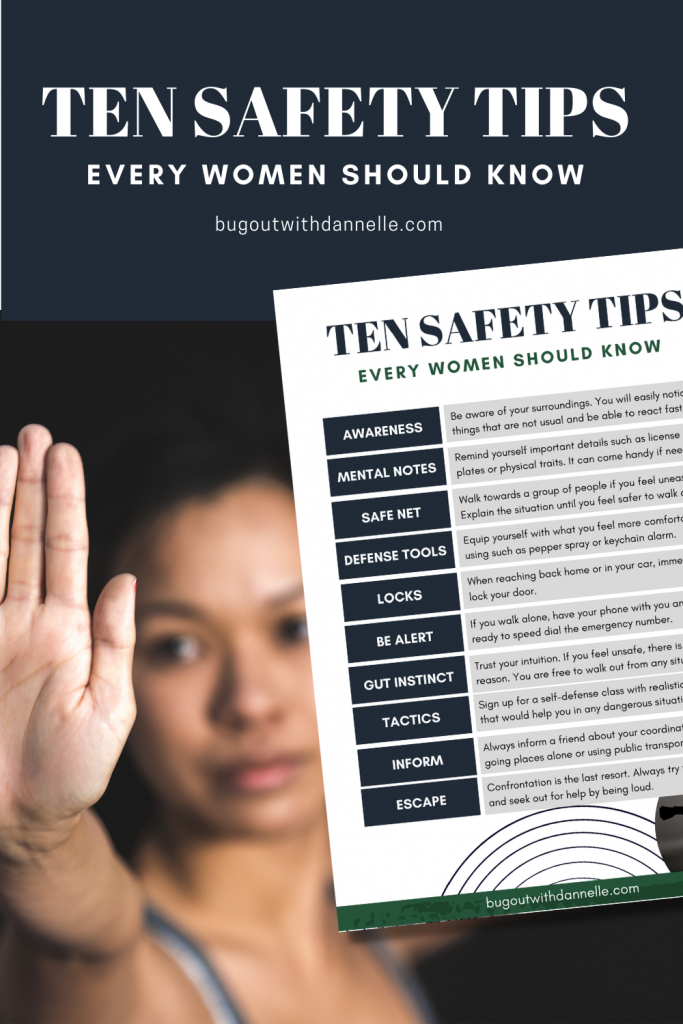
10 Safety Tips for Women
Get our FREE Printable info sheet that you can add to your binder. These are simple things that sadly, all females should know and be aware of for their own personal safety.
Survival Tips for Females: Take Some Female Self Defense Classes
What is the difference between taking a FEMALE self defense class and just taking a self defense class? A female class teaches you how to fight dirty, yet effectively to fend off people. It gives you hints and tips to work with smaller body size, smaller muscle mass, use your available environment as a tool, and so much more.
Shop local first
What kind of things will you learn besides someone standing there and telling you to scream or try to pee your pants?
How to attack with a hammer strike.
How you can use your car keys to defend yourself.
a good groin kick.
how a heel palm strike to try and break their nose.
Elbow strikes
How to escape from a ‘bear hug attack’, when your hands are trapped, and even how to escape from side headlock.
Going to a local martial arts training location can be beneficial as well. Some of the most effective martial arts styles for self-defense are Krav Maga, Brazilian Jiu-jitsu, and Muay Thai.
Krav Maga is the style used by the Israeli army, and is great for street fights. Brazilian Jiu-jitsu was developed for those who didn’t have the muscular power to perform traditional Jiu-jitsu effectively, making it perfect for the average person.
Finally, there’s Muay Thai. Muay Thai has become very popular as a self-defense technique, and for good reason. It’s heavily associated with MMA and UFC fighters. It’s a form of kickboxing that has been adapted to make use of the elbows and knees as well, hence the Thai nickname, “Science of 8 Limbs.”
Those are just a few things that you can learn from a local person – if you hunt out a Karate-type studio that has women only courses, or maybe check your local parks and recreation community guides.
5 simple moves that everyone woman should know
If there is nothing you can find locally that suits your needs, you might need to go online for Martial Arts Options for Hand to Hand Combat.
Sometimes you’re caught off guard without being able to defend yourself with weapons, so you have to teach yourself how to fight with your bare hands. There are many different ways to go about learning hand to hand combat, and there are a few that are most desirable for self-defense.
Udemy
One great resource is Udemy. Udemy is an online academy that, for a small price, will teach you anything and everything. Some lessons last as long as you want, and some expire.
Udemy offers a course on military style hand-to-hand combat for only $20. It includes 24 lectures, 6 hours of video, lifetime access, and a certificate of completion. This course is designed to teach you how to take down opponents who would normally be the winner in a fight, military style.
Book it
There are also many books that will teach you these fighting skills. They can be found on Amazon at a relatively cheap price and can be a wealth of information. One great book is 100 Deadly Skills, by Clint Emerson.
This book employs Navy SEAL tactics to fighting hand to hand, fighting armed opponents, and everything else. Clint Emerson is a retired SEAL who took to teaching others how to use the same strategies he used to fight overseas, and his book is available for $22 on Amazon.
Similarly, you can buy the USMC Martial Arts program for $15 on Amazon. This book teaches you how to use everything: knives, improvised weapons, and of course, your hands.
Martial arts should be trained with often if you intend to have to use them in a self-defense scenario. If not practiced regularly, your skills can quickly become rusty and cost you your life when the SHTF.
How to Handle Your Menstrual Cycle During Survival
With self-defense covered, it’s time to talk about nature. Sorry ladies, our periods won’t stop because it is inconvenient for us. It can also be a hassle to stock up a lot of tampons/pads for a SHTF scenario or even for bugging out. This really is one of the Survival Tips for Females that needs to be addressed.
We do have a few options that are available to take up less space, be less disposable, and make this a little easier. Who wants to be slowed down by our own bodies?
The disposable inventory isn’t even the largest problem, the problem is the fact that you have to dispose of those items. When on the run, or if you are limited to things like a composting toilet, you are going to run into issues long before your inventory runs out.
Let’s look at some options:
Reusable is the key – it saves you a lot of space in your prep stash, is easier to take on the run, and more eco-friendly.
First things first – reusable pads.
Not only will these pay for themselves in two to three months, you will never have adhesive sticking to your nether region again. (ouch!)
There are a ton of cute options – but aim for a reusable pad kit that has a few different sizes, a container of sorts to keep them all together, and some kind of wings with a snap closure. After all, we don’t want leaks and we want them to stay in place!
These can be healthy and eco-friendly at the same time without all the toxic chemicals added to the disposable varieties. I am a fan of bamboo. Bamboo charcoal fiber is soft and natural, it is very easy to clean and dries quickly, so it will not produce peculiar smell or harmful ingredients, reusable and washable. I like this kit HERE.
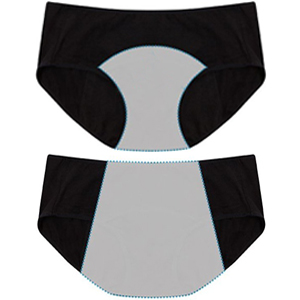
Period Panties
If pads aren’t your thing, Just try the underwear that is designed to act like them, but be a lot more comfortable.
Again, they are usually a bamboo fabric and you want to look for full coverage area from the front to the back. This helps when you are active or sleeping and helps keep you safe of any leakages.
These are ideal for light days but are not meant to replace pads or tampons for a normal period or heavy flow. They usually have an absorbency up to 18ml. You can see some HERE.
If you hunt them out – you will find some that boast 4 tampons’ worth absorption to lock in menstrual flow. Personally, I would want to test them out before a SHTF scenario. You can see the brand I am looking at HERE.
These would also work well for incontinence issues.
From a verified purchase review:
Let me just start by saying these are amazing!!! If you are a plus size woman and you are looking for a pair Period panties these are the ones! I ordered one size up than I probably shouldn’t have and they’re actually a little big but they’re comfortable I wear between a size 18 to 20 Jean and a 2X is about perfect. I have tried one other brand of period Panties and they just didn’t quite fit right didn’t get the right coverage but these are awesome and they’re so soft. They make that time of the month just a little bit nicer. Also they don’t make like a weird rustling noise they feel like regular fabric. I will definitely buy them again.
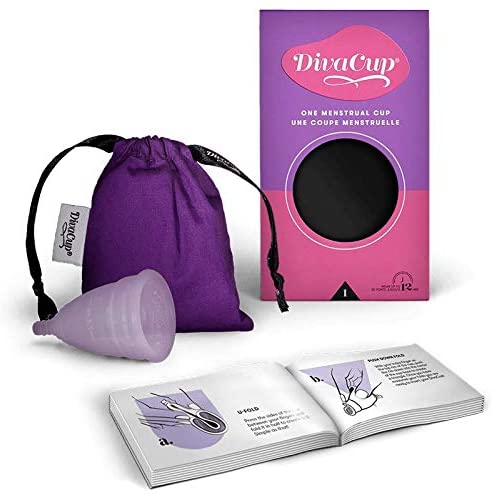
A menstrual cup
What a lot of people fail to mention is that usually these are only ideal for women between the ages of 19 and 34, who haven’t given birth vaginally.
Y’all know how many females that doesn’t include?
Lots.
There are a lot of brands besides the Diva cup, but that seems to be the best known. Regardless of which brand you choose, a menstrual cup is an eco-friendly, cost-effective, durable, and chemical-free vaginal cup that will save you both money and time.
By switching to one of these you will no longer produce 300 pounds of waste, which is about how much an average person creates in a lifetime using disposable feminine hygiene products. This also means no more spending tons of money on pads and panty liners, since these menstrual cups last up to a year– some up to five years.
Whichever one you choose to try, make sure it has a simple to grip for easy removal. If you ever had a diaphram, you know how fun it can be trying to get it out of you when you are a rookie.
Practice with your cup before you just pop it into your bug out bag – it really isn’t something you want to learn on the run.
Prepare Yourself Mentally
In any survival situation, whether you’re in a self-defense scuffle or lost in thick woods, the most important factor remains the same – your mental state. As long as your mind is sound, you will have a much easier time surviving whatever situation you’re in. This is huge when looking at Survival Tips for Females.
Get in the right headspace
In fact, this is the first thing that you’re taught in the US Army Survival Manual. This field manual can be bought in full on Amazon for about $13. The strategy for mental stability that you learn first in this book is S.U.R.V.I.V.A.L., which stands for Sizing up any situation that you’re in, Undue haste makes waste, Remembering where you are, Vanquishing fear and panic, Improvising when you need to, Value-based living, Acting like whatever natives do in the area, and Learning basic, necessary skills.
Doing all of these things will ensure that you are both confident and mentally stable during stressful situations. Many sources consider mental preparedness to be the most important factor between life and death.
WWII and Korea veterans who had to survive the wild and hostile environments of the jungle and forest swear by the effectiveness of being mentally prepared. The main disadvantages of being stressed and freaked out during these times are plentiful.
First, you’ll be less efficient. If you’re confident and feeling good, you’ll get to work on finding food, water, and making shelter – or in a threat situation, protecting your life. However, if you spend your time freaking out and panicking, you’ll barely get anything accomplished, let alone accomplished effectively.
Save your energy
Second, you’ll have less energy. If you’re calm, you won’t waste much energy and will be actively thinking about preserving yourself. If you panic, you may find yourself pacing and wasting time and energy.
This will help you conserve water, food, and other resources. If you aren’t thinking and you’re blowing through everything, you’ll probably run out of water before you know it. This also has an effect on basic self-defense.
Doing what needs to be done
For example, if you keep a level head during a fight, you can probably get the upper hand on your opponent – especially if they’re inexperienced. The most important thing you should mentally prepare for in self-defense is the reality that you very well may have to kill your attacker.
For many, this idea is horrible – having to take another human being’s life. You should prepare for this kind of mental anguish in the event that you actually have to take major action that could result in the death of your attacker. Being mentally prepared is more worthwhile than being physically prepared.
The bottom line with Survival Tips for Females?
We aren’t fragile little flowers that need to be protected from the boogey men. We have the ability and skills available to make sure we can handle ourselves in any situation. Like everything else, it just means taking the time to be prepared. Be the beast you can be!
Surviving a Terrorist Attack? The threat of a terror attack continues to be a major concern and has proven that it’s a very real threat. You never know where or when one will strike. The most important thing that you need to do is to make sure you’re prepared so that you know how to survive one.
While preparation is key, it’s also important to know what to do as an act of self-defense right at the moment, because it can mean the difference between life and death. Sometimes you’re not caught with your gear at hand, so how do you handle a terror attack using a self-defense mindset?
Guide to Surviving a Terrorist Attack
The best thing you can do is stay aware of your surroundings. If you see someone suspicious, get out of the location. Notify authorities if you feel compelled to. Watch for unattended bags or boxes, and listen for people shouting before an attack so you can flee immediately.
Surviving a Terrorist Attack: an Explosion
When an explosion happens, it can be nerve-wracking. The sounds of the bomb, shattering glass, the rocking of buildings, and the screams of people can render you immobile.
But that’s the one thing you don’t want to be in an explosion – paralyzed by fear and confusion. When there’s an explosion, it’s the pressure of the object you’re hit with that can injure or kill you.
This video covers how to survive a building explosion
Projectiles and shrapnel fly through the air with rapid force. In the event of an explosion, the first thing you should do is take cover if you want to find yourself Surviving a Terrorist Attack – especially if the place you were in took the direct hit.
You don’t know if there’s going to be a second explosion where you are, and you might not be able to see through the dust and chaos to know whether or not the responsible party is waiting to pick off survivors.
Everyone’s instinct is to run from explosions but how you run away from the event does matter. Keep your head down and make tracks until you reach a place that’s going to offer you some protection.
If you’re inside a building that was weakened by an explosion, you must get out because the building could collapse. But don’t make the mistake of running right out in the open.
Keep yourself close to other buildings and stay down to make yourself less visible as a target. Head for another building if you can and look for the strongest point of the building.
If you can’t escape the building that you’re in, find the strongest point of the place that you’re in. You must keep calm and not panic if you want to survive. Panic after chaos works against people.
If you’re with a group of others, try to make sure everyone remains calm and works together. For those who are injured, set up a triage area to make sure they get help first. If you’re injured, take care of your injuries or get help. Group panic can hamper you Surviving a Terrorist Attack.
Your chances of surviving a chaotic explosion lessen if you pass out from injuries or loss of blood. Locate the exits if you’re inside a home or building so you’ll know how to get out when you’re ready.
If you can’t get out, once you get to a safe point in the building, do not go near the doors or any of the windows. If you’re inside an office building and there’s an explosion, the debris and fire could cause secondary injuries.
You’ll want to cover your mouth using whatever is handy so that you’re not breathing in that dust or anything that could have been associated with a biochemical attack. Once you’re in a safe place, remain undercover until you know for sure it’s okay to leave.
Surviving in the Middle of Gunfire
It only takes one hit from a bullet to a vulnerable spot of your body to end your life. Yet people have managed to survive horrific situations involving gunfire throughout history by following survival tips.
This isn’t new to any grade-school child in America. They have constant drills for “code black” constantly because sadly, there have been too many active shooter scenarios on their turf.
The second you hear gunshots, try to locate an escape route. Even if everything is confusing, try to take a second to know where the shooter or shooters are and go the opposite way.
Don’t assume that there’s only one person doing the attack. As you make your way toward an exit, don’t run away in a panic. Instead, go as quickly as you can, keep your head down, and stay out of sight as much as possible.
Trying to escape might mean not following the crowd of screaming people. When people are screaming and making a lot of noise, it lets the shooter or shooters know exactly where they are.
In the event that your escape routes are blocked, your next best bet is to find a place that you can hide and stay until the threat is over. Look for a place where you can get completely out of sight.
That might be a location such as a room you can lock, a janitorial closet, a bathroom, a break room, a walk-in refrigerator, or in an office. Once you get inside the room, you’ll want to block access to the door.
While you’re in the room, quietly add layers between you and the door. Keep your head down and lie flat on the floor. If it comes to a point where you must escape from a safe room and run, constantly be aware of your surroundings.
If you get cornered, fight back with whatever you have on hand such as a computer monitor, desk items, and anything else you can throw or beat the assailant with. For shooting cases in large public places such as a mall, use whatever you can reach to defend yourself if you have to.
Never make a move blindly. The shooter or shooters are actively searching for victims. If you run directly into his path, you could be next. If you can’t see where you’re going, don’t go that way.
If you barrel through a door without checking first, the shooter could be on the other side. When you’re in the middle of gunfire, don’t take the time to call anyone except emergency authorities.
You can’t think clearly when you have a sobbing loved one crying in your ear. Keep your phone off so it doesn’t distract you or call attention to your location. Save yourself and not your possessions.
You need your hands free. If you’ve been shopping, let go of your bags so you can run unencumbered and have your hands free to fight back if necessary. If the worst-case scenario occurs and you happen to end up in the shooter’s line of fire and you can’t fight back, then you must run.
To keep yourself from becoming an easy target, never do the expected – which is to run in a straight line. Run from side to side in a zig-zag line, and try to keep objects between you and the shooter. That is the easiest way to surviving a Terrorist Attack when there is a shooter.
Surviving a Dirty Bomb
Most people associate a dirty bomb as being the exact same thing with the same impact as a nuclear bomb, but they’re not the same. A dirty bomb can contain nuclear material but has a shorter blast range.
When a dirty bomb is chosen by a terrorist, the goal is to cause panic as well as kill, but the widespread devastation isn’t as big as a nuclear bomb. While the material inside can be radioactive, it can also be created with explosives like C-4 or dynamite.
The radioactive content isn’t usually what kills people with a dirty bomb – it’s the pressure per inch that’s caused by the explosion that maims or kills. The closer you are to the actual bomb, the more likely you are to sustain an injury or die.
CNN’s Deb Feyerick reports on how to survive an improvised nuclear device attack.
In the event of a bombing, if you’re able to, you need to put as much distance between yourself and the explosion as possible. The more distance you put between you and the bomb, the more you lower your risk from radiation exposure.
Never run with a crowd. What happens with some dirty bombings is that terrorists want to strike a second time and they want to hurt as many people as possible. So the more people that you’re around, the higher your chances are of going through a second attack.
Leave the crowd behind and get away from the point of impact. Because terrorists are known to hide other explosives to create more fear and confusion after an initial bombing or to hurt responders, don’t go near any unattended bags, packages, or vehicles that are near where the bomb went off.
If you’re having to leave a building, be careful to watch for the sudden collapse of that building or ones nearby. Stay away from buildings that have been affected by the explosion so that you’re not hurt in the event of a secondary incident or by debris falling to the ground.
Keep going until you’re someplace safe before you worry about calling anyone – and that includes the authorities. If you stick around in the immediate area and try to call, you could make yourself a target.
Reconnect with your family and friends who were not at the shooting location at a different place by using your emergency plan to meet up. Facebook now has check-in measures for disasters so you can let everyone know you’re okay.
Surviving a Nuclear Bomb Attack
Surviving a Terrorist Attack that involves a nuclear bomb? I know – it seems like it would be impossible. I look back to my grade school “duck and cover” drills and think how they simply gave us the illusion of control – but would never have really helped us.
A vintage “duck and cover” video for school children
You can survive a nuclear bomb attack if you’re prepared and know how to react when one hits. A nuclear bomb doesn’t just kill a few hundred or a few thousand people. It can kill millions and wipe out entire cities.
The fallout from a nuclear bomb strike is what can continue to injure people. After a nuclear bomb strikes the damaging radioactivity from the bomb is spread beyond its point of impact and anyone within range of the fallout is subject to radiation poisoning or death.
The pressure wave from a nuclear blast can disrupt air transportation, radio waves, and communication abilities. It can level buildings and create fires from that destruction. The first thing you need to know is that certain areas are more at risk of experiencing a nuclear bomb attack than others.
Cities with a military presence are at greater risk. So are port cities. State capitols and anywhere important government buildings and infrastructure exist are at risk. Airfields and power plants are also high-risk areas to live near.
To survive a nuclear attack, there are three things you need to do. Run, shelter, and avoid. You must run to get away from any potential radioactive fallout. Find a safe building or structure and get inside of it.
But make sure this place is not within the range of the nuclear fallout. If you remain in a contamination zone, you’re at higher risk of not surviving the bomb after effects. Once you’re inside, remain sheltered there until it’s safe to leave again – which is when it’s considered safe from fallout radiation.
The closer you are to the bomb, the less likely it is that the area will be safe until many years have passed. Consider the Chernobyl disaster which occurred in 1986, yet, there are still areas where the government has closed it down and deemed it unlivable even after all these years.
If you come in contact with anything that was touched by the bomb such as building materials, debris, shrapnel, immediately take a shower. If you’ve prepared in advance and know a nuclear bomb went off nearby, get into your fallout room.
This should be a room with walls designed to prevent radioactive material from seeping through. Make sure your room is stocked with the survival supplies that you need such as food, water, medication, and first aid items – especially items needed to treat burns from the radiation if needed.
Never build a fallout room that’s near an outside wall. You’ll want your fallout room to be away from the outside walls. Seal off any vents, windows, and anything else that will allow material to seep in.
Avoid contamination. You’ll need to remain inside your shelter for a minimum of four days – but it may be longer, depending on your proximity to the blast site. Don’t allow anyone to come in if they’re contaminated.
Surviving a Biochemical Attack
Terrorists are always looking for ways to cause the most deaths possible. One of these ways is by striking with a biochemical attack. By using biochemicals, terrorists can slip under the radar until after the event occurs.
One of the ways that terrorists strike using this method is by attacking a major water system. Once the contaminant is introduced, it can travel widely and affect a great number of people before anyone realizes what’s wrong.
In the case of a biological or chemical attack, quick thinking can keep you safe
An entire city can be caught in the grip of this type of terror attack within just hours. They might target your water supply or some sort of food supply. It’s not simply the water supply system that’s vulnerable.
Anything that can be used to quickly spread a hazard, such as air vents, can be used. In the event of an attack, you need to make sure you stay away from highly populated businesses and avoid crowds.
That means don’t go to the mall, the grocery store, or anywhere there will be a lot of people – including public transportation such as the subway. Most people think fleeing is the right thing to do, but everyone is going to have the same idea.
The more people flee, the more the biochemical has a chance to spread. Immediately after an attack, make sure you’re sheltered in a safe place. Don’t use any water that comes from the public utility.
Instead, use the water that you’ve set aside in your survival stash that you’ve had for a while. This is why it’s important to plan ahead. Since water can be safely stored for years and you can’t survive without it, it’s wise to set aside a lot of it.
However, if a strike does happen, make sure you boil water that you use for any reason and that includes bathing. Listen to authorities to find out when they give the all-clear for any kind of terror attack. You should be ahead of the game for Surviving a Terrorist Attack.