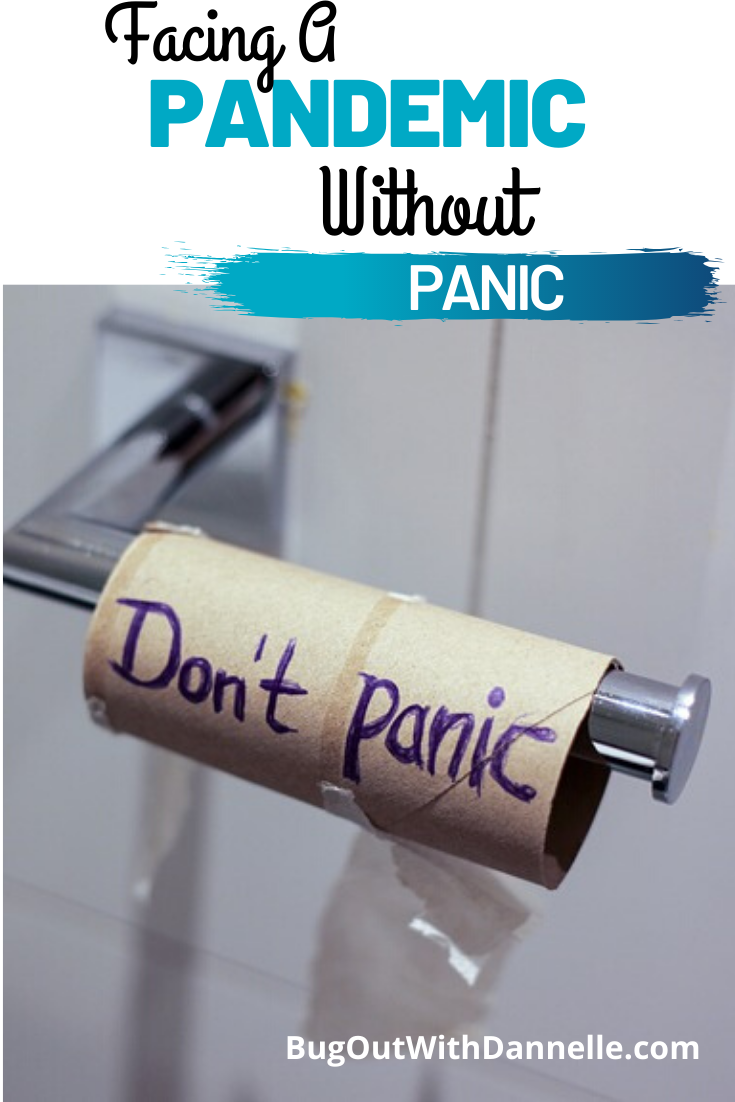
Facing a Pandemic and not Panic

Facing a pandemic is something we don’t all normally think of. At the beginning of a disease outbreak, most people are usually in denial. Some do not believe the disease exists, while some do not think it could get to them. As the outbreak spreads, different groups of people begin to see reality. By the time it is declared to be a pandemic, alarm bells of panic will be ringing worldwide.

facing a pandemic and not Panic

However, panicking is not the way to go about facing a pandemic. Panicking does not do any good, only harm. When people panic, they tend to overreact and make decisions that are not well thought out.

Some people will start hoarding goods and create artificial shortages, which fuel more panic. The economic effects alone usually take a long time to recover from, and this is true for individuals and the whole nation alike.

How then can you face a pandemic without panicking?

1. Be well informed

Information is the key to solving any problem. If you are to face an epidemic the right way, you must be well informed. Look for details on how the disease works, how it spreads, what preventive measures to take, and what is the existing treatment.

Complement this information with the actual figures of what is happening around you and all over the world. Knowing things like the number of infections, the number of deaths, and the number of recoveries can give a clear idea of the progression of the disease and its severity. From this information, you can plan at your best and adjust your life and business accordingly.

When seeking information, be careful of the sources you use. You must only use verified, and authoritative sources as the rest can spread inaccurate information that can harm you.

2. Deal with anxiety

It is normal to suffer from anxiety during times of incertitude. Stress can cause people to make decisions that are not well thought out, such as spending rent money on loads of toilet paper in fear of a shortage. Dealing with anxiety is very important if you want to handle facing a pandemic the right way.

3. Have a game plan

If you’re going to survive a pandemic with very minimum damage, you have to plan and plan appropriately. From the time that the authorities announce an outbreak, start putting together a pandemic plan.

Do not wait for the actual pandemic to be declared. A well-thought-out game plan will include things like how you are going to handle a possibility of self-isolation or lockdown, how to maintain active lines of communication, things to do during the pandemic, how to protect your financial interests, and more.

4. Put your plan into action

When you have your pandemic game plan in place, keep following the news and details about the pandemic. As mentioned before, staying informed is critical when it comes to making decisions.

Use the information to decide the time to put into action your plan. You do not have to wait for an official pandemic declaration to put your plan into action. Just choose the right moment.

5. How to tackle a panic attack

Many people will tell you to remain calm. Unfortunately, not everyone knows how to or shares with you how to manage your peace, especially when a sudden panic attack overwhelms you.

At the outset, you need to realize that anxiety is a feeling which stems from the mind- with raging negative thoughts and fear of impending doom. This overwhelming feeling then affects your whole body which can freeze or cause hyperventilation 

So, let’s see how best to tackle a panic attack. First, recognize your feelings as feelings of anxiety. Then start to counter them with positive thoughts and happy souvenirs. Once you have dealt with the mind, you can tackle the body.

Sit down or lie down, close your eyes, take several deep breaths, and keep focussing on positive thoughts while telling your body to relax. You should already experience a more relaxed feeling after a few minutes.

Complement these little exercises with a hot shower or a bubble bath and maintain deep breathing and stretching exercise. You will soon be able to clear your thought process and face any panic attack in any situation. 
Other pandemic posts that might help you:

Be an Outbreak Tracker to Protect Your Family

In the areas where Ebola is the most active, several organizations are keeping an eye on the virus, ready to report any significant changes. The virus left its region of origin and has spread across the country. Some cases made it out of the country to other countries. The news has dutifully tracked this. You also need to monitor the outbreaks. When the Ebola virus or pandemics like it hit an area, the masses need to know what’s going on, and you have to become an outbreak tracker

Tracking Outbreaks to Protect Your Family from Danger

“Don’t panic the masses” is the goal of government health officials. It’s pretty clear that health officials have dropped the ball with the Ebola disease. It wasn’t supposed to be an issue in America, but if it did happen to become an issue, then the public wasn’t to worry because everything was under control.

Health officials, doctors and hospitals were all well trained and well equipped to handle any Ebola cases. But if you read the news about the first Ebola case in Texas, you can see what happened.

It contradicted what the health officials said. The diagnosis itself was botched – meaning that Ebola slipped right through the cracks. It’s here and it’s not going anywhere.

In fact, some experts predict that Ebola is poised to become America’s newest pandemic. As if that’s not frightening enough, the majority of people are not only ill informed, but unprepared for this health danger.

Everyone should be prepared – not only with the basic essentials like food, water, and necessary medications – but with preventative measures like protection kits. These are kits that you can use if you find yourself in a situation where there are hot zones developing all around you…but the trick to see how much you really need to be concerned depends on where the outbreaks are happening.

You REALLY have to pay attention to the news reports to see how things are moving.

Tracking Outbreaks to Protect Your Family from Danger

Otherwise, you’re operating in the dark, and you could end up accidentally heading into an area that’s become a hot zone. Staying informed of where you shouldn’t go can help protect your family. 

Knowing what’s going on with the outbreak can clue you in as to whether or not you need to vacate your area. You don’t want to rely on just one source when it comes to keeping up to date because some news organizations could have information that other ones don’t. 

As an outbreak tracker, you want to be up to the minute. One of the best ways to keep track of what’s going on with the outbreak is by using the Internet. You can see breaking news online, and the majority of news organizations do have an online presence. 

outbreak tracker that uses the internet

But even better than that, the Internet has real people communicating second by second on various social media outlets. You could be able to hear the up-to-date news as it happens thanks to this human news chain. 

Besides the Internet, you’ll want to be aware of what the news is saying on the television and radio stations. The local news in your area will cover things specific to where you live. 

So you get a closer-to-home approach with the news that way. If there are any evacuations in place, your local news will have that first before other news stations will. 

Keep an eye on the newspapers as well. The newspaper will often do a projected path for an outbreak just like they do with an expected landfall when a hurricane is going to hit the coast. 

Outbreak tracker using internet

These projected paths are usually pretty close to what happens, so you’ll want to pay attention to those. Newspapers are useful if the electricity goes out and you can’t access the Internet or the news stations that you want to see. 

The possibility of losing power is one of the reasons that you want to have a battery-operated radio on standby. The radio can give you the news as it happens, and can also alert you to any emergencies. So make sure you have a supply of batteries on hand to keep your radio running. 

Other posts about pandemics you may find helpful:

Preparing for Water Stores in a Pandemic

If things go wrong, you may lose the ability to have water in your home the way that you’ve always depended on it in the past. In a pandemic, the water supply can suddenly become unusable. While we can go weeks without food, we can only go a few days without water – so your water stores are an important thing to focus on!

water stores article cover image

Water is the one supply you definitely can’t live without for very long. Above all else, you have to be prepared for a good water supply that will keep you and your family alive for days, weeks and months.

Preparing for Water Stores in the Event of a Pandemic

The problem with water is that it’s heavy. It’s not the most portable item to carry around, considering that each person should have a minimum of one gallon per day to use. But aside from carrying a small amount, there are ways you can prepare for better water stores in the event of a crisis or disaster.

Water survival is important because water supplies can become interrupted if there’s a lack of electricity, if a terror attack on our water supplies takes place, or if you’re forced to head out to an area like the woods where you can’t just walk over to a sink when you’re thirsty.

The water supply can become compromised at any time. This simple fact is why you often see those boil advisories on the news. You need to be prepared by stockpiling water as soon as possible. 

Short term water storage

Short term water supplies can be met with water bottles, filters, and water purification tablets. But if you’re prepared to bug out to an area other than your home, make sure you scout out water locations (like a stream or river) ahead of time so that you don’t run the risk of running out.

There are some cool products on the market for short-term water storage. These include portable options like water bricks (which can actually be used for more than water), water socks, and even backpacks with built in hydration packs.

Long term water storage

Long-term water storage is important to plan for. Not only do you and your family need water to survive, but you’ll need it for your crops and animals as well as for cleaning and maintaining proper hygiene.

You can invest in water storage tanks that are perfect for indoor or outdoor use. Both should be BPA-free for safety reasons, and if they’re exposed to light, then they should have UV inhibitors in them so that your water isn’t broken down from the light source.

Stock up now!

The water must be stored away from any direct sunlight. Warm water is an invitation for bacteria to grow and has the potential to make you sick. So you’ll need to keep the water stored in a cool area. 

After you get your supply in, you need to look over it often to make sure it remains viable. Water can be stored in plastic bottles or jugs. Wash the bottles, soda bottles, or any clear jugs, and then fill them with water from your home. 

Other options for water storage

You can also buy water barrels. These are 55-gallon barrels that are great for holding an abundant supply of water, and you can find them online. They’re specifically for long-term water storage. 

But you would also need to keep these away from direct sunlight. You can create a cistern for catching rainwater. What you do is position a barrel beneath any runoff areas of your home. 

For example, you can place the cistern directly beneath your gutter pipe. Instead of the water going into the ground and getting wasted, it can be used for drinking or other water needs. 

Make sure your containers keep out light and have a strong seal. In an emergency situation, there are water bladders where you can safely fill up your bathtub with a lot of water in a sealed, plastic container.

In a pinch, when you need a water supply, you can get it from rivers, ponds, or lakes – but the water must be treated first before it’s safe to use. When you use water that you get or collect yourself, you need a filtering system. 

Make it drink-able

Water stores have to be rotated out just like food – it won’t keep forever. Make sure you label the dates on your water containers. Tap water will keep for about half a year. Always check the water first no matter what to ensure it looks clean. Rotate properly stored water once a year.

The filter can clear your water of bacteria and other pathogens that can make you ill if you ingest them. There are different kinds of systems you can get – ranging from the very elaborate to the elementary, such as filtering straws. 

Boiling the water you need to use for eating or drinking kills pathogens as long as the temperature of the water hits about 215 degrees Fahrenheit. Chemical ways to purify water include using iodine. 

You can get these in tablets or crystals. But you need to be aware that iodine does not kill some organisms. So use these only in a case where you have nothing else to use. 

Chlorine tablets are good to use to purify water, and so is regular household bleach. If you use bleach, don’t use any brands that have additives. So don’t use scented bleach. 

To make water safe to drink, put ¼ of a teaspoon into every gallon of water you want to purify. So if you had a five-gallon container of water you wanted to make safe for use, you would add a teaspoon of household bleach. 

Other posts on water:

Pandemic? It’s not the end of the World

Understanding what you need to do during a pandemic will help you realize that pandemic is not the end of the world. You can minimize your stress levels and anxiety by simply educating yourself about the pandemic.

Know what you need to do once the epidemic starts. Know how to protect yourself as well as your loved ones from getting infected. Know what to buy and practice good personal Hygiene, as advised. 

It’s not the end of the World

Protect your loved ones from panicking if you or a loved one is infected or told to self-isolate. You can achieve this by being prepared before the pandemic starts and by understanding that you are not the only one affected. Know that countless people are doing the best they can to come up with a solution as well as preventative measures. So, focus on keeping up to date with positive news. 

STAY CALM BY FINDING OUT WHAT PROFESSIONALS ARE SAYING

Finding out and understanding what health professionals are saying about a pandemic that has everyone panicking will help you maintain your sanity when everyone else is losing their mind. That is why you must always keep up with information concerning a pandemic only from reputable sources such as The World Health Organization (WHO) or your local clinic

HERE’S HOW YOU CAN CONTINUE ENJOYING YOUR LIFE IN A PANDEMIC

A pandemic is not a sign that everything you are working towards is coming to an end. Its presence does not mean you should stop developing yourself financially, physically, or mentally. You can still enjoy your life while coping with a pandemic. 

EFFECTIVE TIPS TO CONTINUE WITH YOUR PROFESSIONAL LIFE FROM HOME

We still need to work, right? Here is the rub: some people will have no choice in the matter.

In a true pandemic, things like the service and entertainment industries will be closed. That means restaurants, spas, movie theaters, hair salons, hotels, cruise lines, and oh. so. much. more.

I am also a travel writer and had all of my press trips cancelled – not that I am complaining.

The trick on all of that is to be able to pivot what you do, so you can still bring home a paycheck.

I talked about a digital Etsy store on my main site – and it helped me make some cash – so I replicated it over and over with different themed stores. I also coordinated a Midwest Road Trip book – since we were all pretty much trapped within our own state borders.

For those that were able to keep working, they had to look at embracing technology and doing as much as it of possible from home – from their computer.

Set up a home office

Advancing or maintaining your professional life does not have to stop because you are homebound during a pandemic. You can still achieve the same excellence that you are well-known for at the office while at home. There are a few things you can do to make the home environment conducive to office work. Setting up a home office is a great place to start. Make sure your home office is as tidy as the office you usually use.

If possible, you can even dress formally to give yourself and everyone around the house the sense of how important your office hours are. Allocate 6 to 8 hours to continuing with your work and do not allow any interruptions. Make sure your home office resembles your regular office where possible.

Talk to your loved ones about the need for quiet hours

Working from home has many advantages, including controlling your schedule, working on your terms as well as maximizing on time otherwise wasted traveling to the office.

Nonetheless, working from home comes with its share of disadvantages, such as constant interruptions as well as noise. Therefore, talking to your loved ones about the need for quiet hours free from interruptions is essential.

Make sure everyone understands that you will not tolerate any disturbances unless there is an emergency. In this way, you will be able to concentrate better, and it will show in the quality of the work that you produce. That is how you can continue enjoying your work in a pandemic.

pandemic people staying at home

Understand working from home is as crucial as working from the office

The quality of your work is determined by how you approach the work you do. If you treat working from home differently from working from the office, the quality of your work will show. Avoid producing below standard practice by carrying out work you do from home the same way you handle work from the office. 

Keep in mind that all that matters is that you are producing quality work. Stay in touch with your supervisor and your colleagues if you are working on a project that requires communication. 

Other pandemic tips:

10 Of the Best Worldwide Disaster Relief Organizations

There are hundreds, if not thousands of disaster relief organizations around the world. Millions of people are dislocated yearly from one disaster or another and turn to these organizations for help.

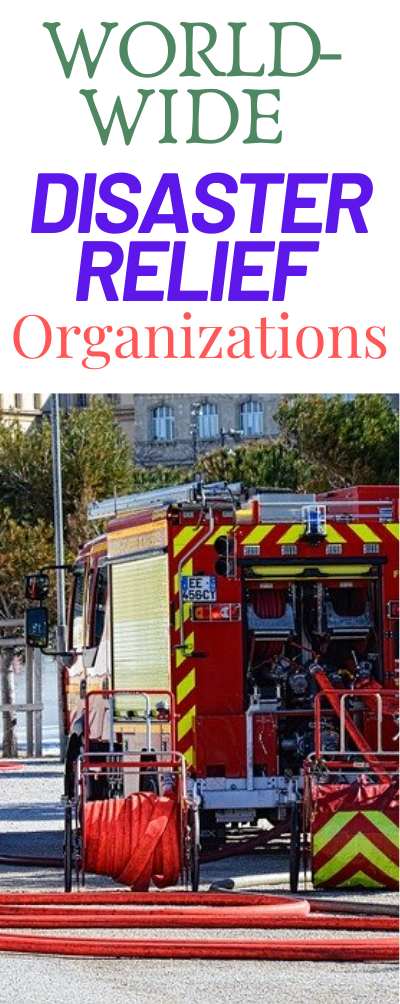
10 Worldwide Disaster Relief Organizations article cover image

These organizations work beyond measure to provide aid to communities and people around the world through health, food, relocation, and much more. The various organizations across the globe cover a broad scope of works from helping to prepare for a potential disaster, assisting during the event, and supporting the rebuilding process in the aftermath.

10 Worldwide Disaster Relief Organizations

However, though they go beyond what many persons see as possible, these organizations are still human-run operations. Persons working or volunteering with these charitable groups show humanitarianism while putting their own lives at risk to help.

Each year, billions of dollars are donated to these disaster relief groups to carry out their works in hundreds of different countries. The provision of essential survival items like food, water, medication, and clothing are among their top priorities. Do you wish to donate but not sure who to contact? Listed below are 10 of these international relief programs you can contribute to or volunteer with:

All Hands Volunteers

The mission of All Hands Volunteers is to provide the short-term and long-term needs of persons affected by a natural disaster. They have been in operation for years and have assisted disaster-affected communities in various countries across the world.

To work as effectively as they always do, they communicate with local authorities and community members in helping to build and re-build disaster-resilient homes, schools, and other infrastructure. Their work never ends, and within the last 15 years, the All Hands Volunteers have changed the lives of over 1.1 million people worldwide.

Direct Relief

Direct Relief International has been providing disaster relief assistance to people and communities in over 70 countries. They have been in existence since 1945 and founded by an Estonian immigrant, William Zimdin, to the US. Over the years, the non-profit organization grew and thus prompted various name changes, which still didn’t change the mission of the foundation.

Their core belief is to “improve the health and lives of people affected by poverty or emergencies by mobilizing and providing essential medical resources needed for care”. They work with local authorities in international countries in finding ways to provide health care services to remote areas.

World Vision International

World Vision International is a Christian-based humanitarian group that is committed to helping and changing the way people live after enduring a disaster or emergency. They have labeled their organization as a non-denominational group that has attracted volunteers of different beliefs on a single cause for good.

They train and dispatch local volunteers who provide emotional, physical, and psychological assistance to those in need. The organization has expanded its reach to various countries and has provided basic survival necessities, especially to people in “hard to reach areas.”

direct relief organization

International Federation of Red Cross

No list of disaster relief organizations would be complete without them. The American Red Cross is one of the longest-serving humanitarian groups around the world. Their mission is to provide disaster relief, emergency assistance, and disaster preparedness education. Known as the International Federation of Red Cross and Red Crescent Societies, this group serves more than 160 million people worldwide through their 192-member National Societies every year.

Since its inception over 100 years ago, the charitable organization has been providing impartial services to vulnerable people and communities. It various local teams assist, before, during, and after an emergency or disaster. Their services are almost not limited, and their developmental programs help millions of people each year.

Salvation Army

This organization is also one of the largest non-profit humanitarian institutions in the world. Their scope of works covers feeding, providing shelter, counseling, providing medical assistance, and resource distribution.

The Salvation Army is over 154 years old and is still serving more than 200 million people each year through its 131 country assistance program. The group does not focus on impartiality such as race, color, or politics but is working to change the lives of local and international communities a day at a time.

United Nations Office for the Coordination of Humanitarian Affairs (OCHA)

Founded in 1991, the OCHA has since established workers and volunteers in over 60 different countries. Their mission is to aid in the strengthening of local communities worldwide that are affected by emergencies and disasters. The organization provides resources that include funding, advocacy, developments, and other disaster-relief assistance.

International Search and Rescue Advisory Group (INSARAG)

INSARAG is a worldwide organization that provides search and rescue mission services to countries around the world. They are a network formed by various countries to assist in disaster search and rescue operations as well as providing resources to enhance the lives of people and communities worldwide.

The group also offers educational support for rescue teams worldwide in being able to respond to the aftermath of infrastructural-damaged regions.

10 Worldwide Disaster Relief Organizations helicopter rescue

Project Hope

Disaster and emergencies have no base on which they need to operate and can affect every area of one’s life.  Since established, Project Hope has joined forces with thousands of volunteers around the world in helping to provide quality healthcare services to those in struggling countries.

Thinking healthcare should be a free opportunity, the founders of this humanitarian organization realized that small and under-developed countries struggled to provide this basic life necessity to their people, even in the case of an emergency or a disaster. Project Hope also offers other resources and an educational platform for spreading information about protecting one’s health.

Episcopal Relief and Development

The Episcopal Relief & Development (ERD) organization has been providing disaster, and emergency relief services to over 40 countries in Africa, Asia, the Caribbean, Middle East, and the U.S. ERD operates under the Episcopal Church but does not limit their provision of services to only those in their faith.

They join forces with local Anglican and related organizations to provide resources for those in need and also to develop the community by extension. Since their establishment in 1940, they have helped in enhancing the way people live positively.

World Emergency Relief (WER)

World Emergency Relief is an international body that has been helping to change the lives of disaster-affected persons worldwide. They have partnered with other organizations to collect resources and dispatch teams to different countries. The mission of WER is to provide a positive impact on the lives of families and local communities in countries struggling to rebuild after an emergency or disaster.

Disaster relief organizations help millions each year, and your support is what they ask in continuing to impact the lives of those displaced in natural disasters. You can donate in cash or kind or contact their offices to find out how you can volunteer.

Other posts you may find helpful:

Self-Defense: Fighting Back During a Pandemic

During a pandemic, systems like the police, fire stations, and EMS can quickly become overwhelmed. In a time of crisis, people are on their own, and it’s up to you to figure out how you’re going to protect yourself and those you love in the event you have to fight. Fighting Back can be an imporant skill!

fighting back during a pandemic article cover image

When an intruder gets into your home during a pandemic, you have no choice but to fight back if you want to make sure you keep the supplies you’ll need. The first line of defense is a firearm. 

Self-Defense: Fighting Back During a Pandemic

There are several different ways you can protect yourself – let’s check it out:

Firearms

Most intruders will run away or back down the moment they see a firearm. They count on cooperation and being the oppressor; they’re not usually looking for a fight. Those who are will be prepared to use lethal force – which means that you’ll have to be ready to do the same. 

There are so many options, it may be a little scary at first. If this is your first time ever getting a gun, you should get a .22lr rifle to start with.

Some people want to dive right in to the larger calibers, like .50AE Desert Eagles. However, this is a bad idea. You should start off on something simple, inexpensive, and trustworthy.

One of the best options for this is a Ruger 10/22 rifle. They’re extremely common, and only about $300. You can pick one up at any sporting goods store…don’t think you can just pick one up on Amazon. You CAN get things like cases, sites, and more on Amazon though. You would want to take this to the range, practice, and maybe even buy some lessons.

Ammo for .22lr is also very cheap. Once you have some experience with guns, you’re going to want to make your next purchase. For home defense, a shotgun is an extremely good purchase.

A solid 12 gauge like the Mossberg 590 will run you anywhere from $400 to $450. The reason that shotguns are good for home defense is that they have spread, are easy to use, and are versatile.

When you hear a break-in during the night, you’re going to have adrenaline rushing. A handgun, while effective, may be harder to aim and land a shot when you’re shaking and panicked.

With a shotgun, you will have an easier time hitting your target, because the pellets will spread out. Some may be put off by the lower ammo capacity of a shotgun, but consider that each shell contains what is essentially eight bullets.

There are even some revolvers out there that will shoot .410 shotgun shells, such as the Taurus Judge or the Smith and Wesson Governor – though those will be more expensive.

Handguns are also a good option for home defense. You can get a variety of 9mm handguns, but you want to make sure they’re from a trusted brand, such as Glock, Smith and Wesson, Beretta, H&K (even though they’re a bit more expensive), etc.

Tools to help you when Fighting Back

You’re going to want to check around online and see what others have said about companies you don’t recognize, such as Bryco, Cobra, Rohm, etc. because they may be prone to failure, and the last thing you want is your gun failing on you when you need it.

All of these guns are great, but they can be really dangerous while defending your home without using proper ammunition. If you’re using high penetration 9mm, there’s a good chance it will exit the criminal and go through your walls, possibly hurting people you don’t want it to.

You can purchase low recoil 12 gauge ammo for $0.34 a round, which is a very nice price. The low recoil means it also has lower velocity, and once it penetrates the criminal, it will have lost most of its speed and will not penetrate the wall behind them.

Keep in mind that those are just MY thoughts. You can use a pistol, revolver, or any handgun to protect your family. Make sure you keep it where you can quickly get to it the second you know someone is coming into your home. 

No matter which weapon you choose, keep it stored safely until you actually need it. We love this company:

Other weapons

If you can’t get to your gun or you don’t have one, then fighting back using whatever it is that you have within reach should work. Quick weapons can be items like baseball bats, fireplace pokers, kitchen knives, or hammers. 

Slowing down an intruder can also work in your favor. By slowing someone down, you can often get the upper hand and take them to the ground. You can slow down an intruder by using things like pepper spray or a Taser. 

Personal Skills

If you’re outside your home and someone is determined to get past you to get in, grabbing a handful of dirt or gravel and throwing it toward their eyes can also be a handy deterrent. 

A thief can’t fight if he can’t see. It might come down to you having to use hand to hand combat to take down the thief. If that’s the case, remember always to disable whatever weapon he has first if he does have one. 

hand to hand combat when Fighting Back

You want to take that out of the equation. Remember that your thief is as determined to get what he wants as you are to stop him. You’re going to have to either injure him or he’s going to harm you. That is the sad truth about fighting back.

Use whatever you have to use during a fight to render him helpless. Then you’ll need to secure him until you can turn him over to the authorities. If the pandemic has hit you and your family and you’re too weak to fight back, you’ll need a particular room in your home that you can all enter into that’s fortified and safe against an intruder. 

This room should have supplies as well as a lethal force weapon in case the intruder can break into this safe room. Remember, with someone searching for medical supplies during a pandemic; they’ll be desperate – so there’s no telling what they’re capable of, even if they wouldn’t normally act that way in the real world without a health crisis. 

More on self defense: