If you are looking for ideas on DIY home security that will give you comfort during times of emergencies or just everyday peace of mind here are some inexpensive ways to start.
It’s no secret that security is something we all want in our life. We want something to make our home feel more comfortable and safe; work to protect the items we work hard for and protect those that we love and cherish.
There are some security systems available that don’t cost an arm and a leg, however, those often come with a monthly fee for monitoring.
DIY Home Security Ideas for Preppers
Here are a few ideas on things you can do NOW that make a difference for your own safety. You might want to look into this more in depth as you feel concerns about things really starting to go over the tipping point for a SHTF situation and you know you will be sheltering in place.
You can have all the food, water, and medical supplies you want, but you need to keep them for yourself – not as fodder for the looters who may be desperate.
Home Security Signs:
One of the most simple and least expensive steps towards DIY home security is a home security sign. Some options would include; Nothing inside is worth dying for.
This gives intruders a warning there may be a gun waiting for them when they get inside. Other options include Beware of Dog signs and home alarm system signs.
Door Jams:
Installing a simple door jam to sliding glass doors will provide a delay if you are in the middle of a home invasion. You could also place a 2×4 between a door and a wall to deter a forced entry.
The nice thing about door jams is that there is no installation and they are small and discreet so no one will ever notice you have one.
Sliding Glass Doors:
Sliding glass doors are another thing – Why are Sliding Doors So Vulnerable? Sliding glass doors are use latches, not locks. That is why you see everyone put a “stick” in the track behind them when they are closed. Some sticks are wooden, some metal – those are referred to as “blocking bars”.
There are a few different things you can do to enhance that security:
The door is glass – right? What is to stop a desperate person from just grabbing a hammer or other similar tool and smashing through the glass? You can pick transparent or tinted film and now you can prevent burglars from making quick entry by breaking your door’s glass.
Protect your lifestyle from unwanted damages with Buydecorativefilm’s Clear Security and Safety 8 Mil S8MC window film. Its 8 mil thickness allows the film to serve as a protective layer once applied to your window.
The S8MC can absorb impact from break-in attempts and hold shattered glass together in case of breakage while remaining virtually clear and transparent so that you won’t even know it’s there.
Bonus perks? It will also help prevent breakage from flying debris as you get with a hurricane or tornado – within reason.
Install a Security Pin
This is hands down a very thrifty way to solve the problem – seriously, we found this great security pin on Amazon for under four bucks.
This locking pin is constructed from case-hardened steel and comes plated in chrome. The pin stores in its holder when unlocked and locks into the retaining ring when engaged. Securely locks your door in a closed or ventilating position.
With your sliding door securely closed, you simply drill a hole through the frame of the door that slides and into the frame of the stationary door. The pin will hold the two doors together and prevent them from being slid open.
One of the most simple and least expensive steps towards DIY home security is a home security sign. Some options would include; Nothing inside is worth dying for.
This gives intruders a warning there may be a gun waiting for them when they get inside. Other options include Beware of Dog signs and home alarm system signs.
The S8MC can absorb impact from break-in attempts and hold shattered glass together in case of breakage while remaining virtually clear and transparent so that you won’t even know it’s there.
Bonus perks? It will also help prevent breakage from flying debris as you get with a hurricane or tornado – within reason.
The pin does not screw or lock into the hole…it slides into three drilled holes through the decorative guide . Two holes are drilled through interior door frame. One hole is drilled on inside edge of exterior door frame.
Personal Protection:
Be sure you have something you can use as personal protection should a home invasion occur. If you are not keen on having guns around keep in mind there are many ways you can secure your guns so that they are safe, yet still accessible should the need arise where you need them.
I prefer the Secure It Gun Storage – and they currently have a great offer:
Secure It Gun Storage BUY NOW PAY LATER – No minimum spend is requiredApplies sitewide “4 Interest-Free Payments” Financing available upon approval Shop Now
WHY do I like them? Well – hubby is NOT a fan of a gun in the house. At. All. Contrasting that is me – a Desert Storm Vet who is used to handling a weapon. The compromise is secure storage so it is there if we need it, but not accessible to kids or visitors that don’t really know how to handle it.
ANY tool is a good tool for defense, if you know how to take care of it and store it properly.
It’s also a great idea to keep a can of mace and know how to use it.
Use Your Car Alarm:
This is a super simple technique but it will work. If you have a car with an alarm on it be sure to keep your key fob with you or on your nightstand. If your home is bring broken into hit the panic button on your key fob.
This will be very loud and bring attention to the area, likely sending the invaders on the run.
DIY Home Security System:
Last but not least is to think of purchasing a simple DIY home security system. There are some on the market that are simple to set up and you do not have to be under any contract for monitoring. These are great because they work just like those that are under monitoring contracts giving you peace of mind without the added cost if you are budget conscious.
A home invasion is very scary and I hope it’s something none of us ever have to face however taking a few simple DIY home security steps just may save your life and the lives of those you cherish most.
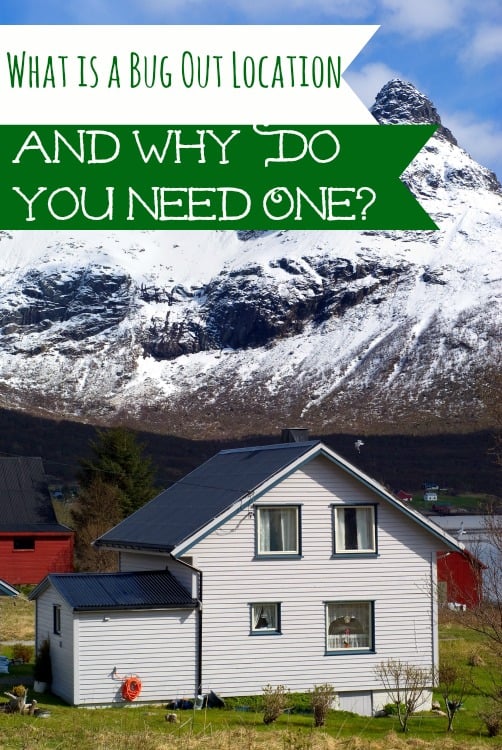
Have you ever heard of a bug-out location? If not, you might be surprised that people actually plan stuff like this. A bug-out location is a location, a house, a business, or a piece of property that your family can go to in case you can no longer stay at your home.
Your bug-out location should be someplace that you and your family feel safe. Whether you choose a friend’s house, a family member’s house, a 2nd home that you own, or even just an empty piece of property that you may own, you need to do two things.
What is a Bug out Location and Why Do You Need One?
First, get permission. Obviously, if you own your location, you can skip this step. If it’s someone else’s home or property, be sure to ask so there aren’t any issues. Next, you’ll need to make absolutely certain that your family knows where you’re going. If you and your teenage kids are separated, they won’t know where to head if they don’t.
So by now, I’m sure you’re asking why you need to have a bug-out location. The answer is easy.
Why set a bug-out location?
Without a second location for your family to go to, any emergency could separate you. If you have a fire and the family scatters, you have no way of making sure that everyone gets out.
If you have a flash flood and don’t meet up, you haven’t got a way to check. The same goes for winter weather. What if your husband is trapped in the ice and snow, but you’re at home?
With a bug-out location, you know exactly where he will head to; either home or your bug-out location, whichever he is closest to. Either way, you’ll know where to look for your family if they get separated.
Your bug-out location doesn’t need to be some out-of-the-way cabin in the woods (although it certainly can be if you want). The best location for you and your family is a place that everyone is comfortable with and knows how to get to.
Place Extra Supplies Along Your Bug Out Routes and Secondary Paths
A bug-out situation is an event that you hope never happens, but you do want to be prepared for. That means that you should plan for every contingency. That includes making sure that you have extra supplies hidden along with your bug-out route as well as along secondary paths.
The benefits of a cache
Having a cache means hiding supplies or anything else that you think you might need in case something happens to the supplies you already have. In the blink of an eye, you can lose important supplies or even everything if you’re ambushed or you have to flee from an animal attack.
Without supplies, your odds of surviving diminish. Most preppers understand that a cache is a plan B in case plan A gets derailed. It’s also something handy to have in case you run into a situation where you use up your supplies faster than you estimated that you would.
Hide your cache well
You need to make sure that your cache is well hidden and protected by the elements. That means you have to use the right container to keep your cache safe. You can use plastic piping for this purpose.
You use wide plastic piping, fill it with some extra supplies, then cap it off. You can also use any storage box that’s waterproof and rust-proof. Put whatever you think might come in handy in the container, then seal it up.
Be thrifty with your cache
To save on costs, some preppers will take those large water containers and load those with items like extra first aid materials or survival supplies like water sanitation methods and extra ammo.
You can also use small or large storage bins, but you need to make sure that you find a hiding place above ground since storage bins can break down when stored underground.
Protect your supplies
Whatever material you choose to use for your cache, you want to make sure that it offers as much protection for your supplies as you can get. You want whatever you choose to be able to withstand temperature changes as well as rain.
What to store
Some preppers store basic things in a cache like extra clothes, shoes, weapons, tools, a way to create a shelter, and other items needed to survive for a few days. Others hide canned food and water alone – or these items in addition to extra supplies like maps, knives, or paracord.
Map it out
You’ll want to keep in mind when hiding a cache that the area where you place the storage container can change over time. What looks one way will look different three months down the road.
That’s why you need to create a document where you list where you’ve hidden your cache or caches. By hiding a cache or two, you’re taking extra steps to make sure you’re protected.
These tips should help you not only figure out a bug-out location for your family, but stock things up along your route to make the emergency situation a little smoother.
Power Outage Boredom Busters? Power outages can be a bad thing in more than one way. Aside from the obvious, they can be a huge issue for parents. Bored and scared kids will often act out to get their point across and when it’s dark?
That can be extremely dangerous. That’s why I love these 10 power outage boredom busters! They’re great for keeping both kids and adults entertained when the lights go out and the storm is raging on!
10 Power Outage Boredom Busters
Spotlight
Spotlight is played with a group of people in large, dark environments. One (or more in a large group) player is designated as the ‘seeker’. The seeker is given a torch/flash-light and loudly counts a number of seconds (thirty is a good number). During that count, the rest of the players must run and hide.
The catch? The person who is “it” can only “tag” people with their flashlight beam.
Some people might call this flashlight tag.
Shadow puppets
I know it may seem “lame” to some, but shadow puppets are actually a fun way to make it through a power outage. This old-fashioned pastime seems to have fallen by the wayside but it will help keep everyone entertained.
Check out this video so you will daze and amaze them with your mad skills:
Have a treasure hunt
Hide something (or a few things) in the house and set the kids off with flashlights to find it! First-person to find the item (or items) wins a small prize!
From how to pitch that tent or teepee, to games to play, down to food to serve, they have 20 fantastic ideas to pour over!
Power Outage Boredom Busters: Start a band
Grab a few pots and pans and spatulas and make “beautiful” music. Be sure to sing loud!
OK – that might get old quick, but we found this great video that shows how to make four different “instruments” for your band – that alone will keep them busy for a bit – and then they have to practice before their performance!
Play cards
Having an outage during daylight hours? Teach your kids to play cards! Play Go Fish or War for younger kids or 500 Rummy or Blackjack for older ones. They’ll work on their math skill AND have fun!
Actually, pretty much any board game will do – but a deck of cards can go a long way! Bicycle Cards has a lot of great games for kids to play on their site right here.
Just watch out for “slap jack” – that gets a little rough, LOL.
My Favorite of the Power Outage Boredom Busters: Tell Scary Stories
Obviously, you’ll want to make sure they’re age-appropriate, but scary stories in the dark are a fantastic way to pass the time. Here are some tips:
Get a story.
Have an idea on hand about what you are going to talk about – pulling it off of the top of you head is challenging. I like to talk about Kate Blood. Doesn’t the name alone sound like a great story is coming?
Make it real.
Or at least make it SEEM real – by weaving in elements that make it seriously plausable.
Use suspense, not gore.
People’s imaginations can conjure up scarier things than we can probably describe to them. It’s the unknown that often makes our imagination run wild. This is where you bring in the drip – drip – drip of the blood off the knife or the tick – tick – tick of the clock before it shimes midnight.
Don’t just tell it; act it out.
The best story tellers really get into it themselves – they seem almost animated. Use your body to help tell your story.
Rehearse.
Practice makes perfect – if you have a “story up your sleeve” that is ready to share? You don’t have to memorize it for verbatim, but the general bullet points of flow will help make you a smash hit!
Start with a warning.
All good movies have disclaimers or ratings. Tell them right off the bat that maybe you shouldn’t be sharing this with them…
Use sound effects.
This is another great way to help sell your story – it adds layers of dimension to the entire experience.
Is there a sequel?
I think the best stories are the ones that don’t truely end – there is always that posiblilty that it could happen again, or is still happening. Is that grave really empty? What happened?
Don’t wrap it all up so there is aperfectly happy ending.
I hope that gives you a few fun tips on how to really rock that story – they will be begging you for another one!
Go on a ghost hunt
Things going bump in the dark? Grab your flashlights and go hunting for ghosts!
Power Outage Boredom Busters: Put on a show
Get out the dress clothes or play clothes and act out your favorite tv show or movie for the rest of the family. Remember to use flashlights and LED candles as spotlights!
This can be a hoot – before you know it, everyone is either cracking up or stunned as they realize that there might be an Oscar worthy actor in the family!
Tell a round-robin story
Have everyone sit around the room. One person starts the story with “Once upon a time” then passes to the next person. Each person adds 1 or 2 sentences to the story. You’d be surprised at how silly these can get!
Power outages don’t have to be boring and scary. If you get a little creative with them, they can also be fun! For moms and dads, they are also the perfect time to get things done around the house that you may have been putting off. I know that’s what I do with my time during them!
Emergency Preparedness Tips for Pets? If you live with furry friends it’s important to plan for their well-being and safety in an emergency, too. Few of us will forget the images of pets struggling for survival in the aftermath of Hurricane Katrina.
The lesson was learned hard and fast, and animal welfare in an emergency took a quantum leap forward via legislation, public awareness, emergency services, and owner preparedness.
Take some time to prepare for emergency scenarios befitting your geography. Every pet owner should have a grab-and-go plan for evacuating a home quickly and some geographies require a plan for extended absences.
Great Emergency Preparedness Tips for Pets
Here are some tips from the ASPCA and the Humane Society of the United States:
Get a Rescue Alert Window Sticker
This will let emergency workers and others know how many pets are inside your home. Stickers are free from the ASPCA and from some pet stores or veterinarians.
How to Care for A Senior Pet might help you prepare a bit – there are a few added considerations for accommodating them well.
Arrange a Safe Haven and Caregivers
If it isn’t safe for you, it isn’t safe for your pets, so don’t leave them behind. Not all Red Cross disaster shelters accept pets, so it is imperative to make an evacuation plan for them ahead of time.
This includes identifying hotels outside of your immediate area that accepts pets and asking friends and relatives outside your immediate area if they would be willing to take in your pet. Establish a permanent caregiver should something happen to you.
Evacuation Preparation
If you must evacuate your home in a crisis, plan for the worst-case scenario. If you think you may be gone for only a day, assume that you may not be allowed to return for several weeks. When recommendations for evacuation have been announced:
Make sure pets are wearing tags with up-to-date identification
Bring pets indoors. Pets can become disoriented and wander away from home during a crisis.
Call ahead to make arrangements for boarding your pet outside of the danger zone at the first sign of disaster.
If emergency officials recommend that you stay in your home, determine which rooms offer safe-havens. These rooms should be clear of hazards such as windows and flying debris.
Choose easy-to-clean areas such as utility rooms, bathrooms, and basements as safe zones.
Fill up bathtubs and sinks ahead of time to ensure that you have access to water during a power outage or other crises.
In the event of flooding, go to the highest location in your home, or a room that has access to counters or high shelves where your animals can take shelter.
If you keep other kinds of pets, the ASPCA lists special considerations for birds, reptiles, and small animals that are important to read.
Please be humane.
So many loved pets are left behind in times of crisis because their owners didn’t prepare for THEM if there was a potential threat. I think of Harry Connick Junior who went in a little motor boat from home to home to rescue both people and pets.
I see clips like this – with NO pets visible and wonder what happened to all of those loves…
A Checklist for Bug Out Bag Making? I am a firm believer that, if you are ready, you never need it! So, we are talking about getting ready! Bug Out Bags and How to Make Them is a simple thing you can engage the kids into so they have the illusion of control for any possible situation. It is good to get the entire family on board with this concept!
Bug Out Bags and How to Make Them
First, we talked about a basic water supply, just in case you all of a sudden can’t use your faucets. (think tornadoes, etc).
Today, we talk about Bug Out Bags (BOBs).
If you watched that 10 Minute Notice video I just shared, you might have to leave your home FAST.
This is where a Bug Out Bag comes in handy
Bug Out Definition
Think of the national emergencies that took them a LOOOOOONG time to respond to Hurricane Katrina, the Gulf Coast Oil Spill, etc. Having enough basic supplies to help your family get from place A to place B safely and comfortably is the goal.
This makes it fast and easy for you to “bug out” if you have a very short time to leave your home.
When you hear the term “bugging out,” most people immediately picture getting out of the area in their vehicle so that they can get to their prearranged meet-up site.
But bugging out isn’t something that can encapsulate every single situation in a crisis moment. If a SHTF moment happens, you might have no choice but to get out – but you’ll have to do it on foot.
These are times that can occur that might allow you to stay local and you’ll be able to get back home once the crisis is over. Bugging out doesn’t automatically mean that you’re going to have to spend months out in the woods in a survival situation.
There can be disasters when it’s a short-term time frame. But the key to success for short-term survival that’s temporary and local in the outdoors is to plan ahead. Since you won’t know the difference until it actually happens, you plan for the worst so that you’re prepared in the short term.
You’ll have the gear and supplies that you need to survive temporarily in any location because you will have already planned for a long-term stay. A temporary bug out could mean something like you have to go for a few days and stay in a tent at a location you’ve already scouted ahead of time.
In this plan, you need to plan to have enough supplies for at least 72 hours for everyone in your group. When it’s going to be a temporary situation, then you can travel lighter, but only do that if you know for sure that you’ll be able to come back home soon.
To survive in a short-term situation, a temporary bug out means you have to be prepared by having your bag, good hiking boots, knowledge of the way out, and the ability to get yourself to an area out of the chaos so that you can survive.
A long-term plan can easily be adapted into a short-term one. You’ll still need the same stuff to start with – and you’ll still follow the same protocol – but just or a bit longer.
By being prepared, you’re in control rather than conceding control to whoever is in charge of the situation – if there is anyone to take charge at all. If a truly awful SHTF situation has happened and you have to bug out and you know it’s going to be long-term, you follow your plan.
Get your bag and get out of there. Take your vehicle if possible – but if that’s not an option, then rely on your immediate bug out plan and your maps to get you to the location that you’ve scouted in advance and head out on foot.
In a long-term SHTF situation, you know that you may not be able to ever come back. So you head to the location that you’ve prepared for homesteading. For some people, this is a site to camp in.
For others, it’s a bug out cabin or other structure such as a container home that’s well hidden and able to protect you during the event. Wherever it is, this is the place where you begin to set up your life again.
A Survival Backpack for Every Member of Your Family
You need to have your gear already contained and ready to go for two main reasons. First, in the event of an emergency, everyone already knows where to go to get their hands on several days’ worth of necessary supplies.
Secondly, in the event of an emergency, if your home becomes unfit for habitation and you need to leave in a hurry, all you have to do is grab your backpack and go. You want a good quality bag with double stitching that has plenty of compartments to keep everything organized.
Bug Out Bags
Every member of the family should have a backpack of their own with his or her name clearly labeled on the outside because you can’t carry enough for every member of the family in one or two bug out bags.
You should even have bug out bags for babies and toddlers in the family. While they can’t carry the bag themselves, it’s wise to have all their stuff together so you can get to their needs quickly.
Children and teenagers, however, can carry their own backpacks and it will make them feel safer knowing that they have their own provisions. The sizes and weights of these backpacks vary.
Bug Out Bag Options
They can be purchased so that they’re the right fit for children up to adults. You want to look for backpacks that say they’re height-adjustable since obviously, all children aren’t the same height. Check the back-to-school sales in the fall, garage sales over the summer, or even thrift stores.
Also for children, you’re going to want sturdy, yet lightweight material. You’ll want backpacks that are waterproof for them. For teenagers, you can get the backpacks with the frames but you might not want to do this for younger children because of the added weight of the frame. These backpacks can have internal or external frames.
The children’s survival backpacks are a smaller version of the adult-sized ones and some of these have pockets that you can access without having to stop and take the bag off. Many people find this added convenience helpful.
These backpacks also have padded straps for the shoulders and are made of water-resistant nylon. These also come with multiple pockets and hooks for storing gear. Most of them come with expandable straps and some come with a hydration pocket. Look for ones that are hydration compatible if you want that feature.
You can get some backpacks that are made of wicking fabric. This is a fabric that will help keep the contents dry and they’re usually thickly padded backpacks, too so they’re comfortable to carry if you have to travel any distance. You want to look for backpacks that are expandable so that they’ll hold everything you need them to hold.
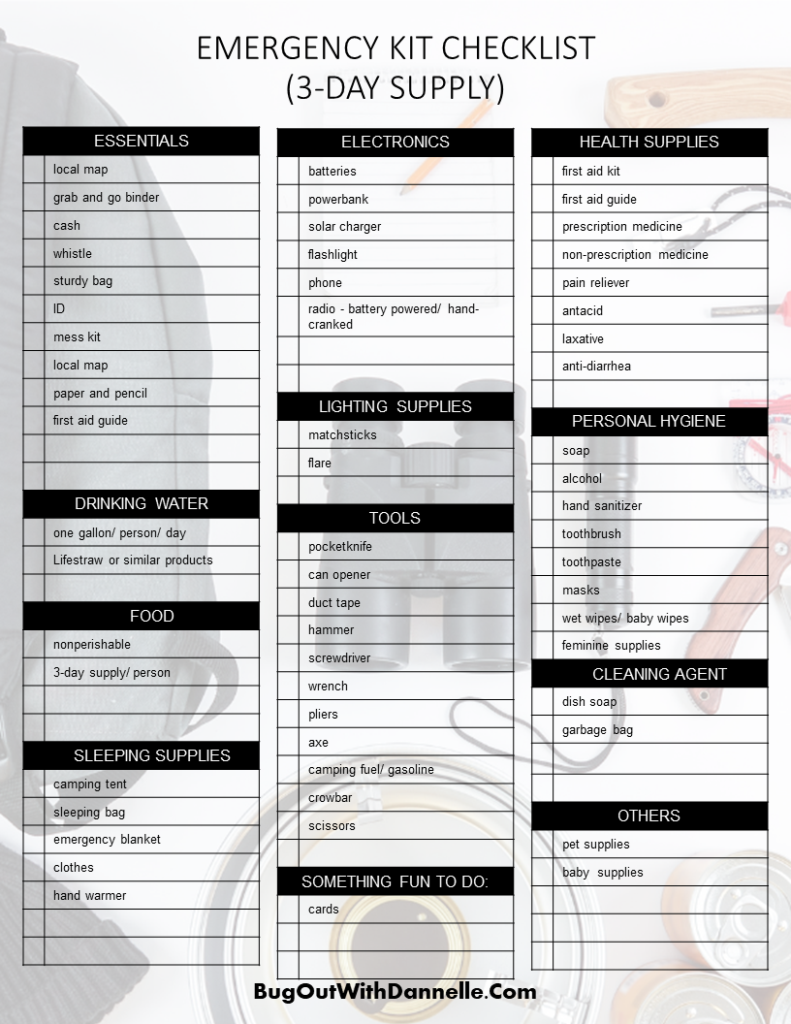
Checklist for Bug Out Bag Essentials
If you’re new to survivalist training, you might not know what bug out bags are. This is just gear that you can grab and go on your way in the event of a disaster. You can put your gear into a backpack or other sturdy nylon bag.
Bug Out Bag Food
You’ll need food that’s lightweight. Something like freeze-dried foods or MREs. Make sure you pack enough that can last everyone with you for at least three days.
Water is a must-have. Power/granola bars, peanut butter, salt-free crackers, nuts, canned beans/veggies, just-add-water noodle dinners, fruit snacks, beef sticks, juice boxes/bags.
We aren’t talking gourmet meals here, we are talking things that could sit in your bag for 1-2 years, be light to carry, and fill your family’s belly until you either have help arrive or get to a safe location. Try to avoid things that will make you thirsty.
You’ll also need three days’ worth of water for everyone. But you’ll want to take along something to collect water in for the days ahead. Pack water purifying tablets. Bleach can do in a pinch but is harder to pack.
Bug Out Bag Gear
Aside from food and water, you need a way to cook the food and boil the water. To cook the food, you’ll need a basic cooking set, which would be lightweight pots that can be used over campfires or on a portable camp stove.
You’ll want to pack clothes for two days. We will talk more about that in a minute… but rain gear like a poncho can be used as shelter in a pinch. Bring a hat along to keep the rain and the sun off your head. Take sunglasses to protect your eyes in case you’re out in the sun for long periods. A bandana should be packed because it can have a multitude of uses.
Shelter materials should also go in your backpack. Take a tent or a tarp along with cording in the event you need to tie something to trees. Carry a sleeping back or a sleeping pad along to protect you from having to sleep directly on the ground. Make sure there are enough emergency blankets for everyone.
Personal hygiene materials need to go in your bug out bags and don’t forget your first aid kit. Firestarters are necessary as are waterproof matches. Take a flashlight that uses solar power rather than batteries.
You’ll also want fishing gear, a knife, and a multi-tool. An emergency radio and a way to charge your cell phone using solar power should be included in your bug out bag. Have sturdy gloves and a small ax that can be used to make a clearing or to get debris out of your way.
You’ll want to have a folding shovel and duct tape along, too. Bring your important papers and pack entertainment. Finally, make sure that you bring a weapon such as a gun in order to protect yourself and your family.
Each of the bug out bags should have a change of clothes, few pairs of undies (face it – we can wear an outfit more than one day if we have to but would love clean undies with it!), toothbrushes, personalized necessary medicine (insulin, asthma, allergy, etc).
Now – for other things to add!
For the kids – you need things to entertain them – small, that travel easy. Think card games, small puzzles, coloring books, and crayons. Also some snacks. They can carry the lighter things like fruit snacks, granola bars, etc. Don’t forget diapers or infant formula if you need them!
Don’t forget your pets! Pet food and extra water for your pet are important too.
A good rule of thumb to follow would be to pack as if you’re going to be gone for three days. You’ll also want to consider exactly where you’re going when choosing what clothing to pack because the area you’re going to may have different weather than where you’re currently living.
If you’re heading to a rainier area, then you’d want to make sure you had rain gear – and if you’re going to an area where the weather is colder, you’ll want warmer clothing. Since room can be limited in a backpack, you want every piece of clothing to serve a purpose.
Pack two pairs of pants to wear. Since you’ll be wearing a pair, that counts as your third-day pair. You’ll want to take long pants rather than shorts since you might be hiking through rough terrain. Plus, having long pants can help protect your legs against insect bites.
Take two shirts along for the journey. You’ll need one that’s fit for warmer weather – such as a short sleeve t-shirt. But you’ll also want a long sleeve shirt for cooler temperatures. Remember that temperatures always drop in the evening hours. By having both a short sleeve and a long sleeve shirt, you can double these up for warmth if needed.
For undergarments, you’ll need to take two pairs of socks and two pairs of underwear – but you’ll also want to pack a pair of thermal underwear. You can wear these under your clothing in the event of cold weather.
You’ll want to take along a hat to protect your head from the sun’s rays as well as to keep your head warm if it’s cold. A hat can also be useful to keep the rain out of your eyes.
A jacket is a must-have clothing item, but you want one that can serve two purposes. You want one that helps you keep you warm but can also protect you from inclement weather like rain.
Many jackets have a waterproof shell and are lined with warm material on the inside. You can find some that are lightweight so that fitting them in your backpack won’t be an issue.
Don’t forget to pack footwear. When you first start out, it’s best to wear your waterproof boots and pack a pair of athletic shoes. Break them in ahead of time to prevent blisters if you have to hike around a lot.
You could add sleeping bags and a tent to this collection of bags, or plan to sleep in your car until you get where ever you are going. I have our Bug Out Bags on a shelf above our tents/bags so they are all together.
This is SIMPLE stuff to do that even FEMA suggests.
How Heavy Should Your Bug Out Bags Be, Realistically?
One important thing to know before you bug out is how much your bug out bags should weigh. Most people lean toward the “more is better” type of thinking when it comes to supplies, but in this case, it could mean you get slowed down and put in danger.
Bug out bags that are loaded to the hilt with everything but the kitchen sink will get you killed. The heavier it is, the more strain it puts on your body and it will slow you down as you’re walking or running to safety.
Not only that but if a bag is too heavy, it will act as a gravitational pull that could cause you to fall backward. There are different mindsets when it comes to the right weight. Some people say a ballpark estimate is less than 50 pounds – while others think along a much lighter amount of about 15.
The truth is that your bug out bags should be packed with survival necessities and should weigh around ten percent of your body weight. While that might seem like an impossible goal, you have to remember that bug out bags aren’t a catch-all solution.
Its intended purpose is to help you survive for 72 hours – not weeks or months – but some people pack it intending it to last for weeks or months. If you fill it up like that, you’re going to end up with a bag that’s too heavy for you to safely bug out with.
If your bag is too heavy, not only is it going to prevent you from bugging out with speed, but it can wear you out and even end up causing shoulder or bag strain, which could impact your safety in an ambush or animal attack.
Your bag should only be loaded with 3 liters of water and purification methods for obtaining water after that if needed. You’ll need 3 days’ worth of food. Though it can be tempting to pack more, that would be a mistake and weigh your pack down.
You need to follow the same 3-day rule when it comes to clothing. Carry a means of shelter with you if you don’t have the survival skills to build something in the woods. Take a first aid kit, flashlights, fire starter method, and a camping pot.
Carry any knives you brought along in the bug out bags, but keep your gun on you so that you can get to it quicker. Some preppers think of packing a bug out bag the same way that they pack groceries.
They put whatever is bulkiest and heavier on the bottom of the bag then load the lighter stuff on top. This is backward for a bug out bag. You want the bulk of the weight at your shoulders to avoid strain on your lower back.
You’ll want any shelter items like a tent or a tarp on the bottom – because these items fill out the bottom of the bag and help support other items that you pack on top of them. When packing a bag with outside pockets or Molle straps, make sure that you have items of equal or close weight on either side so that you don’t end up with an off-balance weight.
If you cut down on all the items you pack, you save weight in your bag and you save your strength because you’ll be carrying a lighter bag when you go. Instead of packing a heavy tent for a shelter, pack a tarp.
Not only can it be used in place of a tent, but it can also be used as a hammock, a windbreaker, and a water collector. Instead of packing eating utensils, pack sporks. You can use them as both a spoon and a fork.
Tools are usually where a lot of preppers waste valuable space in their bug out bag. People will pack dozens of different items like screwdrivers, saws, or pliers when you can find a multi-tool that can do the job of several different items.
You can get a multi-tool that can be used as a screwdriver, as a wood saw, like a knife, a wrench, pliers, hard-wire cutters, a crimper, and even as a hammer. Gadgets are another way that people fill up their bug out bag.
I really like this toolset. This is professional emergency survival equipment, equipped with a large-capacity waterproof box, used to store 22 pieces of emergency survival equipment and emergency supplies, designed for camping, hiking, hunting, and mountain biking adventure trips, to meet any medical or emergency needs.
The lightweight waterproof case holds: Tactical flashlight, tactical pen, bracelet, compass, tactical knife, fishing equipment set, etc., are made of high-quality material, providing excellent safety and durability, meeting emergency and medical needs, making your camping, wilderness survival, or hiking trips easier and more convenient, without worrying about getting lost.
Most of these gadgets really are necessary – such as a radio, a communication device, flashlights, and more. But instead of packing items that serve only one purpose, make as many items as you can do two jobs at least.
Instead of carrying a separate flashlight and radio in your bug out bag, get one instead that’s both a flashlight as well as a radio and charging device for your smartphone. One item that can do the job of several other things is dental floss.
This can be used to secure shelter to a tree instead of a rope. It can be used to fix tears in clothing or to create a warning system against possible intruders. Floss can be used to sew up wounds or as a fishing line.
In a pinch, it can be used as a tinder or to slice through something if you don’t have a knife. You might think of salt as a flavoring for food and nothing more – but this can be used as an antibacterial treatment and it can be used to disinfect items.
Vaseline can be used as an antibiotic treatment and as a fire starter. Trash bags can be used as rain gear, waterproofing, or as a water reservoir. Look through your bug out bag and see what items can be combined to save space and allow you to pack something you may have had to leave behind instead.
Knowing When It’s Time to Bug Out
Those who are prepared for survival situations know that a bug out may come. A bug out is exactly how it sounds. It means it’s time to get out of dodge. Bugging out may mean you’ll have to get where you’re going by walking.
If this is the case, then you need to make sure that you have sturdy shoes or boots – and the means to have food and shelter if it’s going to be a long trek. Being prepared for this scenario means having a bug out bag where you can get to it when the time comes for you to go.
Bug Out Car
Bugging out by vehicle means that you’re leaving in a vehicle that’s already prepared ahead of time for a bug out. Your vehicle is gassed up and ready to go within seconds.
It’s time to bug out when the place you’re at is no longer safe – or could be compromised – and survival may become an issue. This means you need to be prepared to bug out in the event of a weather emergency, a terrorist attack, a flash mob, or a riot.
Bug Out Situations
You also need to leave fast if there’s a contaminate set loose in your area – such as a train derailment and the train was carrying some nasty hazardous materials that escaped into the air. City-wide blackouts are a criminal’s favorite time to come out and wreak havoc. Your possessions aren’t worth losing your life over – so leave.
If there’s been a city-wide breakdown of communication resources like if the 911 system crashes, get out. These systems are all computer run – and when the computer crashes, you’re on your own. When a city goes down, law and order go out the window and chaos ensues.
If some nasty weather is headed in your direction and it’s not looking good, get out before the government officials tell you to get out. Why? Because there will always be thousands who wait until the last possible minute to leave – and you may end up trapped in your vehicle sitting still on an interstate while a harrowing storm bears down on you.
Bug Out Plan
Plan ahead of time to take an alternate evacuation route, since the main roads will be overrun by people trying to leave. Print out your escape routes and have them where you can get to them easily.
Know where you’re going. Don’t just hop into your vehicle and take off. Plan ahead for every possible emergency. Have your kit or bag ready to take with you when you go. Inside the bag, you should have water, food, first aid, a way to take care of shelter – like a sleeping bag or poncho, flashlights, and personal safety tools like Mace or weapons.
Make sure you pack a battery-operated or hand-crank radio so that you can listen for emergency broadcasts. Have a way to start a fire and make sure you have a change of clothes.
Other posts you may find useful if you liked Checklist for Bug Out Bag: