Prepping Your Arsenal? We all know that we are vulnerable to crime in our day-to-day lives. Staying prepared with the necessary tools and knowledge is the key to successful personal protection. Stocking up a proper arsenal for personal and home protection can be complicated, but there are some basic guidelines you should follow when deciding what items will best suit your needs.
When the SHTF, you will be more than happy that you have taken a few measures to prep your arsenal so you can protect not only your loved ones but everything else that you have prepped.
Stocking Up a Proper Arsenal
I’ve broken this down to five separate tips to try and keep it simple for you. Bear with me as some of these seem like more than one actual item.
Choose Guns with Common Calibers
Picking guns with commonly available ammo is a much better choice than choosing something obscure because you may not be able to find more of it around if you run out. Why is this important? Having a gun that you can use to protect yourself is important but being able to actually find ammunition for that gun if need be will make all the difference.
Even it if gets to the point where you have to swap with people to get more ammo – having a rare kind of caliber will make it difficult.
The last thing you want to do is to advertise that you have guns, have ammo, or even worse, that you are out of ammo and can’t protect your home.
Buy Sturdy, Quality Guns
If this is a hobby or something that you really want in order to protect yourself from day-to-day crime, then buy guns that will last for years and not need to be replaced every few months.
Try to buy guns that are made from quality materials and not cheap plastic or other breakable components. Your life may depend on it in the future, so you want a gun that is going to work when needed without breaking down easily.
Get Some Diversity in Your Arsenal
One gun won’t always do everything you need, preferably you’ll have at least three: a shotgun for hunting and defense, a rifle for ranged defense and larger game hunting, and a pistol for times you can’t carry a long gun.
The shotgun is the one weapon that you should have in your arsenal if possible.
Shotguns are great for self-defense because they can go through doors, locks, and other obstacles with ease – but also because of their widespread shot and how easy it is to hit someone at close range with them.
The rifle would be a perfect choice too as it can take out most of the smaller games and then have enough ammunition to be used for self-defense.
The pistol is a good weapon if you’re going into areas where long guns are not allowed, but it should never be your only choice because they don’t do as much damage as other weapons like shotguns or rifles would.
Don’t Choose Something Underpowered
Trying to fight off attackers with birdshot or a .22 rifle isn’t impossible, but using something like buckshot and a 5.56mm is much easier.
The first shot you take should do enough damage, and the criminals will know this as well. They’ll also know that they can’t get away with stealing your belongings because if it comes down to it, you would be ready to fight back or make a last stand.
Get Plenty of Practice
All that firepower is wasted if you can’t hit your targets. If you have no experience shooting, start off on a .22 and work your way up, then practice plenty with the guns you own to get a feel for them.
You should also practice regularly to make sure you are still on target and can use your firearms when needed to protect yourself.
If you don’t know where to practice, find a range or shooting club near you – some are even open to the public. A good place to start is to ask the gun shop that is selling you the weapon.
Often those places have someone who can give you hints and tips on how to use, clean, and shoot that weapon.
Proper Arsenal Maintenance is Key
Storing firearms and ammo improperly can result in them malfunctioning more often or even not working at all, which would be deadly in a sudden defense situation.
To prevent rust or even worse, you’ll want to make sure the guns are stored in a dry and cool place. Storing them inside of safes is also a good idea as it will keep children out of them more easily without needing an alarm system. Make sure that all your ammo storage containers are locked up if they have keys so that children can’t get into them.
If you don’t want to be tempted by the gun, then store it away from where you sleep. Storing guns and ammo together is never a good idea because that way they are more likely to get stolen or taken as well.
This should be your first step in preparing for personal and home protection – but you need to do more than just that! Stocking up on other weapons, ammunition, food supplies, medical equipment is all important too so make sure you take care of those as well!
If you follow these steps, you’ll have a proper arsenal for personal and home protection.
Other articles you might find helpful for protection and preparation if you liked prepping your arsenal:
Preparing Your Homestead for Survival: Don’t Overstock Your Homestead
Don’t leave anything dear to you
always a risk of things being stolen or lost from your homestead, so if it’s important to you, keep it at your regular home
Avoid stocking up too much food
(having food and water there is important if you have to be there in a pinch, but leaving too much food there may end up being a waste if it all goes bad)
Homestead pantry staples
Too many supplies can attract outsiders
(whether it be looters thieves, or even animals, lots of supplies and food in one location can attract a lot of unwanted attention while you’re away)
Many predators can be scared off (by making yourself look big and making noise, many predators will take you for something large and dangerous and not want to mess with you)
Know your local animals (if you have brown bears around and you try to use tactics that work with black bears, you’ll very possibly end up dead. Know the differences in your local predator populations)
Keeping Predators Away (things like fires will keep predators away from where you’re sleeping more often than not, as they’ve usually learned to fear fires)
When you’re in survival mode during an emergency, it’s hard to think about ways to keep the kids occupied and entertained, but it’s essential. You don’t want your children to feel any more stress than they already do because of everything going on around them.
It’s vital to try to make things feel as normal as possible when you don’t know what to expect or what can happen next. Check out these five ways to keep kids occupied and busy during any survival situation.
Five Ways to Keep Kids Occupied During Survival
Even if you’re limited to what you have available for your children to use, there are still several great ways to keep children of all ages occupied.
1. Give Them Something to Read
Provide each child with something to read. A good book that isn’t too long or too heavy can keep children entertained while broadening their minds and helping them improve their reading skills.
Choose the Right Books
The types of books you’ll select will depend on the ages of your children. If you have younger children who aren’t great at reading, you can always grab a kid-friendly magazine for them to look through. Kid-friendly magazines often have bright and colorful animations with large text and smaller words that are easier for little ones to recognize.
Reading is Relaxing
If your children are spending time reading books, it can take their minds off everything. It’s good to have something that can put them in a better mood and leave them feeling a bit happier instead of stressed and anxious over being in survival mode and dealing with life-threatening situations.
2. Give Your Kids Some Simple Tasks
Make your children feel like they’re more useful by providing them with a list of simple tasks to complete. These tasks allow the children to get involved in doing things that can help with survival and improve everyone’s chances of getting through a challenging time.
For example, you may want to send two of your children to gather a bit of firewood that you’ll use at the end of the night to start a campfire. Once you have the fire set, you’ll get to stay warm and prepare food over it.
Keep Kids Occupied During Survival: Small Tasks are Welcomed
Some of the other tasks that your children may have no problem completing would include gathering different types of food to bring back to you for inspection. You can look through the items they’ve brought back and make sure everything is safe to consume.
They can help with washing any of the food found with water if you have it available. These small tasks provide kids with something to do while making them feel good about being helpful.
3. Bring Along a Few Toys
While you don’t want to overpack because that can hold you back, you should bring along a few toys for the children to play with to stay busy. It brings a slight sense of normalcy to the situation.
Don’t bother bringing toys that operate with batteries because you don’t want to waste the batteries you’ve collected on the toys. You might end up needing those batteries for flashlights in the future.
Toys to Bring Along
Some of the best toys to bring include dolls, crayons with notepads, coloring books, puzzles, and board games. These are items that won’t require you to use batteries to keep your children occupied. They can use the toys to stay busy and play alone or with one another when there is time for them to do so. Let each child bring a toy or two of their choosing with them when you’re leaving home.
4. Play Some Basic Games With Them
Try to play some basic games with kids that can take their minds off of being in survival mode and leave them smiling and laughing. You can play I Spy and 20 Questions, to name a few of the games that are easy to play without any supplies. It’s a great way to bond with the children, forget about the things happening around you for a few minutes, and spend a few hours while together.
Play Games Together
Not only can you play these games with the children and make it a family ordeal, but you can also teach them how to play these games with one another. It can spark some creativity in their minds, encouraging them to come up with even more fun games to play together to get the time to pass a lot faster. Make a list of any games you can come up with together, and then try to play those games for at least two hours per day to kill some time and keep busy.
5. Remember Some Riddles to Keep Them Thinking
Try to think about some of the riddles you were taught when you were a child and then teach those riddles to your children. When you were a child, your parents may have told you a few riddles to put your brain to the test and to see if you could come up with the correct answer.
It’s something you can pass down to your children, asking them some of the same funny and exciting riddles to see what they come up with right away and a few minutes or hours later. Some riddles are tricky enough to get children thinking for lengthy periods. If they’re worried about trying to solve a tricky riddle, it can take their minds off everything else.
Ways to Keep Kids Occupied During Survival
When you’re in survival mode, you’re going through a lot, but the children are experiencing it all with you. Making the experience as normal as you can for the kids is important. The best way to keep things normal is to develop different ways to keep your children occupied. You can get them to lend a helping hand with some survival tasks, such as collecting firewood and scavenging for food.
However, you can also give them time to read, play with toys, and even meditate. Get creative when dealing with any survival situation. You’ll get to temporarily take the trouble off your children’s minds and leave them feeling more optimistic about what can happen in the future.
Like Keep Kids Occupied During Survival? Try these articles for kids:
Top Mistakes New Homesteaders Make? Homesteading is a wonderful idea for many reasons. It allows you to learn how to live a self-sufficient lifestyle while saving money and becoming crafty. You’ll get better at doing things you once didn’t know how to do.
While it has its benefits, there are some homesteading mistakes that people make throughout the journey. If you’d like to avoid these mistakes and have the most success possible with homesteading, check out this list of the top five homestead mistakes and what you can do to prevent them.
The 5 Top Mistakes New Homesteaders Make
Let us just dig into the list –
1. Trying to Make It Too Homey
Some people try to make things too homey. It’s all about making it feel like home. Instead, it’s about having a shelter and safe haven to go to in an emergency. You want to have all the right things on your land, including a comfortable and quiet place to sleep, good spots to hide if it comes down to that, and plenty of storage space.
The goal is to have enough room for everything you’re planning on storing and saving for emergencies, such as foods that you’ve canned and other items you’re stocking up on, including bottles of water, batteries, flashlights, candles, and other essentials. If your space doesn’t feel too homey, don’t stress it because it’s not that big of a deal.
2. Poor Maintenance
Unfortunately, not everyone keeps up with the maintenance involved in running a homestead. If you’re not putting effort into its upkeep, it can get broken and overgrown, leaving you without a safe and resourceful place to stay when you need it the most. Put effort into keeping your homestead in excellent condition.
If you notice something wearing down or getting dingy, put work into fixing it until it’s back in excellent condition. Keep an eye out for pests and anything else that could potentially cause damage to your homestead. You don’t want to allow anyone or anything to damage the homestead you’re working hard to build.
3. Over/Under-Planning
Some people make the mistake of over-planning or under planning. So, how does that happen? Some people get so into it homesteading that they start creating this elaborate shelter with extra things they don’t need. While it might make the place look nice, it might not provide the comfort you’ll need if an emergency occurs.
It might not be practical for you to stay there for lengthy periods, which has the potential to cause problems for you if you need to stay there for an extended period.
Don’t Over Plan or Under Plan
While over-planning is a problem, so is under planning. Some people fail to prepare for what could potentially happen, which puts them at risk. For example, if you’re not putting effort into building your homestead, it might not be safe enough for you to stay in for a while due to a lack of protection against possible intruders.
All you need to do is the right amount of planning. Please keep it simple, but put effort into making sure you’re creating a safe and sound homestead for your family. It would be best if you had this to turn into your safe haven in times of need.
4. Top Mistakes New Homesteaders Make: Lack of Familiarity
A lack of familiarity is a top homestead mistake often made by beginners. The last thing you’d want to do is get lost on your land. Not only is it embarrassing, but it’s also got the potential to get you into some serious trouble. Instead, take the time out to explore the land that you’re using for homesteading.
Don’t Forget the Map
Use a map to get around, in the beginning, to become more familiar with the land and how far it is from any other properties in the area. Use different things to help you remember where you’re at, such as trees with a unique appearance or specific plants that only grow in certain spots. As you explore your land regularly, you’ll become more familiar with it, and you won’t have to worry so much about a lack of familiarity causing you to get lost.
Get Familiar with the Land
If you’re lost and end up on someone else’s land, they might think that you’re an intruder. If that’s the case, things might not end up well. Avoid that problem altogether by getting used to your land as much as you can. Don’t forget to make sure your loved ones become more familiar with the land, too.
5. Poor Location Choice
When you have serious homesteading goals, you need to choose the ideal location to run it. You don’t want to select a spot known for its bad weather. The poor weather conditions could make it difficult for you to keep your homestead thriving.
Besides the bad weather, you don’t want to choose a spot that’s too far from home or too close to the city where you’ll have limited resources available to you in an emergency.
Careful Where You Choose to Live
It’s also not in your best interest to choose an area with too much wildlife. While you want to have access to some nature, especially if you end up having to hunt for animals for meat, you don’t want to have too much wildlife roaming around to the point that it becomes dangerous for you.
While you’re the predator for most animals, you can become the prey to other animals, such as bears and wolves that roam around. When you want to take homesteading seriously, research the areas that are best for homesteading. Choose land in one of those areas that can meet your needs more than others.
Homestead Mistakes to Avoid
Homesteading is a fantastic idea because it helps you prepare for emergencies. It’s the best way to make sure you’re fighting for survival in challenging and dire situations. However, there are some mistakes that people tend to make, and now that you know about them, take steps to avoid them!
Get familiar with your land, don’t worry about making it too homey, and choose the right location for homesteading. Don’t forget to plan accordingly and take measures to keep up with the maintenance involved in running a homestead. Then, you can do it the right way and have a safe haven for your family.
Other articles you may find helpful if you liked Top Mistakes New Homesteaders Make:
It’s a scary thought to think about, but if you’re ever in a survival situation where food is scarce and there are no grocery stores to scavenge from, it can be difficult. It is imperative to know how to scavenge food for survival because without it you’ll eventually starve. This post will provide five of the most effective ways that people have found to scavenge for food when they find themselves in this type of scenario.
If you’re ever in a situation where you’re fighting for survival, knowing how to scavenge food you can eat is a must. If you don’t know how to find food or where to get it, you could end up suffering from starvation, which can ultimately lead to death.
Top 5 Ways to Scavenge for Food in Survival Situations
Instead of dealing with that possibility, check out these top five ways to scavenge food for survival and have the most success with it. You’ll learn how to find plenty of food in areas that you’ve probably never thought of before.
1. Hunting Can Be Valuable
Whether you have hunting experience or not, it’s valuable to know how to do it. Whether you’re willing to try to hunt small game or big game, you’ll end up with enough meat to last for several days, especially when rationed correctly.
Scavenge Food for Survival: Consider Hunting
Hunting a large animal could leave you with enough food to feed your family for several weeks, but you’d need to know how to properly store the meat that you’ve managed to get to keep it fresh. You don’t want to eat spoiled meat because that could cause you to end up with food poisoning and other serious problems.
Use Different Tools
Not everyone is comfortable with the idea of hunting. Even if you don’t like the idea of it, keep in mind that it might be necessary in dire times. So, try to get familiar with using different tools that can help you capture your prey when necessary. You’ll also need to know how to safely take your game apart and separate the meat into sections based on what you can cook with it each day to make meals.
2. Scavenging for Fruits
Be prepared to scavenge for fruits in different spots. You’ll notice that trees are often a hot spot for fruits. While it’s good to have access to these trees’ fruits, you need to know what you can safely eat and what you need to avoid.
Some berries look sweet and delicious, but they’re poisonous and shouldn’t be consumed. You don’t want to make the mistake of eating the wrong thing or giving something harmful to someone in your family.
Scavenge Food for Survival: Search for Fruit Trees
Search for a fruit-bearing tree that has fruits growing from it that you can safely eat. If you can find that kind of tree where you’re at, it’ll become an excellent source of carbs for you and your family. You can continue picking the fruit and safely storing it to keep it fresh until you’re ready to eat it.
3. Don’t Discount Bugs
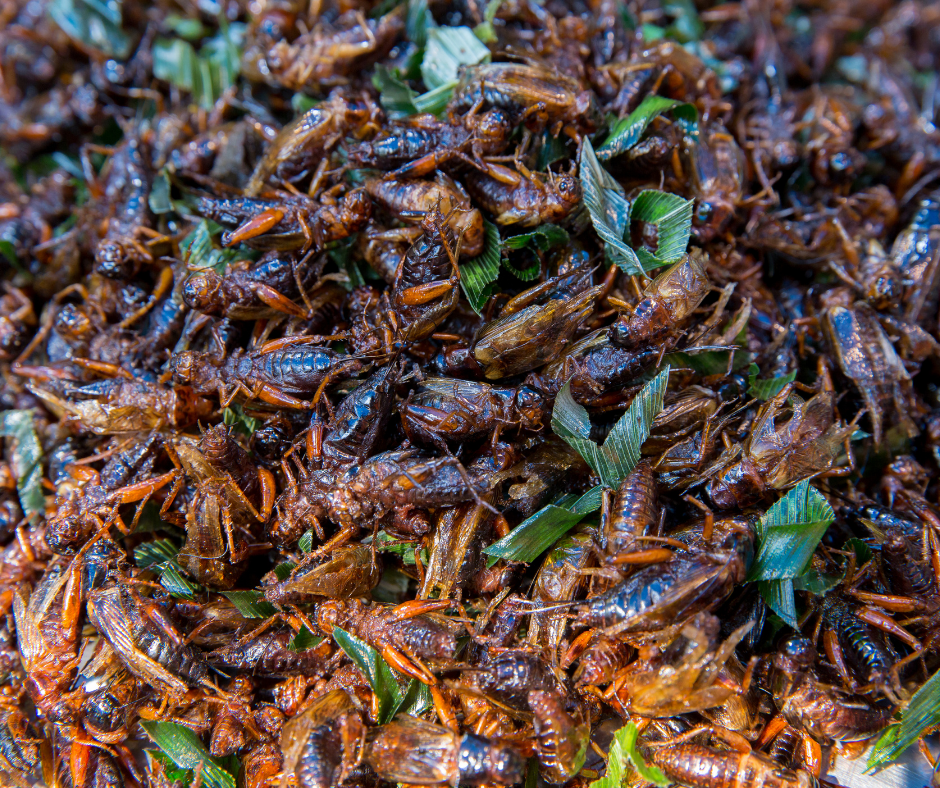
While it may sound gross, sometimes it’s necessary to eat bugs for survival. It doesn’t mean that you need to eat these insects raw because that’s difficult for most people to do. However, you can collect crickets and grasshoppers, cook them over the campfire to roast them, and then eat them.
Not only will they taste better when you’ve cooked them, but they’ll also provide you with the protein you’ll need to stay energized. The right types of bugs consist of lots of protein that your body needs, especially during difficult times when all you’re trying to do is survive.
Bring Seasoning and Spices
If you have any seasonings or spices with you, it’s possible to make the bugs more appealing by covering them in some of these seasonings. When you’re out in the wilderness, starving, and in desperate need of food, eating the readily available insects no longer seems nearly as gross as it might sound to you right now.
4. Scavenging in an Urban Area
Being in the wilderness is one thing. However, if you’re fighting for survival in an urban area, you’re probably not surrounded by a bunch of trees and plants with fruits and vegetables that you can consume. However, you may have easy access to markets and grocery stores.
You can head over to these places to look for canned foods. It’s best to choose canned foods and other non-perishable items that won’t go bad quickly. You want the food to last a long time because you don’t know when you’ll find another food source during a crisis.
Seek Out Non-perishable Foods and other Proteins
If you’re not sure what to grab, look for canned meats, canned vegetables, and containers of peanut butter. The canned meats, such as chicken and tuna, will come in handy as a protein source for you. The canned vegetables contain vitamins and nutrients.
They’ll also taste great when prepared with the canned meats to give you a bit of variety with each meal. It’s also helpful to have peanut butter because it tastes good, tends to last longer, is a versatile ingredient to use, and is an excellent protein source.
5. Observe the Wildlife Around You
Start observing the wildlife around you each day to get an idea of how they survive in the wilderness. You can keep an eye on how some of the other animals get their food and what they tend to go for when trying to find something to eat. If you see what they’re going for, it can help you decide what you’ll go for in the wild if it comes down to that.
You may start to observe bears in the water grabbing fish to eat. If it’s something you notice, you’ll know that the specific body of water has fish swimming inside it, and that means you can go in there and get your own fish, too. Use the wildlife observations that you make to your advantage to help you find food in all the right places.
Other articles you may find helpful if you liked Scavenge Food for Survival:
Are you a Dollar Store Prepper? If not, then it is time to get your act together and start building that stockpile! We learned with Covid-19 that the world as we know it can end at any moment, so it is important to be prepared for anything. Whether there’s an emergency, natural disaster or just the momentary shit hitting the proverbial fan- with our Extreme Dollar Store Prepping List you’ll always be ready for what comes next.
The worst thing about the early COVID pandemic was the panic buying. While FEMA says to have at least 3 days of emergency supplies like food and water on hand, it really should be 3 months – or more!
Why Dollar Store Prepping Rocks…
What if I told you that for just ten bucks a week, you could have 520 incredibly value-worthy shelf-stable items in your stockpile.
Now, more than ever, this is an important thing to consider. Have no fear – the best thing about our list is that you are shopping at your local Dollar Tree – so even someone with the tightest budget can pull out success with this list and build up their preps!
Is it really a bargain?
The key thing to remember when stocking up on food is that if it is something that you or your family doesn’t like? Don’t buy it. Why make yourself eat stuff you absolutely hate when things are already stressful? It isn’t a bargain if it isn’t something that you would like to actually eat. It just wastes your time, money, and space to add it to your inventory.
Personally, I find that thinking of what you DO like is a great way to start. Do you like spaghetti with red sauce? Tacos? Fritattas? Pancakes? Make a quick list of 7 to 10 meals that you DO like and that can be your “hit list” of items to stock up on.
I roughly did that with this list – these 21 items are bargain-priced for basic items that help build pasta, rice, or bean meals, and even soups. They are all at a better price than the local grocery stores.
But it gets better…
Dollar Tree Takes Coupons!
Dollar Tree does accept manufacturer coupons. They do not accept competitor store coupons, such as those for Walmart, Target, or Dollar General.
Coupons used at Dollar Tree must always be originals and cannot be photocopied. They must be completely intact and not altered or modified in any way.
Coupons can not be over $1 in value.
Dollar Tree accepts one manufacturer coupon per single item purchased and has a maximum of four of the same manufacturer coupons accepted for each customer per day. For printable coupons from the internet, Dollar Tree will accept up to two printed coupons per customer per day.
When coupons are used on a purchase, Dollar Tree requires that the item purchased does exactly match the product listed in the coupon’s description including the appropriate brand, size, quantity and etc. in order to be accepted by the cashier.
Whew.
But — some of what I am going to talk about are name-brand items – so you could get them for less than a buck – or possibly FREE – just by adding a coupon to your transaction!
Another thing to consider
You can order online and have items shipped either to your home or your store! Yes, you might have to buy a full case – but most items come in a case of 12. So…that week you spend $12 instead of 10. oops!
On the other hand, you can get as few as 4 items on select items in their “Smaller Quantities” lines!
21 Hot Dollar Store Prepping items
Let’s get started with my list of 21 Amazing Dollar Store Prepper Items to add to your stockpile!
1) Pasta
Take your pick – macaroni noodles, spaghetti noodles, even penne pasta has been spotted at my local Dollar Tree. One-pound boxes for a buck – and with name brands like Barilla? You know there are coupons out there!
Compare that to my local grocery store that is sliding down into 12-ounce boxes and, if you are lucky, the sale is 4 boxes for $5. (sigh)
2) Dried beans
This was a hard-to-find item in the early COVID days as there is no easier meal than a quick bean or lentil soup. On our Operation $40K site, I whipped up a list of lentil recipes for everything from sloppy Joes to pasta sauce. (see it here). Bean soups – bean burritos – so many options that you can simply toss in the crockpot and leave cooking all day to whip up a great, and simple meal.
Dried Northern Beans make a killer soup with a can of diced tomatoes and a can of sliced carrots added – just add onion and a little chicken broth!
Seriously, I could go on and on about how well these keep and how many uses you could get.
3) Rice
This is a 2-pound bag. Keep in mind that In the Egyptian pyramids, they found pasta and rice that we could still eat today. It keeps almost indefinitely in a cool storage location.
Fried rice, rice pudding or custard, even as a filler for a casserole – it is a great way to help keep a belly full.
4) Knorr Rice Mixes.
OK – don’t call the health police on me. Knorr is a name brand (coupons!) and it is easy to add that can of chicken or tuna to it to stretch it out to a full meal. When you are comparing this to “disaster prep food” you have about the same portions and are getting it for a lot less than $8-10 a package.
Yes, there is sodium. This is EMERGENCY food – not your average weekly meal.
5) Shelf-stable boxed milk.
Places like Walmart price gouged in 2020 and we saw gallons of milk top $5 – IF you could actually find it. Boxed milk is shelf-stable, comes in quarts, and will do with cereal or cooking. You have choices of whole milk, 1%, 2%, and even Almond milk quarts!
6) Pasta Sauce
Canned is better than glass for longer storage – again, there are name brands like Prego and Hunts. Red sauce or white sauce, make sure you have enough for each box of dried pasta you stock up on.
7) Coconut Oil
If you have never used coconut oil before – this is the time to start. Coconut oil can be used for cooking, baking, as a substitute in lotions and hair products, or even as fuel for your emergency stove!
You can use it for cooking – just use it in place of butter or olive oil.
You can add coconut oil to your coffee, cereal, oatmeal, and other foods for a healthy boost!
It’s an effective moisturizer that you can either buy pre-made or make at home with special recipes:
– Coconut Oil + Honey (or sugar) mixed together
– Coconut Oil + Lemon Juice mixture rubbed on the face before bedtime
Don’t forget about using coconut oil as a hair product while SHTF too! It will help keep your scalp from itching when there are no more products left on shelves…
Coconut oil is also great as fuel for emergency stoves because it has such a high smoke point.
OK, I could go on and on but this isn’t an article about coconut oil. Normally it is pretty darned pricey so I was beyond tickled to find coconut oil at the Dollar Tree!
8) Ramen 5-packs.
Ignore all the rumors about the plastic in the noodles, etc. Yes, there is a lot of sodium. You can stretch this into a soup that feeds an entire family by cooking up 2 packs and adding a few cans of veggies along with a can of cooked chicken breast.
9) Canned veggies.
Name brands y’all! With the metal shortage currently driving up prices – canned goods are rapidly jumping in price at the grocery stores. You can get all of your favorites for a buck!
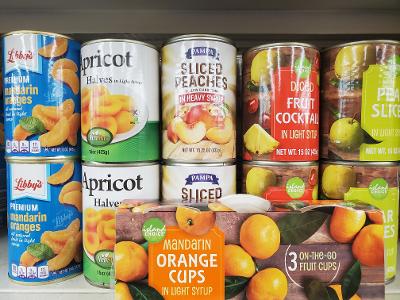
10) Canned fruit
It is important to have a little balance and fruit adds that nice sweetness we tend to crave after a few days. It can be used as a dessert or topping to dress up oatmeal.
11) Canned soup
Name brands again y’all! Campbell’s and Healthy Choice – perfect for those who like to just heat and eat. I’m a fan of the beef barley! Even cream of mushroom or cream of chicken for those pasta or rice casserole dishes – the Dollar Tree has you covered.
12) Spices.
Talk about expensive – your grocery store can charge up to $15 for the SAME-sized container. Get a nice-sized container for your most common spices for just a buck. Try adding a little ginger to that Ramen soup for an Asian flair or even Cinnamon for that rice pudding.
13) Juice boxes.
Name brand, single serving, a variety of flavors. This is good for the kids and also the diabetics – a four-pack for a buck makes a great bargain.
14) 32 oz bottle of Lemon Juice.
You can get a quart of lemon juice for a buck. Add a one-dollar sugar package and you are all set for that refreshing lemonade! All you need is 6 1/2 cups of water, 1 cup lemon juice, and 1 cup sugar in your 2-quart pitcher, and a little ice in your glass to pour it over. It helps that tough time seem a little more normal.
15) Canned pie filling.
Whether it’s apple, cherry, or blueberry pie filling – just one buck. It is good to have on hand for wrapping pancakes around for a fancier breakfast – or even to turn into pudgy pies over your open fire. Musselman’s is a GREAT brand of pie filling and roughly $4 at the grocery store
16) Pancake mix
A box of pancake mix for a dollar? You can’t beat that! And it’s the perfect breakfast on those mornings when you need to hurry back out the door and don’t have time to make them from scratch. I have found the “just add water” version 16.5 oz boxes that literally ANYONE can make without screwing it up.
17) Hungry Jack Hashbrowns.
This dehydrated 3.2-ounce box only needs a little water to come to life. You can play “Waffle House” and add onions, cheese, diced ham, and more to make a meal or use them as a base for a family frittata with some scrambled eggs and a few veggies.
18) Condiments
Ketchup, Mustard, even Salsa, and Hot Sauce! You might not think of these things when you are prepping, but they really come in handy. Your food will need FLAVOR.
19) Pancake syrup
Who cares if Aunt Jemima is on your bottle of pancake syrup or not? For a buck you can save two to three bucks that the grocery store charges! Why not pick up a bottle for the camper AND the house at that price?
This is also a great way to sweeten everything from oatmeal to rice custard.
20) Baking mixes.
Muffins, Cookies, Cake, and even brownies. Baking mixes are a must-have for anyone in your family. Did you know you can even make pancakes from muffin mixes? (more about that later…)
21) Chocolate bars
It is important to have mood elevators too. When things look bleak – you need a pick-me-up. They have name-brand chocolatey goodness like Godiva. Make sure you pamper yourself a bit – even in an emergency. It really can help you with your sanity.
I know there are a lot more great things you can find when just walking around your store or when you are combing over their website. These are just the top 21 items that I found that are a total bargain and PERFECT for anyone who is prepping on a budget.
That makes this is a MUST-HAVE list for any prepper, whether they’re new to the game or have been at it for years. When you start shopping from your local Dollar Tree store, you’ll be amazed by all of the deals!