Pandemic Preparedness: Meeting Your Family’s Hygiene Necessities

After food and water, hygiene products are the next items that disappear from shelves when a pandemic strikes. So your odds of getting what you have to have during a time when needs are elevated are slim. It pays to know what Family’s Hygiene Necessities for a Pandemic Preparedness would or should look like.

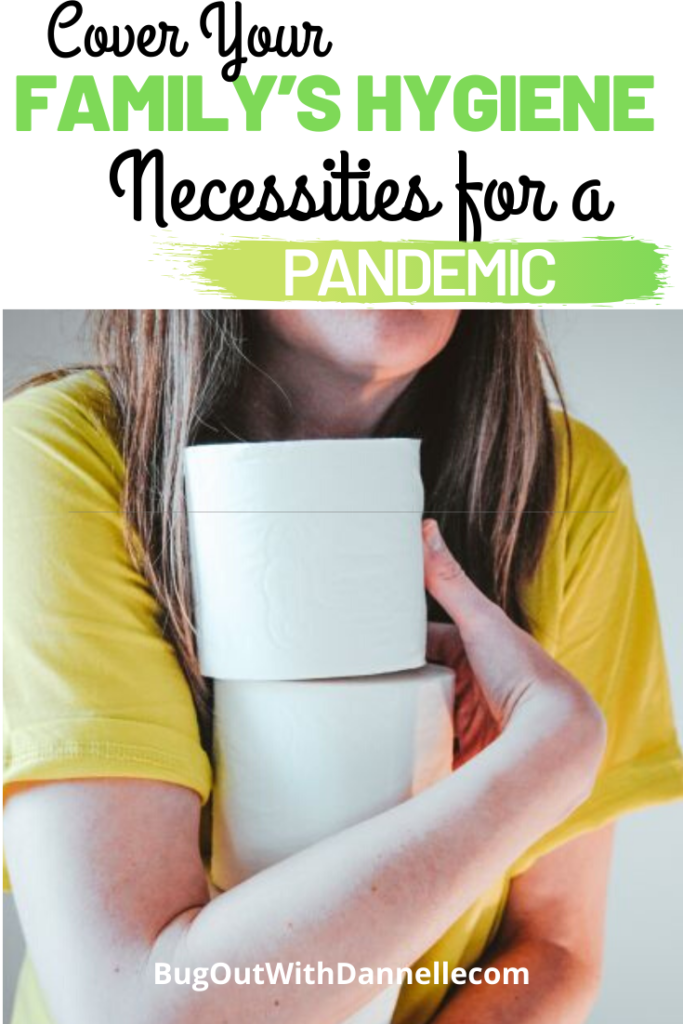
Pandemic Preparedness article cover image

You want to prepare now so that you don’t have to fight crowds. Plus, you want to make sure you can stay isolated from them so that you won’t bring any illness back to your own home. 

Cover Your Family’s Hygiene Necessities for a Pandemic Isolation Period

What Do You Need?

You’ll want to figure out how much of each hygiene product your family goes through by adding up what you usually go through in a year. Then multiply that by at least two years. 

Hygiene items can store that long, so even if the pandemic doesn’t last that long, you won’t have wasted the expense of buying the items. You’ll need to stock up on toilet paper. 

toilet paper shortage

Toilet Paper

If the Covid-19 panic buying taught us anything, it was the fact that TP is king. There were Facebook groups dedicated to a “where is it now” concept to help people find what they needed. Add in all the TP memes talking about how TP was used to make moonshine, or it was replacing poker chips?

It became pretty clear that this baby is important to have. The best rule of thumb for Pandemic Preparedness is to figure two rolls per family member per week with extra rolls figured in for the event of an illness that could require more usage.

Teeth

For toothpaste, think that a family of four would need two tubes of toothpaste per month.  Dental floss should be figured at one container per month per person. Toothbrushes should be replaced more often during a pandemic because of the higher chance of you having to deal with germs.

A good rule of thumb is to change toothbrushes every four weeks – sooner if anyone in the family has an illness. In between time? Throw them in your dishwasher each week for a quick clean. Toothpaste?

This isn’t so critical as you can even resort to baking soda in a pinch or worst-case scenario? Just brush with water. You really want to get the “scum” off your teeth and prevent plaque build-up.

homemade toothpaste

Soap

You’ll need bar soap. If you currently use liquid hand soap, it’s more cost-effective to plan to use bar soap during a pandemic. However, since pandemics are spread through viruses and germs, you’ll want to make sure that you have a hearty supply of hand sanitizer to use during the length of the isolation period. 

There are those of us that like to make our own – I have an oatmeal honey sensitive skin bar that I make and love for my daughter’s skin, but prefer the Eucalyptus soap recipe for myself that I found HERE.

make your own soap for Pandemic Preparedness

Deodorant

While this doesn’t seem like a top priority for pandemic preparedness, everyone in the family – except for infants and small children – will need deodorant. Using the solids is more cost-effective than the spray-on kind. Figure a container per person that uses it per month. It doesn’t really pay to stock up on 5-10 years’ worth of this, it degrades pretty fast.

Feminine Hygiene Items

Feminine products should be figured at the current use, but always store extras in case of additional needs. If you use condoms for intimacy, you’ll want to pack a supply of those as well to keep those little swimmers in check. If you don’t?

You may find a bonus family member in about nine months. There are already jokes about the Covid-19 pandemic babies being called “Quaranteens” a dozen years from now. A few tampons should also go in your first aid kit – professional sports medicine docs use them for nose injuries!

tampons are also good for the first aid kit when looking at Pandemic Preparedness

Razors

You’ll need to pack in storage a supply of razors for both men and women as well as an amount of shaving cream. The shampoo is something you can also store up, but in a pinch, hand soap can be used to wash hair if you don’t have enough shampoo. 

Basic Skin and Nail Care

You never know when a problem will strike, and Pandemic Preparedness needs to take that into account. Is it the middle of winter? Lotions for dry skin should also be on your store list. Also, add Chapstick to prevent cracked lips from occurring. Q-tips and nail clippers for each person should also be stored for use.

You’ll want separate nail clippers to help keep nail fungus and other bacteria or viruses at bay. A Great DIY Home Manicure Starts with a Manicure Kit has a great list of basic supplies.

tips for home pedicures

It goes beyond saying that if you have infants, you’ll want to store up diapers and baby wipes. Now you’ll want to be careful on the diaper sizing since babies can outgrow diapers. So buy these in size increments to allow for that. 

Other posts you may find useful:

Pandemic preparedness woman holding TP article cover image

What is Quarantine during an Outbreak?

During a disease outbreak, you may need to quarantine your family to keep the disease from entering your home. But it’s challenging to isolate your family if you don’t have supplies on hand to survive for a long time. A lot of people do not know what is quarantine and how you do it.

what is quarantine

You may also encounter a situation where you have a sick family member that needs to be quarantined from the rest of the household. If you don’t come in close contact with a virus, you can’t get sick from it. 

We learned a bit from the worldwide Covid-19 pandemic, and people’s general failure to take social distancing seriously. With older adults, people with a compromised immune system, or other issues? It was life-threatening for many and hard to watch people on “Spring Break” romping on the Florida beaches when we were all trying to be responsible.

Some of these tips may seem a bit extreme but consider the situation. If we are talking about Ebola, they seem more understandable. For those with family members with high-risk factors? It makes a little bit more sense. It pays to plan ahead, as once a pandemic hits? It is hard to find supplies. These tips should help anyone who wonders : “What is Quarantine”

How to Quarantine Your Family During an Outbreak

The purpose of quarantine, then, is to prevent the possibility of coming into contact with a virus that can be deadly and spread quickly – just as the common cold is easily spread.

Keep Disease Out of Your Home

If the purpose of quarantine is to keep a healthy family member well, you’ll need to be prepared ahead of time with all of the supplies you need for food, sanitation, and hygiene. 

keep disease out of your home

You’ll want to seal off the outside entrances of your home using duct tape and plastic sheeting to cover doors and windows. Most people find it helpful to cut out plastic sheeting ahead of time that will fit these entrances so that in times of stress, all you have to do is tape them up. Make sure you label them for ease of the job.

It’s essential to have a designated area outdoors where you’ll place items such as used bags for personal waste. It’s not a good idea to store these in your home because they increase the risk of developing a host of diseases. We really like these Double Doodie Bags that fit a 5-gallon pail.

Once you’re sheltered in place, you’ll want to keep communication lines open with radio communication so that you’ll know when it’s safe to leave your home.

How is your first aid kit?

Make sure your medical kit is up to snuff too – we love MediTac for our supplies – and they have free shipping for all orders over $50. We keep a kit at home, one in the camper, and one in each car.

free shipping banner

What to Do When a Family Member Is Ill

A more likely scenario when it comes to illness is that you’ll have one or more members of your family who have become ill. Those people will need to be quarantined in a room of your home or another nearby place. 

For example, if you have a motor home, cabin, or detached garage, you can use these as quarantine areas. These rooms need to be sealed off with duct tape and plastic sheeting. 

how to make a quarantine kit

You’ll also need to place a sign on the entrance stating that it is a confined area. This sign warns people to stay out unless they’re wearing protective clothing. Right outside the door, you’ll need to set up a sanitation area that contains soap, water, latex gloves, masks, and other protective equipment as required. 

Before people enter the room, they need to put on the proper protective gear. Before returning to the rest of the household, they need to properly dispose of gloves, masks, and other disposable items and make sure they wash their hands thoroughly.

Do You Have kids?

We haven’t seen a lot of the quarantine culture in our country as vaccines have been developed to handle everything from Measles to Small Pox. (thank goodness!) I remember the stories from my own grandpa about signs on the houses, etc. from when he was a boy.

It can be a very scary time for the littles – so maybe practice with a loved stuffy or two prior to any event actually occurring. Once they are comfortable with the concepts, or idea? They will be a part of your team in the event of any real emergency.

Other posts you may find helpful:

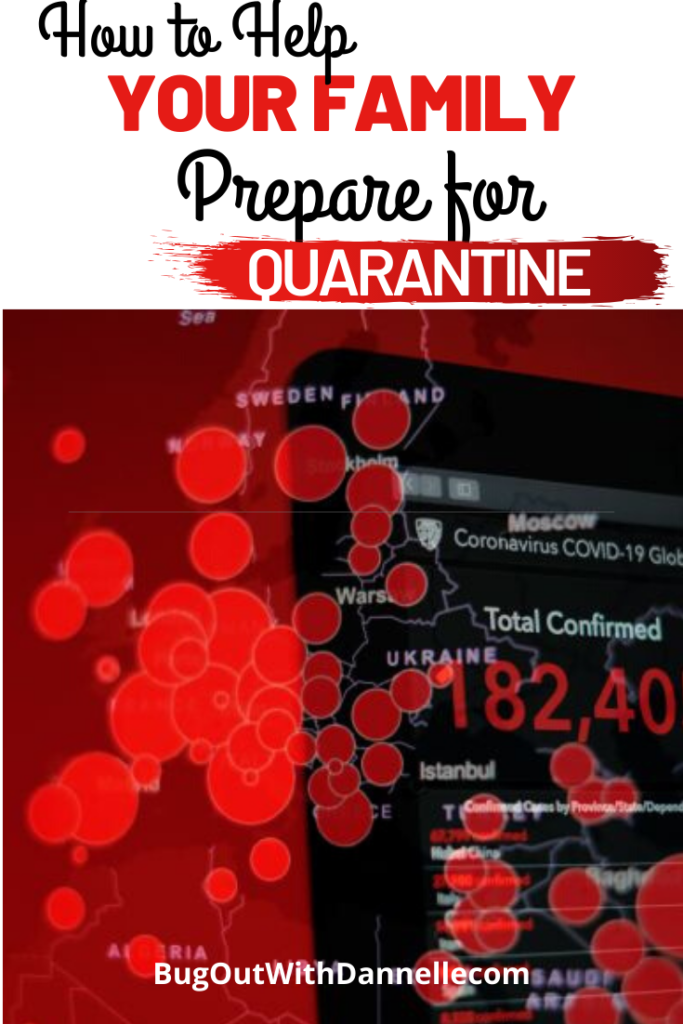
what is quarantine article for families cover image of mecial supplies

Panic Buying, the Real Problem

When a hurricane is predicted to hit an area and be a fairly nasty one. When a pandemic hits and locals schools and churches are closed. When a blizzard is expected. That is when panic buying starts to be a key factor in why prepping for disaster is a way to go.

panic buying

Panic Buying, the Real Problem

Let’s look at the COVID-19 Pandemic as an example: panic buying at its best. While you can do a quick Twitter search for the hashtag #Panicbuying and see for yourself, there is a huge selection of photos and videos on shelf clearing, physical fights over things like toilet paper, and hoarders. While the memes make you chuckle for a moment, if you take a second to think, it is sad and scary.

Panic Buying Definition

Panic buying occurs when consumers buy unusually large amounts of a product in anticipation of, or after, a disaster or perceived disaster, or in anticipation of an incredibly large price increase or shortage.

Yup – that is certainly what happened when people realized COVID-19 was a more serious thing than they had originally thought.

Panic Buying Effects

It screws up the balance of supply & demand and then leads to a major disruption of the supply chain. You would then hit empty shelves, and possible price gouging as stores know they have what you absolutely need and will probably pay what they ask for.

Yup – we saw this. A lot of empty shelves, and then places like Walmart raising prices on everything from toilet paper to ground beef.

Panic Buying Jokes

Sometimes you simply need to laugh. We were all scared, there was so much that was unknown, and the information we were living by changed every day it seemed. Humor came to our rescue.

Here are a few of my favorite jokes:

Ran out of toilet paper and started using lettuce leaves. Today was just the tip of the iceberg, tomorrow romaines to be seen.

Yesterday I ran out of soap and body wash and all I could find was dish detergent. Then it Dawned on me.

How did the health experts lie? They said a mask and gloves was enough to go to the grocery store. When I got there, everyone else had clothes on.

What do you call panic-buying of sausage and cheese in Germany? The wurst-kase scenario.

The grocery stores in France look like tornadoes hit them. All that’s left is de brie.

Some of the first things to vanish

Toilet paper.

Not a square can be found on any shelf, in any store. With the COVID-19 being a respiratory illness, that was surprising and something most stores didn’t see coming. Everyone knew the handsoap, hand sanitizer, and disinfecting wipes would vanish quickly, but the toilet paper was a stunner.

panic buying toilet paper

Medical supplies.

Think of what you need when you have the flu; things to help with an intake of fluids and rest. Gatorade, broth, juice, meds to help lower a fever, and Kleenex. These items were cleared out of stores quickly, along with any over-the-counter flu and cold medicines.

Meat.

People were grabbing multiple packs of ground beef and chicken. We saw one lady grab 12 packs of chicken! The poor guy in the meat department couldn’t get stuff on the shelves fast enough, people were taking it right out of his hands or out of the boxes he was pulling items from.

panic buying where stores limit amount of items to be purchased with signs

Canned Goods.

Spagettios, baked beans, and even soup seemed to vanish. Many stores started putting up signs that said “no more than 4 of each kind” to limit the hoarding and make sure everyone had enough to go around.

Bread.

Let’s face it, schools are out and sandwiches are the fast and easy fix for feeding the kiddos. Peanut butter and jelly are a quick go-to for most families, along with eggs and toast. White bread seemed to be the winner over wheat, vanishing faster than you could blink.

Panic Buying Costco

Even Costco was out of things like toilet paper – and soon put limits onto how much of certain items you were allowed to purchase. It took 8 months for the “limit of one” case of toilet paper signs to disappear.

So let’s make a list

Looking ahead, it pays to have an adequate stock of the things we already talked about. You can avoid the panic buying and fighting people at the stores to just pick up your weekly list. Granted, this makes a lot of sense to spread out over a period of time. It is easier on the pocketbook, for one thing.

  • Pain Reliever
  • Fever Reducer
  • Toilet Paper
  • Feminine Hygiene Items
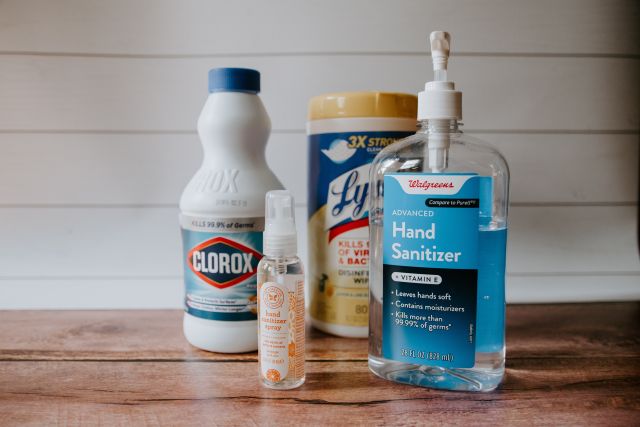
  • Hand Sanitizer
  • Disinfecting Wipes
  • Kleenex
  • Band-Aids
  • Rubbing Alcohol or Peroxide
  • Soap
  • Household cleaning supplies
  • Antacids
  • Canned Meat (easy to do yourself with ground beef and chicken!)
  • Canned Veggies
  • Canned Fruit
  • Canned Soups
  • Vegetable oil
  • Juice
  • Gatorade
  • Cereals
  • Beans
  • Lentils
  • Pasta
  • Pasta Sauces
  • Peanut Butter
  • Jelly
  • Dried Fruit
  • Nuts
  • Powdered Milk
  • Pet items
  • Candy
  • Supplies for Baking like: flour, sugar, baking powder, baking soda, brown sugar, powdered sugar

There are a lot of other things to consider, and if you join our mailing list? You will get a 52-week stock up plan that helps you build your inventory with a minimal investment each week. You will be prepared for the next big emergency and not have to worry about panic buying. You can stay home with your toilet paper and lookup #panicbuying on Twitter and enjoy and chuckle at the memes and craziness.

Other posts you may find interesting:

panic buying costco

Prepping: The Coronavirus Kind

Coronavirus (COVID-19) Readiness is all over the news right now, and justifiably so. With the new pandemic on the horizon, it is good to understand a little about it so you can adequately be prepared. Make sure you are ready for the Coronavirus Kind of problem.

how to survive the coronavirus

What is COVID-19?

Coronavirus disease 2019 (COVID-19) is caused by a virus (more specifically, a coronavirus) identified as the source of an outbreak of respiratory illness first detected in Wuhan, China.  

Early on, many of the patients in the outbreak in Wuhan, China reportedly had some link to a large seafood and animal market, suggesting animal-to-person spread. However, a growing number of patients reportedly have not had exposure to animal markets, indicating person-to-person spread is occurring.

While Fever, Cough, and Shortness of breath might not be a huge issue for most of us, those young, old, and with compromised immunities are the ones having the issues. This has proven fatal for them, and we have seen our first death by this virus on US soil.

Prepping: The Coronavirus Kind kleenex and tea on nightstand

The most common symptoms of COVID-19 are fever, tiredness, and dry cough. Some patients may have aches and pains, nasal congestion, runny nose, sore throat or diarrhea. These symptoms are usually mild and begin gradually.

Some people become infected but don’t develop any symptoms and don’t feel unwell. Most people (about 80%) recover from the disease without needing special treatment. Around 1 out of every 6 people who get COVID-19 becomes seriously ill and develops difficulty breathing.

Older people, and those with underlying medical problems like high blood pressure, heart problems, or diabetes, are more likely to develop serious illnesses. About 2% of people with the disease have died. People with fever, cough, and difficulty breathing should seek medical attention.

How to Prevent Coronavirus

There is currently no vaccine to prevent Coronavirus disease 2019 (COVID-19). The best way to prevent illness is to avoid being exposed to this virus. However, as a reminder, CDC always recommends everyday preventive actions to help prevent the spread of respiratory diseases, including:

  • Avoid close contact with people who are sick.
  • Avoid touching your eyes, nose, and mouth.
  • Stay home when you are sick.
  • Cover your cough or sneeze with a tissue, then throw the tissue in the trash.
  • Clean and disinfect frequently touched objects and surfaces using a regular household cleaning spray or wipe.
Prepping: The Coronavirus Kind woman's hands being washed in sink

Person-to-person spread

The virus is thought to spread mainly from person-to-person.

  • Between people who are in close contact with one another (within about 6 feet).
  • Through respiratory droplets produced when an infected person coughs or sneezes.

These droplets can land in the mouths or noses of people who are nearby or possibly be inhaled into the lungs.

Spread from contact with infected surfaces or objects

It may be possible that a person can get COVID-19 by touching a surface or object that has the virus on it and then touching their own mouth, nose, or possibly their eyes, but this is not thought to be the main way the virus spreads.

Coronavirus Symptoms in Dogs?

Viruses rapidly mutate, can cross species, and it might be the case here. We know the common cold can make our feline friends ill, so it wasn’t a surprise to hear that the pet dog of a Coronavirus patient in Hong Kong tested “weak” positive for COVID-19 and has been put in quarantine.

It was not immediately clear if the animal tested positive due to “environmental contamination” of the dog’s mouth and nose. Researchers suspect that COVID-19 spread to humans through an animal, but it was not clear what kind of animal transmitted the disease to people. The virus is now rapidly spreading from person to person.

Prepping: The Coronavirus Kind puppy looking sad

What does this mean for your fur babies? Keep an eye on them and make sure you take care of them if they display any respiratory distress.

Should you get a mask?

Save your money. These masks often need 3-4 professional fittings to make sure they are tight enough to the face for the correct results. And ideally? The masks people are running to buy are meant for the people who ARE infected.

It takes that six-foot radius of contagion down to about six inches. Even the CDC suggests healthy people NOT wear a mask, but avoid touching their faces, and wash their hands often.

Prepping: The Coronavirus Kind person in mask

Can someone spread the virus without being sick?

  • People are thought to be most contagious when they are most symptomatic (the sickest).
  • Some spread might be possible before people show symptoms; there have been reports of this occurring with this new Coronavirus, but this is not thought to be the main way the virus spreads.

How easily does the virus spread?

How easily a virus spreads from person to person can vary. Some viruses are highly contagious (spread easily), like measles, while other viruses do not spread as easily. Another factor is whether the spread is sustained.

The virus that causes COVID-19 seems to be spreading easily and sustainably in the community (“community spread”) in some affected geographic areas. Community spread means people have been infected with the virus in an area, including some who are not sure how or where they became infected.

Prepping: The Coronavirus Kind cold and flu suppliles

Clean all “high-touch” surfaces everyday

High touch surfaces include counters, tabletops, doorknobs, bathroom fixtures, toilets, phones, keyboards, tablets, and bedside tables. Also, clean any surfaces that may have blood, stool, or body fluids on them.

Use a household cleaning spray or wipe, according to the label instructions. Labels contain instructions for safe and effective use of the cleaning product including precautions you should take when applying the product, such as wearing gloves and making sure you have good ventilation during the use of the product.

The bottom line? Stock up on Chlorox wipes, and use a whole lot of common sense. If you have supplies for the common cold? You should be OK.

Other posts you may find helpful

Emergency Winter Car Survival Kit – with free printable

The North Shore Emergency Management Office of North Vancouver and West Vancouver has provided a list of emergency preparedness supplies and emergency survival actions if you become stranded in your car during a snowstorm. If these Winter Car Survival Kit tips are good for Canada, which is colder often than the US, they should more than work for us too!

Emergency Winter Car Survival Kit

Established in 1978, the North Shore Emergency Management Office (NSEMO) serves the Vancouver, Canada metropolitan area. Among its responsibilities are to administer volunteer emergency response teams, provide community education about preparedness for diverse situations that would endanger individuals or the population, and coordinate regional emergency planning.

Winter Car Survival Kit Tips

Two Means of Emergency Survival in Your Car in Winter Snow

The NSEMO website provides information on winter storm preparedness, including your best chance to survive being stranded in the snow in your car. There are two vital elements of survival. The first is preparation – the supplies to carry in your vehicle during a severe winter – and the second is taking the correct actions to survive in your car while waiting for rescue.

Supplies for Emergency Survival in Your Car in a Snowstorm

Winter Car Survival Kit checklist
This free printable checklist is designed to help you out – and has blank spaces for you to fill in

If you are aware of a coming storm, fill your car with gas. During winter, never let the tank go below half full. Here are the supplies suggested by NESEMO, embellished with some extra ideas to make a complete Winter Car Survival Kit:

  • Store extra clothing in your car, such as mittens that fit over your gloves, warm socks, a ski mask or wool hat, extra sweaters. Think of large size items that you can layer over what you are already wearing. Duplicate or even triplicate clothing items are important, such as snow caps and scarves. You can use the extras if the one you are wearing gets wet.
  • Wool stocking caps are particularly important, as body heat is quickly lost if the head is not covered. Caps can be layered just as easily as clothing: wear two or three, one over the other.
  • Blanket(s) or sleeping bag. Probably the only thing that will fit over your coat is a blanket or sleeping bag. Take a weighty, wool blanket or afghan.
  • Emergency “survival” blankets designed by NASA and made of mylar are said to retain 80% of body heat and are found on numerous websites.
  • Sturdy walking boots made to stay warm in snow and wet weather, with traction for ice. There are reasonably priced boots available that indicate the temperature they can withstand while still protecting from frostbite.
  • Keep a store of high-calorie non-perishable foods that can be consumed or melted in the mouth if frozen, such as raisins, chocolate, and energy bars.
  • Standard Emergency Kit including a flashlight, bright flag, or flares.
  • Water bottles can be stored in the car and kept from freezing by storing in a small cooler, packed with towels, and covered with the blankets you have on hand. Snow is not a good source of water, because it is 90% air and cools the body temperature as it melts.
  • The towels are also handy for wiping snow off the seat or drying parts of your body that get wet.
  • It is not a pleasant subject, but it is advisable to have a simple container with a lid for urine, which will add more warmth to the car. For women, a simple kitchen or auto fluid funnel can be helpful.

Correct Actions for Emergency Survival in a Car Stranded in Snow or Ice

It isn’t always about what is in your Winter Car Survival Kit. “Stranded” implies that it is too far to go for help. In sub-zero temperatures, it can be life-threatening to attempt even a small distance on foot, especially if snow is deep and walking is difficult. Here is a condensed version of what NSEMO recommends:

  • Stay in your car, except to check periodically to make sure your exhaust pipe is not clogged with ice or snow and to put up a flag on your antenna or another visible place. In modern cars with no visible antenna, be prepared with something to position a flag.
  • Turn on your hazard lights. In remote areas, be sure your emergency kit has flares. Light the flares.
  • Run the engine and heat every ten minutes each hour. When the engine is on, crack a (downwind) window slightly to maintain oxygen.
  • Turn on your dome light (ceiling light) and not your headlights to save the battery. Or use light from your emergency kit.
  • Exercise your extremities such as arms, legs, feet, and toes to maintain body heat and circulation.
  • If there are two people in the car, never sleep at the same time, or you may miss an opportunity for rescuers to find your vehicle.
Emergency Winter Car Survival Kit

Blizzard of 1997 Fatalities Due to Lack of Emergency Preparedness

Statistics from the blizzard of 1997 in Colorado and North Dakota, where one would expect people to be prepared, had the highest incidence of death due to winter storms. It was noted that many people did not take the dangers of snow and blizzard conditions seriously enough and drove on the weekend.

Fatalities from being stranded in vehicles were mainly caused by failed attempts to seek help and carbon monoxide poisoning. Males were more likely to die than females at a rate of over two to one.

A possible explanation given was that men might have been more likely to venture out in the storm and more likely to have left the car to seek help.

Emergency Survival in Your Car in a Snowstorm Preparedness and Caution

Common sense and following the advice provided by NSEMO are your best chance for survival in your car in blizzard conditions. Taking winter storm warnings seriously and, if possible, staying indoors, is the most important advice of all, but make sure your Winter Car Survival Kit is in place.

Other posts for winter survival that may interest you:

In Case of An Emergency Apps To Check Out

In Case of An Emergency Apps? Technology is on the rise each day, and we must stay up-to-date with its development has it has advantages to benefit our lives. There are millions of different things technology has given us, and we can certainly say they are worthwhile.

In Case of An Emergency Apps article  cover

So many times, we are affected by natural disasters, and lack of preparation allowed them to deal with us in the worst. Over the years, the relevant disaster preparedness management authorities have been trying to develop a plan to help persons better prepare and protect themselves. As such, invention of emergency preparedness apps has been created to help.

There are thousands of different emergency prep apps you can use though there are some more effective than others. We have done some research on a wide selection of these apps and can agree the following are top apps you may want to consider downloading…

10 Great Emergency Prep Apps

1. Disaster Alert

The Pacific Disaster Center controls this app by putting relevant and useful information and tips that persons can use to help prevent and/or protect themselves in case of an emergency.

There is a free as well as a paid version of this app, and it showcases a world map with icons indicating the types of disasters that are prone to a given area.

This app provides period updates about disasters such as flooding, pandemic outbreaks, earthquake, volcanic eruptions, and more. However, if you need more detailed information about your hometown, you may need to upgrade to a paid version. After all, a $12 fee might save you a lot in the near or far future.

2. Red Cross Ready

This app is excellent in the sense that it works whether you have a phone signal or not. It provides you with practical checklists, instructions, and updates on how to prepare for an emergency, what to do during, and the aftermath activities.

3. Earthquake

Get periodic updates from around the world as they are issued by scientific and research centers about pending earthquake disasters. This app provides quick alerts of pending emergencies in addition to information about pending tsunamis.

Factual information is provided by the NOAA’s National Weather Service, The Pacific Tsunami Warning Center, and the National Tsunami Warning Center. 

4. My Radar

The information provided by this app comes through the NOAA data stream and provides real-time updated maps of emergency events around the world. It also shows wind and ocean currents to keep you on guard for any impending conditions and strictly monitors incoming weather systems.

My Radar app provides exclusive information on temperatures and other similar climate conditions around the world.

5. Storm

This app is created by a team known called Weather Underground, which provides extensive information o storm advisories, various weather blogs, emergency alerts, and more.

Storm monitors the wind and current to send fast alerts of impending weather conditions. The accuracy of the information provided will help you to react accordingly to each disaster threat.

6. Red Cross First Aid

The Red Cross First Aid app is an excellent choice as it helps in guiding you on how to respond in case you get injured during an emergency. It details first aid information for issues such as broken bones, burns, asthma attacks, and other injuries. However, for other severe problems, the main recommendation is to visit a hospital soonest.

In Case of An Emergency Apps

7. WebMD

Have a medical emergency, and don’t know what to do until you get professional help? Then the WebMD app is what you need to have. It provides information on diagnosis, medical procedures, medication, and more.

Also, the WebMD app is efficient in allowing an individual to effectively diagnose a particular illness based on direct signs and symptoms associated with the condition being experienced.

The app has vital information on various brands of medication, what they are used for, and their potential side effects. You may want to get this app so you can prepare yourself for quick medical attention before an emergency strike.

8. Emergency & Family Communications

This app is, by far, one of the essential apps you need to have. When an emergency hits, forms of communication are affected, and you have no way of saying if your family is okay or not.

The app helps you stay in touch in getting updates from across town or from emergency management authorities. There are many other communication apps you can choose from to download.

9. Zello

Zello is an exciting app that allows you to communicate with friends, family, or your local authority through a pre-programmed system. The app will enable you to send out information even with low signal in the event of a disaster strike.

Though it requires WIFI to fully function, it is still operational in a low-bandwidth area, and any recorded messages can be retrieved whenever you get the chance. This app was one of the most downloaded during Hurricane Harvey that hit the United States a few years ago.

10. International Travel

Traveling abroad should not only include your fun activities for your vacation, as disasters can strike at any time. The Travel Smart app helps keep you posted on any pending emergency event based on your location, what you need to do, prepare, and how to respond during and after.

Though a Canadian-based authority created it, Global Affairs Canada, it should not be a barrier for downloading even if you are in another country.

The app has extensive information on historical emergency events for a given region, emergency preparedness tips, potential natural disasters, and much more. Travel abroad knowing you will be safe and your family kept in the know.

There are thousands of other apps you can choose from to keep you posted on emergency events around the world. However, these provide a more efficient and reliable service no matter the location you are. Your safety depends on you, and there are local authorities in collaboration with technology-driven entities, which have made it easier for you to achieve it. 

Other articles you may find helpful