Five Survival Tips for Females To Know

Survival Tips for Females? As the fairer sex, there are so many things we need to consider when looking at any kind of emergency situation. The thing is though, many of them are the same things we have to deal with on a daily basis so it cracks me up to read what the men have to say about it.

Five Survival Tips for Females article cover image of a woman doing karate

I was reading articles from other survival blogs and get frustrated with the men talking about us ladies. They talk about us like we are commodities and how they need to be concerned with taking care of women if we have to go through some type of SHTF moment or time period.

We are fragile little flowers that everyone seems to be concerned with protecting. They talk about veritable bubble wrap to keep us safe from bad things or bad men.

I don’t know if it is the conservative collective thinking we are all helpless, or if they believe that we all need to be kept in our place, but today – we are going to talk about survival tips for females. From a female.

Five Survival Tips for Females

Not everyone feels comfortable with lethal force. Add that to varying concealed carry laws across different states and it can be a little confusing to figure out the best way to keep yourself save and prepare ahead.

Stay Vigilant at All Times

This is something every young girl is trained on – almost as a right of passage. Sadly. With one of every three females experiencing a sexual violation of some sort, this is a serious issue. One in five is actually raped.

The target age of victims is between the age of 12 and 34, at least according to statistics that are reported. Twelve years old.

Isn’t that insane?

As women, we learn always be on the lookout for an attacker. We park near street lights, walk in a crowd, keep our keys between our fingers, look inside our cars before unlocking them, keep a noise/alarm handy like a whistle or our key fob.

Sound familiar?

It’s much harder to defend yourself when they take you by surprise – and we make sure to drill that into every upcoming potential victim, hoping that knowledge is power and the key to preventing it from happening to them.

Carry Nonlethal Weapons for Self Defense

This is where you are going to step it up a little bit! Stun guns, pepper spray, and similar nonlethal weapons should be used to fight off attackers instead of trying to fight unarmed if at all possible.

Stun guns

A stun gun usually has two prongs on the end of it that transmit a non-lethal dose of electricity through them. These stun guns are effective because they take advantage of how the human body actually works.

Your body’s cells use electricity to communicate with your brain and muscles. Sending an extra jolt of electricity through your body causes your muscles to contract and expand against their will.

This is ultimately harmless, but at the time, will be very painful and immobilizing for your attacker. The most common stun gun company is Vipertek, and they make many reliable and inexpensive stun guns available on Amazon.

Pepper Spray

The other most common form of self-defense is pepper spray. Pepper spray is, as the name implies, a spray infused with pepper and other chemicals, notably oleoresin capsicum, or OC.

OC is derived from cayenne peppers, and it works even better than tear gas, because tear gas won’t always stop victims who feel less pain, such as drunks and druggies. OC will cause temporary blindness and restrict the victim’s breathing, while not cutting it off completely.

The blindness will last at least 15 minutes – 30 at most. The burning feeling lasts 45 to 60 minutes, the coughing from it getting in your lungs lasts up to 15 minutes. These combined factors give you more than enough time to make your escape while your attacker is incapacitated.

One of the best companies for pepper spray is SABRE. SABRE is used by some of the largest police forces, including NYPD, LAPD, and Chicago PD. SABRE combines the tear gas mentioned earlier with the OC to create a perfect defense weapon.

It also includes a UV dye, so that the suspect can later be identified by holding up a UV light, without him knowing that he’s been marked. You can also get a pepper gel from SABRE, which works the same as pepper spray, but it sticks to your attacker, making it safer to use indoors.

Pepper spray may be a better first line of defense over the stun guns, due to the fact that they have a much longer range. Finally, there is the least common form of self-defense – a Taser.

Tasers

Taser is a company that makes an advanced, long-range version of the stun gun. Tasers are legal in 45 states, so make sure you check the legality of Tasers in yours. A Taser is a small weapon that fires two little prongs, much like the prongs attached to the stun gun, which stick into the victim and shock them.

For non-law enforcement consumers, the maximum range for a Taser is 15 feet. This is still plenty of room, and the Taser will lay anyone and anything out completely. It’s essentially a much more effective stun gun.

The only downside to the Taser is its price tag. A Taser will usually run you about as much as a regular gun costs. However, this does not stop them from being very effective pieces of self-defense technology and it’s perfect for those who have a moral problem killing another person, even in self-defense.

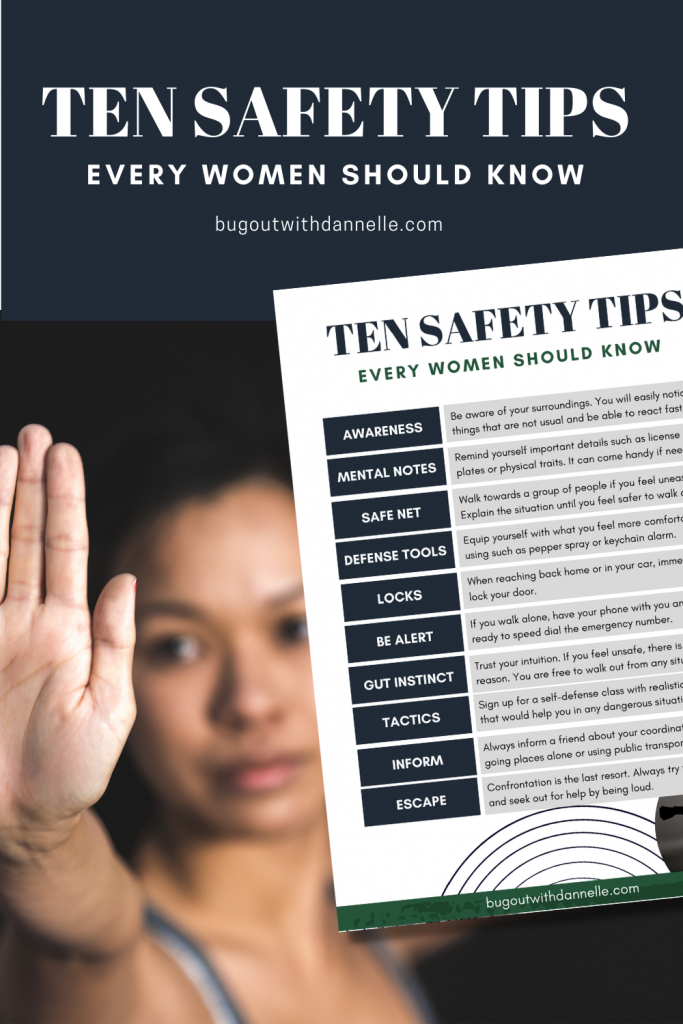
10 Safety Tips for Women

Get our FREE Printable info sheet that you can add to your binder. These are simple things that sadly, all females should know and be aware of for their own personal safety.
Survival Tips for Females

Survival Tips for Females: Take Some Female Self Defense Classes

What is the difference between taking a FEMALE self defense class and just taking a self defense class? A female class teaches you how to fight dirty, yet effectively to fend off people. It gives you hints and tips to work with smaller body size, smaller muscle mass, use your available environment as a tool, and so much more.

Shop local first

What kind of things will you learn besides someone standing there and telling you to scream or try to pee your pants?

  • How to attack with a hammer strike.
  • How you can use your car keys to defend yourself.
  • a good groin kick.
  • how a heel palm strike to try and break their nose.
  • Elbow strikes
  • How to escape from a ‘bear hug attack’, when your hands are trapped, and even how to escape from side headlock.

Going to a local martial arts training location can be beneficial as well. Some of the most effective martial arts styles for self-defense are Krav Maga, Brazilian Jiu-jitsu, and Muay Thai.

Krav Maga is the style used by the Israeli army, and is great for street fights. Brazilian Jiu-jitsu was developed for those who didn’t have the muscular power to perform traditional Jiu-jitsu effectively, making it perfect for the average person.

Finally, there’s Muay Thai. Muay Thai has become very popular as a self-defense technique, and for good reason. It’s heavily associated with MMA and UFC fighters. It’s a form of kickboxing that has been adapted to make use of the elbows and knees as well, hence the Thai nickname, “Science of 8 Limbs.”

Those are just a few things that you can learn from a local person – if you hunt out a Karate-type studio that has women only courses, or maybe check your local parks and recreation community guides.

5 simple moves that everyone woman should know

If there is nothing you can find locally that suits your needs, you might need to go online for Martial Arts Options for Hand to Hand Combat.

Sometimes you’re caught off guard without being able to defend yourself with weapons, so you have to teach yourself how to fight with your bare hands. There are many different ways to go about learning hand to hand combat, and there are a few that are most desirable for self-defense.

Udemy

One great resource is Udemy. Udemy is an online academy that, for a small price, will teach you anything and everything. Some lessons last as long as you want, and some expire.

Udemy offers a course on military style hand-to-hand combat for only $20. It includes 24 lectures, 6 hours of video, lifetime access, and a certificate of completion. This course is designed to teach you how to take down opponents who would normally be the winner in a fight, military style.

Book it

There are also many books that will teach you these fighting skills. They can be found on Amazon at a relatively cheap price and can be a wealth of information. One great book is 100 Deadly Skills, by Clint Emerson.

This book employs Navy SEAL tactics to fighting hand to hand, fighting armed opponents, and everything else. Clint Emerson is a retired SEAL who took to teaching others how to use the same strategies he used to fight overseas, and his book is available for $22 on Amazon.

Similarly, you can buy the USMC Martial Arts program for $15 on Amazon. This book teaches you how to use everything: knives, improvised weapons, and of course, your hands.

Martial arts should be trained with often if you intend to have to use them in a self-defense scenario. If not practiced regularly, your skills can quickly become rusty and cost you your life when the SHTF.

How to Handle Your Menstrual Cycle During Survival

With self-defense covered, it’s time to talk about nature. Sorry ladies, our periods won’t stop because it is inconvenient for us. It can also be a hassle to stock up a lot of tampons/pads for a SHTF scenario or even for bugging out. This really is one of the Survival Tips for Females that needs to be addressed.

We do have a few options that are available to take up less space, be less disposable, and make this a little easier. Who wants to be slowed down by our own bodies?

The disposable inventory isn’t even the largest problem, the problem is the fact that you have to dispose of those items. When on the run, or if you are limited to things like a composting toilet, you are going to run into issues long before your inventory runs out.

Let’s look at some options:

Reusable is the key – it saves you a lot of space in your prep stash, is easier to take on the run, and more eco-friendly.

First things first – reusable pads.

Five Survival Tips for Females - How to Handle Your Menstrual Cycle During Survival with reusable pads

Not only will these pay for themselves in two to three months, you will never have adhesive sticking to your nether region again. (ouch!)

There are a ton of cute options – but aim for a reusable pad kit that has a few different sizes, a container of sorts to keep them all together, and some kind of wings with a snap closure. After all, we don’t want leaks and we want them to stay in place!

These can be healthy and eco-friendly at the same time without all the toxic chemicals added to the disposable varieties. I am a fan of bamboo. Bamboo charcoal fiber is soft and natural, it is very easy to clean and dries quickly, so it will not produce peculiar smell or harmful ingredients, reusable and washable. I like this kit HERE.

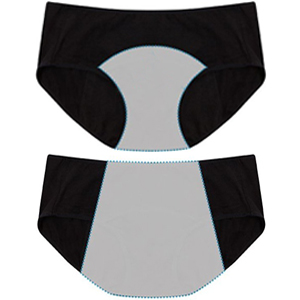
Period Panties
Five Survival Tips for Females - How to Handle Your Menstrual Cycle During Survival with period panties

If pads aren’t your thing, Just try the underwear that is designed to act like them, but be a lot more comfortable.

Again, they are usually a bamboo fabric and you want to look for full coverage area from the front to the back. This helps when you are active or sleeping and helps keep you safe of any leakages.

These are ideal for light days but are not meant to replace pads or tampons for a normal period or heavy flow. They usually have an absorbency up to 18ml. You can see some HERE.

If you hunt them out – you will find some that boast 4 tampons’ worth absorption to lock in menstrual flow. Personally, I would want to test them out before a SHTF scenario. You can see the brand I am looking at HERE.

These would also work well for incontinence issues.

From a verified purchase review:

Let me just start by saying these are amazing!!! If you are a plus size woman and you are looking for a pair Period panties these are the ones! I ordered one size up than I probably shouldn’t have and they’re actually a little big but they’re comfortable I wear between a size 18 to 20 Jean and a 2X is about perfect. I have tried one other brand of period Panties and they just didn’t quite fit right didn’t get the right coverage but these are awesome and they’re so soft. They make that time of the month just a little bit nicer. Also they don’t make like a weird rustling noise they feel like regular fabric. I will definitely buy them again.

A menstrual cup

Five Survival Tips for Females - How to Handle Your Menstrual Cycle During Survival with menstrual cup

What a lot of people fail to mention is that usually these are only ideal for women between the ages of 19 and 34, who haven’t given birth vaginally.

Y’all know how many females that doesn’t include?

Lots.

There are a lot of brands besides the Diva cup, but that seems to be the best known. Regardless of which brand you choose, a menstrual cup is an eco-friendly, cost-effective, durable, and chemical-free vaginal cup that will save you both money and time.

By switching to one of these you will no longer produce 300 pounds of waste, which is about how much an average person creates in a lifetime using disposable feminine hygiene products. This also means no more spending tons of money on pads and panty liners, since these menstrual cups last up to a year– some up to five years.

Whichever one you choose to try, make sure it has a simple to grip for easy removal. If you ever had a diaphram, you know how fun it can be trying to get it out of you when you are a rookie.

Practice with your cup before you just pop it into your bug out bag – it really isn’t something you want to learn on the run.

Prepare Yourself Mentally

In any survival situation, whether you’re in a self-defense scuffle or lost in thick woods, the most important factor remains the same – your mental state. As long as your mind is sound, you will have a much easier time surviving whatever situation you’re in. This is huge when looking at Survival Tips for Females.

Get in the right headspace

In fact, this is the first thing that you’re taught in the US Army Survival Manual. This field manual can be bought in full on Amazon for about $13. The strategy for mental stability that you learn first in this book is S.U.R.V.I.V.A.L., which stands for Sizing up any situation that you’re in, Undue haste makes waste, Remembering where you are, Vanquishing fear and panic, Improvising when you need to, Value-based living, Acting like whatever natives do in the area, and Learning basic, necessary skills.

Doing all of these things will ensure that you are both confident and mentally stable during stressful situations. Many sources consider mental preparedness to be the most important factor between life and death.

WWII and Korea veterans who had to survive the wild and hostile environments of the jungle and forest swear by the effectiveness of being mentally prepared. The main disadvantages of being stressed and freaked out during these times are plentiful.

First, you’ll be less efficient. If you’re confident and feeling good, you’ll get to work on finding food, water, and making shelter – or in a threat situation, protecting your life. However, if you spend your time freaking out and panicking, you’ll barely get anything accomplished, let alone accomplished effectively.

Save your energy

Second, you’ll have less energy. If you’re calm, you won’t waste much energy and will be actively thinking about preserving yourself. If you panic, you may find yourself pacing and wasting time and energy.

This will help you conserve water, food, and other resources. If you aren’t thinking and you’re blowing through everything, you’ll probably run out of water before you know it. This also has an effect on basic self-defense.

Doing what needs to be done

For example, if you keep a level head during a fight, you can probably get the upper hand on your opponent – especially if they’re inexperienced. The most important thing you should mentally prepare for in self-defense is the reality that you very well may have to kill your attacker.

For many, this idea is horrible – having to take another human being’s life. You should prepare for this kind of mental anguish in the event that you actually have to take major action that could result in the death of your attacker. Being mentally prepared is more worthwhile than being physically prepared.

Five Survival Tips for Females be the beast you are woman ready to bug out

The bottom line with Survival Tips for Females?

We aren’t fragile little flowers that need to be protected from the boogey men. We have the ability and skills available to make sure we can handle ourselves in any situation. Like everything else, it just means taking the time to be prepared. Be the beast you can be!

Other articles you may find helpful:

Guide to Surviving a Terrorist Attack

Surviving a Terrorist Attack? The threat of a terror attack continues to be a major concern and has proven that it’s a very real threat. You never know where or when one will strike. The most important thing that you need to do is to make sure you’re prepared so that you know how to survive one.

Guide to Surviving a Terrorist Attack article cover image that shows a bomb going off

While preparation is key, it’s also important to know what to do as an act of self-defense right at the moment, because it can mean the difference between life and death. Sometimes you’re not caught with your gear at hand, so how do you handle a terror attack using a self-defense mindset?

Guide to Surviving a Terrorist Attack

The best thing you can do is stay aware of your surroundings. If you see someone suspicious, get out of the location. Notify authorities if you feel compelled to. Watch for unattended bags or boxes, and listen for people shouting before an attack so you can flee immediately.

Surviving a Terrorist Attack: an Explosion

When an explosion happens, it can be nerve-wracking. The sounds of the bomb, shattering glass, the rocking of buildings, and the screams of people can render you immobile.

But that’s the one thing you don’t want to be in an explosion – paralyzed by fear and confusion. When there’s an explosion, it’s the pressure of the object you’re hit with that can injure or kill you.

This video covers how to survive a building explosion

Projectiles and shrapnel fly through the air with rapid force. In the event of an explosion, the first thing you should do is take cover if you want to find yourself Surviving a Terrorist Attack – especially if the place you were in took the direct hit.

You don’t know if there’s going to be a second explosion where you are, and you might not be able to see through the dust and chaos to know whether or not the responsible party is waiting to pick off survivors.

Everyone’s instinct is to run from explosions but how you run away from the event does matter. Keep your head down and make tracks until you reach a place that’s going to offer you some protection.

If you’re inside a building that was weakened by an explosion, you must get out because the building could collapse. But don’t make the mistake of running right out in the open.

Keep yourself close to other buildings and stay down to make yourself less visible as a target. Head for another building if you can and look for the strongest point of the building.

If you can’t escape the building that you’re in, find the strongest point of the place that you’re in. You must keep calm and not panic if you want to survive. Panic after chaos works against people.

If you’re with a group of others, try to make sure everyone remains calm and works together. For those who are injured, set up a triage area to make sure they get help first. If you’re injured, take care of your injuries or get help. Group panic can hamper you Surviving a Terrorist Attack.

Your chances of surviving a chaotic explosion lessen if you pass out from injuries or loss of blood. Locate the exits if you’re inside a home or building so you’ll know how to get out when you’re ready.

If you can’t get out, once you get to a safe point in the building, do not go near the doors or any of the windows. If you’re inside an office building and there’s an explosion, the debris and fire could cause secondary injuries.

You’ll want to cover your mouth using whatever is handy so that you’re not breathing in that dust or anything that could have been associated with a biochemical attack. Once you’re in a safe place, remain undercover until you know for sure it’s okay to leave.

free shipping banner

Surviving in the Middle of Gunfire

It only takes one hit from a bullet to a vulnerable spot of your body to end your life. Yet people have managed to survive horrific situations involving gunfire throughout history by following survival tips.

This isn’t new to any grade-school child in America. They have constant drills for “code black” constantly because sadly, there have been too many active shooter scenarios on their turf.

The second you hear gunshots, try to locate an escape route. Even if everything is confusing, try to take a second to know where the shooter or shooters are and go the opposite way.

Don’t assume that there’s only one person doing the attack. As you make your way toward an exit, don’t run away in a panic. Instead, go as quickly as you can, keep your head down, and stay out of sight as much as possible.

Trying to escape might mean not following the crowd of screaming people. When people are screaming and making a lot of noise, it lets the shooter or shooters know exactly where they are.

In the event that your escape routes are blocked, your next best bet is to find a place that you can hide and stay until the threat is over. Look for a place where you can get completely out of sight.

That might be a location such as a room you can lock, a janitorial closet, a bathroom, a break room, a walk-in refrigerator, or in an office. Once you get inside the room, you’ll want to block access to the door.

While you’re in the room, quietly add layers between you and the door. Keep your head down and lie flat on the floor. If it comes to a point where you must escape from a safe room and run, constantly be aware of your surroundings.

If you get cornered, fight back with whatever you have on hand such as a computer monitor, desk items, and anything else you can throw or beat the assailant with. For shooting cases in large public places such as a mall, use whatever you can reach to defend yourself if you have to.

Never make a move blindly. The shooter or shooters are actively searching for victims. If you run directly into his path, you could be next. If you can’t see where you’re going, don’t go that way.

If you barrel through a door without checking first, the shooter could be on the other side. When you’re in the middle of gunfire, don’t take the time to call anyone except emergency authorities.

You can’t think clearly when you have a sobbing loved one crying in your ear. Keep your phone off so it doesn’t distract you or call attention to your location. Save yourself and not your possessions.

You need your hands free. If you’ve been shopping, let go of your bags so you can run unencumbered and have your hands free to fight back if necessary. If the worst-case scenario occurs and you happen to end up in the shooter’s line of fire and you can’t fight back, then you must run.

To keep yourself from becoming an easy target, never do the expected – which is to run in a straight line. Run from side to side in a zig-zag line, and try to keep objects between you and the shooter. That is the easiest way to surviving a Terrorist Attack when there is a shooter.

Surviving a Dirty Bomb

Most people associate a dirty bomb as being the exact same thing with the same impact as a nuclear bomb, but they’re not the same. A dirty bomb can contain nuclear material but has a shorter blast range.

When a dirty bomb is chosen by a terrorist, the goal is to cause panic as well as kill, but the widespread devastation isn’t as big as a nuclear bomb. While the material inside can be radioactive, it can also be created with explosives like C-4 or dynamite.

The radioactive content isn’t usually what kills people with a dirty bomb – it’s the pressure per inch that’s caused by the explosion that maims or kills. The closer you are to the actual bomb, the more likely you are to sustain an injury or die.

CNN’s Deb Feyerick reports on how to survive an improvised nuclear device attack.

In the event of a bombing, if you’re able to, you need to put as much distance between yourself and the explosion as possible. The more distance you put between you and the bomb, the more you lower your risk from radiation exposure.

Never run with a crowd. What happens with some dirty bombings is that terrorists want to strike a second time and they want to hurt as many people as possible. So the more people that you’re around, the higher your chances are of going through a second attack.

Leave the crowd behind and get away from the point of impact. Because terrorists are known to hide other explosives to create more fear and confusion after an initial bombing or to hurt responders, don’t go near any unattended bags, packages, or vehicles that are near where the bomb went off.

If you’re having to leave a building, be careful to watch for the sudden collapse of that building or ones nearby. Stay away from buildings that have been affected by the explosion so that you’re not hurt in the event of a secondary incident or by debris falling to the ground.

Keep going until you’re someplace safe before you worry about calling anyone – and that includes the authorities. If you stick around in the immediate area and try to call, you could make yourself a target.

Reconnect with your family and friends who were not at the shooting location at a different place by using your emergency plan to meet up. Facebook now has check-in measures for disasters so you can let everyone know you’re okay.

Surviving a Nuclear Bomb Attack

Surviving a Terrorist Attack that involves a nuclear bomb? I know – it seems like it would be impossible. I look back to my grade school “duck and cover” drills and think how they simply gave us the illusion of control – but would never have really helped us.

A vintage “duck and cover” video for school children

You can survive a nuclear bomb attack if you’re prepared and know how to react when one hits. A nuclear bomb doesn’t just kill a few hundred or a few thousand people. It can kill millions and wipe out entire cities.

The fallout from a nuclear bomb strike is what can continue to injure people. After a nuclear bomb strikes the damaging radioactivity from the bomb is spread beyond its point of impact and anyone within range of the fallout is subject to radiation poisoning or death.

The pressure wave from a nuclear blast can disrupt air transportation, radio waves, and communication abilities. It can level buildings and create fires from that destruction. The first thing you need to know is that certain areas are more at risk of experiencing a nuclear bomb attack than others.

Cities with a military presence are at greater risk. So are port cities. State capitols and anywhere important government buildings and infrastructure exist are at risk. Airfields and power plants are also high-risk areas to live near.

To survive a nuclear attack, there are three things you need to do. Run, shelter, and avoid. You must run to get away from any potential radioactive fallout. Find a safe building or structure and get inside of it.

But make sure this place is not within the range of the nuclear fallout. If you remain in a contamination zone, you’re at higher risk of not surviving the bomb after effects. Once you’re inside, remain sheltered there until it’s safe to leave again – which is when it’s considered safe from fallout radiation.

The closer you are to the bomb, the less likely it is that the area will be safe until many years have passed. Consider the Chernobyl disaster which occurred in 1986, yet, there are still areas where the government has closed it down and deemed it unlivable even after all these years.

If you come in contact with anything that was touched by the bomb such as building materials, debris, shrapnel, immediately take a shower. If you’ve prepared in advance and know a nuclear bomb went off nearby, get into your fallout room.

This should be a room with walls designed to prevent radioactive material from seeping through. Make sure your room is stocked with the survival supplies that you need such as food, water, medication, and first aid items – especially items needed to treat burns from the radiation if needed.

Never build a fallout room that’s near an outside wall. You’ll want your fallout room to be away from the outside walls. Seal off any vents, windows, and anything else that will allow material to seep in.

Avoid contamination. You’ll need to remain inside your shelter for a minimum of four days – but it may be longer, depending on your proximity to the blast site. Don’t allow anyone to come in if they’re contaminated.

Surviving a Biochemical Attack

Terrorists are always looking for ways to cause the most deaths possible. One of these ways is by striking with a biochemical attack. By using biochemicals, terrorists can slip under the radar until after the event occurs.

One of the ways that terrorists strike using this method is by attacking a major water system. Once the contaminant is introduced, it can travel widely and affect a great number of people before anyone realizes what’s wrong.

In the case of a biological or chemical attack, quick thinking can keep you safe

An entire city can be caught in the grip of this type of terror attack within just hours. They might target your water supply or some sort of food supply. It’s not simply the water supply system that’s vulnerable.

Anything that can be used to quickly spread a hazard, such as air vents, can be used. In the event of an attack, you need to make sure you stay away from highly populated businesses and avoid crowds.

That means don’t go to the mall, the grocery store, or anywhere there will be a lot of people – including public transportation such as the subway. Most people think fleeing is the right thing to do, but everyone is going to have the same idea.

The more people flee, the more the biochemical has a chance to spread. Immediately after an attack, make sure you’re sheltered in a safe place. Don’t use any water that comes from the public utility.

Instead, use the water that you’ve set aside in your survival stash that you’ve had for a while. This is why it’s important to plan ahead. Since water can be safely stored for years and you can’t survive without it, it’s wise to set aside a lot of it.

However, if a strike does happen, make sure you boil water that you use for any reason and that includes bathing. Listen to authorities to find out when they give the all-clear for any kind of terror attack. You should be ahead of the game for Surviving a Terrorist Attack.

Other articles you may find helpful:

Everything About Permaculture Garden Life

While this might seem like a post we should have on our garden site, it really belongs on THIS site as a permaculture garden helps you create a sustainable food source when grocery stores are not an option. It is a long-term emergency food source.

Everything About Permaculture Garden Life article cover image with a great garden

It is necessary to know how to feed yourself – and your family in a SHTF situation. It doesn’t matter if you are planning to can food for storage, or eat as you go, but the concept of a permaculture garden is great to wrap your head around

What Is Permaculture?

We live in an increasingly industrially reliant culture.  A culture that relies on fast food, disposable goods, and cheap gasoline.  A culture that is fast eating itself up.  Enter Permaculture. 

Permaculture is another way to look at the world and its resources.  We’ll look at just what is meant by permaculture, the history of this conservation movement, and meet some of its originators and the future of Permaculture.  You may find that you are already applying some of the basic tenants of this small but growing movement.

Permaculture, as you may have guessed, is a contraction of the words permanent culture.  The idea is that we rely more on sustainable agriculture not dependant on fossil fuels. 

What does permaculture use?

It will use local resources, smaller more diverse crop planning, non-chemically dependant fertilizing, for example.  Permaculture is a movement away from anything big and industrial to the smaller and sustainable farms, encouraging more interdependence with community members.

It all began in the ‘70s by a wildlife biologist and ecologist named Bill Mollison of Australia.  He saw the growing monster of the Industrial Revolution and its impact on our culture. 

How this kind of culture was bound to eventually cave in due to its monstrous appetite.  Rather than reacting in a negative way to this, he instead decided to take a more positive approach. 

By studying nature, he came to several conclusions about how nature goes through sustainable cycles without the benefit of man.  Bill began to live and then to teach his philosophy.

Another man who has silently built up a following in this movement is Masanobu Fukuoka.  He believes that you should disturb the soil to an absolute minimum.  Seeds are planted right on the soil’s surface and then lightly covered with straw or other light mulch. 

Weeds are trimmed before the flowering stage and allowed to become part of the mulch.  This kills unwanted vegetation without poison and gives a favorable soil in which to plant.  In time the soil becomes healthy and weeds and pests become less of a concern.

Ruth Stout is another voice in this community.  Her ideas about “no-till” gardening have caused many to change their views about weeds and weeding.  Similar to Fukuoka, she purported to never need to weed but allowed plants to grow together. 

All vegetation, both “good” and “bad,” builds the soil which leads to healthy crops which means fewer pests.  Once the soil is built weeding becomes as simple as flicking out the weed.  All without chemicals and pesticides.

A practical example, of permaculture design, in use. The sheep graze around the bee boxes, and the chickens break up the pest cycle.

From its small, quiet revolutionary beginnings, it is apparent that permaculture will have to be embraced to a greater or lesser degree.  Pollution due to industrial waste and mass transportation systems are on their way down memory lane.  It will cost too much to ship in food from across the country so it makes more and more sense to buy food grown locally or grow it yourself.

Permaculture as a basic philosophy has grown and spread its less intrusive approach to living on and using the earth.  While nowadays it seems to be associated with second and third generation “hippies,” even Urbanites practice it by growing a garden for vegetables and tossing the trimmings back on the beds.  Yes, permaculture, in all its varied philosophies will impact our lives – for the good.

The Core Concepts of Permaculture Garden Design

Understanding any subject that’s new to us, helps to dig into its key concepts. Understanding permaculture in its basic sense will help people to perhaps see how some of its elements can be applied in their own life. 

Specifically, we will deal with, sustainability, minimal disruption of soil conditions, and interdependence with our neighbors.  Let’s begin by talking about how permaculture contributes to the sustainability of the earth’s ecosystems.

David Holmgren’s 12 principle version which are used to help guide every Permaculture design.

It isn’t by accident that permanent is part of the term permaculture.  Here we have a way to work with the way nature works not in a forced, mechanized way of modern times.  When you use hand tools and human labor, you don’t need to depend on fossil fuels. 

Naturally built-up soils don’t support disease and pests so you don’t need petroleum-based pesticides and fertilizers.  When you don’t remove the unused part of the plant but just lay it back down on the soil to mulch you reduce labor and eliminate the need to amend the soil.  Mulching aids water retention and thus reduces the need for water. 

The ultimate in sustainability is when the end of year harvest comes, you allow several plants to go to seed.  Then you can cut down the dying foliage and seed heads and lay this on the ground with the mulch which will go on to seed for next year’s crops.  This like the other core concepts is the hallmark of permaculture – giving back to the land everything but the fruits you consume.

Another core concept of a permaculture garden is the idea of soil conservation and minimally disturbing the soils in which we plant.  Permaculturists will use hand tools rather than tillers and tractors, which does several things to harm the soil.  Heavier equipment compacts the soil, which makes the ground more difficult to use. 

It is a fact that intensive gardening increases crop production 10 fold when soil is not compacted and the soil is left loose and friable.  This way we can get 10 times more production out of the same amount of land – which translates to 10 times more food available to feed the population of the world.  No more food shortages.  It may be hard to believe that we can get more production out of less land by eliminating machinery, but permaculture has proved this time and again.

A final key concept of permaculture is rebuilding the community.  Because of our industrialized society, we have become detached from each other not just as a family but also as a community.

This causes us to turn to government and corporations to fill our needs, which causes lower quality food because of the need for mass production, as well as diminishing the local job base, and creating more of a need for outside energy input.

If you buy raw milk from the dairy down the road, beef from your neighbor, and vegetables from the local organic farmer, you not only provide work for them, you also get higher quality food, with less fossil fuel input. This creates a sustainable loop of profitable work, quality products that we actually need, and utilizes local sources.

In an increasingly global economy suffering from constant disruptions in the job market and food chain, this is the future we must work toward for our children and grandchildren. To create a “permanent” culture, we must strive for sustainability, minimal disruption of the soil, and interdependence, and shared resources. 

How to Grow a Permaculture Garden

While we may not be able to make large changes, a whole lot of little changes can add up to a revolution.   A small way to make a big change is to grow a garden using permaculture techniques. 

What makes a garden small permaculture?  You can learn about garden preparation tools and techniques, how to plant and tend to a garden that is raised sustainably.  It takes far less time to garden in this way than you may think.

The idea behind permaculture gardening is to use only hand tools and minimal human labor.  The only tools you’ll need are a shovel, rake, and small trowel.   The idea here is to not disturb the soil any more than necessary. 

Tilling the soil will introduce too much oxygen, which acts to kill the soil organisms that live on and around plant roots.  This allows for weeds, which are less “picky” about the soil in which they grow. 

Plot preparation can be as simple as layering a mat of cardboard or thick layers of newsprint where you plan to plant.  If the weeds are well established, cut them down before you layer the cardboard. 

There’s no concern here about existing vegetation as the thick cardboard mulch will kill the weeds.  So, we have eliminated dubious chemicals and poisons from your garden shed. 

On top of this, you will layer 6 to 12 inches of straw laid out in rows so you can walk between hills.  Here the idea is to keep the rows no wider than you can comfortably reach from both sides.  Notice we didn’t till, dig or poison the garden plot.  It is so much simpler to use permaculture garden techniques in your garden.

Everything About Permaculture Garden Life

To plant seeds, you can sprinkle them right on the soil’s surface in most cases.  Then pull any mulch over this.  The mulch acts to help the soil retain moisture so you don’t have to water as often.  The mulch gradually breaks down and adds to the soil, as the seeds germinate and grow.

Planting starts like lettuce is easy as pulling back the straw, poking a hole in the cardboard, placing the little plant in, and pushing back the straw.  This works even in heavy soils.  Allow the greenery of the plant starts to barely come above the mulch, even gently pulling off an older leaf to stimulate growth.

When it comes to weeding, it is a simple matter of snipping the emerging greenery and leaving it to add to the mulch.  The idea is to not let the weeds go to the flowering stage where they would quickly go to seed. 

At the time of harvest, you take a head of lettuce, for example, and would just cut the head off and leave the roots.  The lettuce will continue to produce some leaves till the first frost that you may continue to harvest and use. 

Over winter the roots will die and add to the soil.  When harvesting beans or tomatoes, you take the fruit; pull the greens and leave to break down with the mulch.  No composting this way and no waste.

Learning permaculture is possibly one of the most responsible skills any homeowner and gardener could learn and as you can see it isn’t like learning rocket science.  Take a strong back and a rake to the garden next spring.

Increase Your Insight With Permaculture Courses

Anyone desiring to educate themselves in skills in how to “go green” would want to add one more course to their roster: permaculture.   Here you will learn the world-altering techniques of how we can change the course of mankind just by a few simple changes in how we work in the landscape. 

By taking classes on permaculture you would benefit from lessons learned from nature, the ecosystem, and how we humans act to work with it all.  You can avail yourself of books, community college courses, and on-site laboratory type classes.  Any way you look at it, you can learn just how you can become part of the solution.

Starting a garden that is efficient and uses no artificial inputs and chemicals can be challenging. We speak to those challenges here.

Many books have been written on the subject of permaculture and its variations.  “The One-Straw Revolution” by Masanobu Fukuoka, is a “bible” to many students of permaculture.  This man, like his peers, quietly went about doing or mimicking what he saw in nature.

Ruth Stout wrote the “No-work Garden Book” an amazing look at how one woman proved how simple and sensible permaculture gardening is.  While her neighbor’s plants died of frosts, hers survived due to the insulated type of mulching she practiced in her garden.

From time to time, local colleges offer non-credit courses on topics of interest to the members of the community.  Permaculture is fast becoming a popular evening and weekend course offering.  Just check your local community college to see if yours has anything along those lines.

Yet another choice for the more “physically inclined” is to participate in a hands-on internship type program sponsored by one of many eco-village type co-ops.  Here you are instructed by those knowledgeable in their field and you get to get practical, hands-on experience. 

You can choose to stay a week or a month or more as you volunteer on the land.  Often you will work side by side with veterans and activists from all over the world. Here, you will be part of whatever process is going on at the time you participate – from plot planning, soil prep, and planting, to ongoing garden maintenance and harvest. 

It’s very likely you’ll eat of the produce of your labors and even participate in its preparation.  You will be part of a group that has the satisfaction of knowing they’re keeping the seeds of change alive. Take a look on the Internet for permaculture communities and co-ops to see what choices are available to you.

The Benefits of Being a Permaculture Activist

When you know something is a good thing to do, it’s hard not to take an active part in the process and promotion of it.  Permaculture, while a very quiet and rather peaceful group of people, has its voice too.  Take a look through the following list to get an idea of what benefits there are to participating as a permaculture activist:

  • Knowing that you are part of important work – something bigger than yourself.  Taking care to work with the intelligence of nature and the built-in wisdom of the earth, we can affect positive changes a little at a time.
  • Knowing you are providing a sustainable future for your children and grandchildren—instead of living in a short-sighted way for today and now, we can be a part of our children’s future by low impact living, gardening, and responsible use of resources.
  • Being part of a group that stands for less dependence on foreign oil and using domestic oil in a more responsible way—no need for the expensive fossil fuel-guzzling trucks and machinery when you use permaculture garden techniques.  
  • Encourages less pollution due to less dependence on trucks used in the transportation of food as well as equipment that uses fuel.
  • Being a voice in your community and eventually, your state government can have a ripple effect once people realize it is not just an odd movement by “earth muffins” but a true and sensible way to live.
  • Allows you to participate in a true revolution that positively affects the community and the world —growing your own food is a satisfying pursuit and gives real power into your hand knowing that you can look out your back window and see your family’s food source right in your own yard.
  • Actively striving for better quality food—it makes sense that the food you grow on your own land will have better quality nutrition not to mention taste.  You have more control over what goes on and in your soil.
  • Being ready to take a lead in your community when difficult times do come.  Your knowledge of permaculture will be at the very core of the survival of whole neighborhoods and surrounding communities.

While permaculture won’t rock the world, it can quietly infuse and give hope to those who have so long lived in a selfish, push-button, disposable world.  You can be part of the biggest little movement in modern times.  And when the time comes, you and your children will be part of raising human awareness and education of men and women that survive the fall of the Industrial Era.

Other articles you may enjoy:

The Firestarter Tool We Like the Most

When looking at survival gear, a good Firestarter tool should be at the top of the list. Being able to start a fire can save your life during a survival situation. You can use the fire to keep away bugs and predators, boil water, cook food, and stay warm. However, you can’t always carry around lighter fluid and a lighter.

The Firestarter Tool We Like the Most picture of a roaring campfire

We found a survival fire starter kit that is small enough to keep in the glove box of your vehicle, and is light enough to haul in your bug out bag. Better yet? It is a name we trust for great quality: Gerber.

The Firestarter Tool We Like the Most

Since 1939, Gerber has masterfully hand-crafted knives, tools, and equipment, in the Portland, Oregon facility – pioneering an industry and honoring a heritage. Local ingenuity and American spirit collide within these walls – where iconic products are born, tested, and shipped worldwide.

What is the best fire starter tool?

A simple firestarter tool can start fires even in damp, unfavorable conditions. A firestarter works by running a metal striker over a ferrocerium rod, creating sparks. These sparks will not only dry out damper wood, but ignite dry wood. This is important is you have ever had to try to camp when the ground is wet.

These are better than a firestarter brick, firestarter cubes, firestarter nuggets, and even paracord – which doesn’t really do a good job of starting any kind of campfire.

Just check out this video on how paracord doesn’t really work well:

The Gerber Bear Grylls Firestarter is one of the best firestarters on the market, especially for the price. The Gerber firestarter comes in a compact, waterproof container that pulls apart into the striker and rod.

The rod has a black coating that has to be scratched off before any good sparks will fly. The first few strikes won’t produce very good sparks, but once it’s been broken in, it will give off consistent, powerful sparks.

That is important to know as many people never take the time to scratch it off and when they have to put it to the test? It doesn’t work correctly. Take the time to make sure your tools are really ready for their intended use.

To use this firestarter tool, firmly place the sharp end of the striker against the rod. Then, quickly pull the rod towards you. This should give off a nice spark after a few tries.

The kit also actually has instructions for signaling for help. It includes the Morse code for SOS, the Alpine rescue signal, and hand signals to signal for air help. The SOS and Alpine rescue signals can be done with the loud rescue whistle on the lanyard. It is right on the handle of the tool!

The SOS signal is 3 short bursts of the whistle, 3 long bursts, and then 3 short bursts. Allow around a minute for a response, and then send the signal out again. The Alpine rescue signal is to be used in the event of mountain emergencies and consists of six bursts, all with 10 seconds in between them.

After the signal, allow a minute for a response. A response will sound like 3 bursts, and should mean that they’re contacting rescue services for help. Inside the end of one of the handles is a waterproof compartment for tinder, with a cotton ball already inside.

I know it seems funny, but the sound of a whistle can carry a lot further than the sound of a human voice AND it can’t go hoarse from overuse.

Now, let’s talk tinder. You can fill the rest of that bag with whatever tinder you choose to pack, though cotton balls are a great tinder. Optionally, you can rub some petroleum jelly on a cotton ball, which will make it burn longer and hotter. I keep those in a ziploc baggie so it doesn’t mess up the rest of the items in the the glove box and emergency bug out bag kit.

When starting a fire, the sparks should land on the tinder, and once the fire starts, you should pile on kindling to keep the fire going, and eventually larger pieces of wood to burn as fuel.

Before you know it, you are toasty and ready to whip up that supper. If you are camping, we love these foil meals, meals on a stick, and even cast iron skillet meals.

I know that might not be practical in a real emergency situation. You may find yourself with a paracord animal snare and roasting a fresh rabbit over the fire, or just boiling water to pour over your MRE.

Whatever you end up eating, having a great fire is the important thing. And with a good firestarter tool, you should be ready to go!

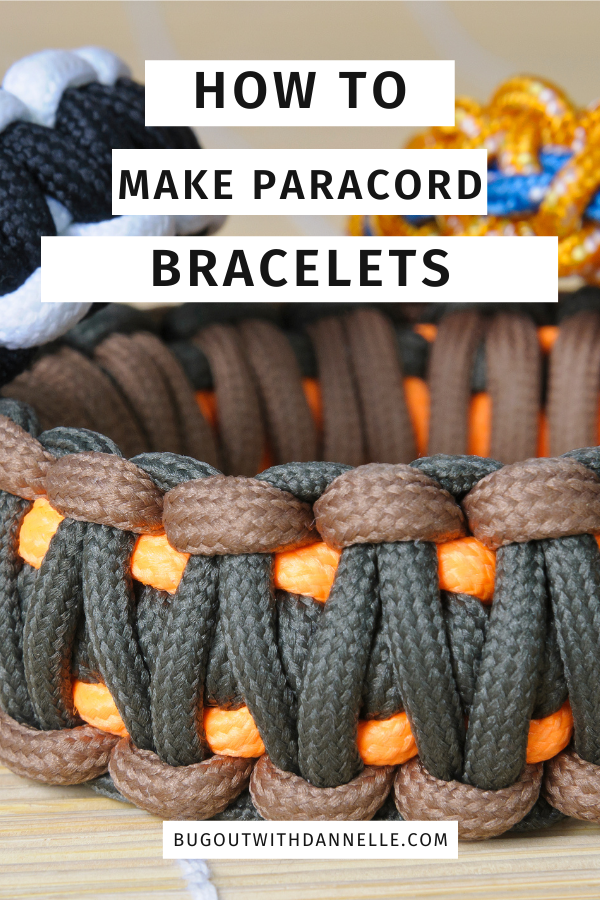
Paracord Survival Bracelet DIY and Other Paracord Uses

Most people have heard of a paracord survival bracelet, but very few people know all that paracord can actually do – and WHY you would even want to have it on you!

Paracord Survival Bracelet DIY and Other Paracord Uses

If you’ve met someone dedicated to the outdoors or survival, the chances are high that they had something made from paracord on them. Paracord is any survivalist’s best friend because its uses are practically limitless and it’s extremely tough.

All About Paracord Emergency Uses

As long as you know how to tie a few good knots, it can replace anything from worn-out strings in clothing to dog leashes. Paracord is also extremely inexpensive, so it’s a great idea to add some to your bug out bag.

It’s my personal opinion that these 5 knots are the most important for learning how to make great paracord bracelets and paracord crafts.

Paracord Planet sells high-quality Type III 550 Paracord at an affordable price. The main reason outdoorsmen love paracord is that it’s extremely tough in all conditions. The 550 in the item’s title refers to the amount of weight it can hold with one strand before snapping: 550 pounds.

Paracord emergency uses

This makes it almost impossible to break by just pulling on it, so people use it to secure their items without worry. For example, if you have a crab trap in a river and want to secure it to a tree right next to the water, you can tie the paracord around the tree and to the trap, and won’t have to worry about currents or larger animals taking it away.

You can create a web out of it and make fishing nets – just in case your fishing line/hook isn’t doing the job for you. Although the inner threads can be used as a fishing line too.

You can also use the paracord to make snares for catching rabbits, coyotes, and other animals. The Type III in the title refers to the fact that the 7 strands that make up the cord are each made of 3 even smaller strands, which makes the cord MIL-SPEC, or military standard.

Learn to Make a Basic Snare Trap out of Paracord or Wire so that You can Stay Alive in a Wilderness Survival Situation.

Paracord is great for securing cargo. When you are bugging out, you might have more things on board than you normally carry and it can help secure that canoe, few cases of water, or even a pet kennel in the car.

If you are making a quick shelter, you can use paracord for lashing together poles. That helps make a frame to pop a tarp over, or even use to keep your food out of the reach of bears, etc.

Have a hammock you want to hang up? Paracord to the rescue! You can lash that tarp OVER your hammock and not only be off the ground, but safer from the elements. There is nothing worse than camping out when it is wet or when it is cold.

Need a line to help someone up a cliff, out of a ravine, or help pull them out of a current that is stronger than originally thought? Paracord is great for assisting with water rescues.

Paracord is fantastic for first aid! If you’re severely bleeding and can’t make it to a hospital immediately, a paracord can be used as a tourniquet. It can also be used to lash together sticks for a makeshift splint. In a pinch, it can even work as a sling for a strained or sprained arm. There are actually a lot of first aid uses for paracord!

In a pinch, you can use those inner threads for sutures. This would be a last resort as it is NOT sterile, and there are better options for closing a wound.

You can even make a travois out of paracord if you need to haul a wounded or unconscious person from one location to another.

Let’s talk about securing your environment… you can create trip lines with it or even a poor-man’s alarm system with empty cans.

Catch someone looting your site? Paracord makes fantastic handcuffs in comparison to duct tape. What you actually do with your prisoner depends on you…

These handcuffs are easy to make – should you find that you need them

As for a Fire Starter? Not so much – make sure you pack your waterproof matches or a fire starter.

Paracord uses

This paracord can also survive all kinds of conditions. It’s impervious to UV damage, mold, water damage, and heat up to 470 degrees Fahrenheit. You won’t have to worry about it giving out because it rained, or because it’s been sitting out in the hot sun for days on end.

If you’re going to be spending most of your time outdoors, the last thing you want is something that can’t stand up to the weather. If the shoelaces on your waterproof shoes gave out because of wear, you can replace them with paracord and keep your shoes fully functional.

When bugging out, you may have equipment failure of some sort – so paracord can come in hand for fixing broken straps or belts.

Have a dog? You can use paracord to make a dog collar, or even a dog leash.

Dubbed the “lazy man braid” by Bruce Grant this interesting braid is fast, easy and looks great.

Paracord comes in tons of different colors, designs, and lengths. Paracord Planet offers hundreds of different options – ranging from camo to neon orange to straight black. So if you’re using your paracord for shoelace replacement, you can make it look totally normal if you had colored shoelaces. You can even teach your kids how to tie knots and make bracelets with bright colors to make it more enjoyable.

It can be handy to take unique colored paracord and turn them into “wearable art” so you have it handy when the situation arises. Bracelets, lanyards, keychains, and so much more!

Paracord Projects

Let’s take a look at some of the most popular paracord projects that help keep it at your fingertips:

Paracord Survival bracelet

There are several different kinds of paracord bracelets to make, but my favorite? The Mad Max. It uses ONLY paracord, no additional clips etc., so it is quick and easy to dismantle when you need to use it. Here is a great video on how to make it:

Make a Mad Max Style Paracord Survival Bracelet

paracord survival bracelet with a compass

Some people prefer the watch-style paracord bracelets that have a compass built in to them. We found a video lesson on how to make them for you:

How to Make a “Watch Style” Paracord Compass Survival Bracelet.

Paracord Lanyard

It can be easy to wear paracord around your neck and have it hold your keys, a whistle, or even mace – whatever you wish to have at your fingertips.

This is a tutorial for making a basic paracord lanyard.

Paracord Keychain

We always take our keys with us and this simple keychain can give you enough paracord for an emergency. This video shows you how to make one in less than 2 minutes!

SUPER EASY Paracord Keychain in 90 SECONDS using the cobra knot

The bottom line? Paracord is great to have handy – no matter how you choose to package it.

Bugging Out Practice and Relocation Tips – with printables

Bugging Out Practice? Having a bug out plan is one thing but having to put it into action is another. Everything looks different when emotions are heightened and the possibility that your life could be at stake enters the picture. It can be stressful and when you add in the fear that young children experience during the chaos, your bug out plan could end up in disaster.

Bugging Out Practice and Relocation Tips - with printables article cover image with emergency sign background

That’s why you need to practice various bug out scenarios so that your escape plan runs smoothly. You want everyone to know what to do, when to do it and how to react. You want everyone to know ahead of time that everything is going to be okay.

By having clear cut instructions that your family knows like the back of their hand, what can happen during chaos is that repetition can take over the fear. Everyone can act on autopilot because they’ve had what to do drilled into them.

Practice Your Bug Out Scenarios for a Seamless Escape

It’s not enough to have everyone act out the escape plan a couple of times. You need to hold ongoing Bugging Out Practice drills and various scenarios that impact that escape every single month. This way, your younger children won’t be afraid when something happens. They’ll know that everything is going to be okay.

You need to have a meeting point in place and each family member should know where it is and the route to take to get there. But everyone needs to also know a plan B in case the road leading to the meeting point is blocked or has been compromised.

This was a Group Bug Out Exercise where they had 45 minutes to prep for a 72 hour event.

You’ll want to practice getting to this meeting point when you’re at home as well as when the family is separated. Obviously, you’ll keep younger kids with you but older teenagers need to know how they’re going to get to the meeting point.

You need to know ahead of time what to do if everyone is at their job. This includes knowing who gets which family member if necessary. You want to know how to act when it’s needed. Trying to decide how to react in the heat of the moment always compounds the problem.

You need to practice for the different scenarios. This includes ones like natural disasters. Prepare flood evacuation, fire evacuation and if you live in a tornado-prone area, plan how you’re going to escape the area. You need to have an escape plan in place in the event of an EMT, an enemy airstrike, or biological warfare.

Go over your Bugging Out Practice plan during the morning hours, in the afternoon, and in the evening because things look different at night. Practice as if you didn’t have any power at all. Practice escaping both on foot and in a vehicle.

Make sure that every member of the family has an alternative way to communicate if cell phones go down. Have a spot chosen ahead of time where you can leave communication such as notes if you have to.

Bringing Everyone Along On Personal WILDERNESS SURVIVAL TRAINING! Practicing Real Life Techniques Of Security, Shelter, Fire, Cooking, Water Disenfection And More!

Run through your complete drill from beginning to end. It might be an inconvenience now, but in the long run, it could save your life and those you care most about.

Understanding the Terms Bug Out Bag, Inch Bag, and Go Bag

During a bug out situation, you might need to use different bags. The reason for this is because a situation could be different. Some are temporary and some are long term. Some are so awful and chaotic, you’ll never be able to come back to your house.

Bug Out Bag

That’s why you should have Bugging Out Practice that involves the need to have different bags prepared for different events. A bug out bag is also commonly referred to by its initials of BOB. This is a bag that can safely sustain your survival for at least 72 hours.

It’s not really intended for more than that. This is the bag that you grab when you’re exiting to get out of the chaos to somewhere safe. It contains the basic essentials. In this bag, you’ll have water, food, clothes for three days, shelter or a way to make it in nature, a way to start a fire, a flashlight, tools, a way to communicate, personal hygiene items, and whatever else you’ll need to make it for three days.

Bugging Out Practice and Relocation Tips - with printables scene of the wilderness

Inch Bag

A bug out bag’s purpose is to get you out of where you are to safety. The INCH bag stands for I’m Never Coming Home and it’s intended to help you survive a SHTF event for a longer amount of time than a bug out bag is.

Where a bug out bag should last 3 days, an INCH bag can last as long as a week or more – until you find more supplies. It’s intended to carry the essentials you need as well as other important items you must have when coming back to your house just isn’t going to happen.

Your INCH bag should be packed with food, water, a way to purify water, clothes, a fire starter method, cash, guns, and ammo. It should also have a radio and a first aid kit. You’ll need to have a compass in this bag as well as fishing items, a wilderness or survival knife, a good flashlight, and an ax.

I like these kits from MedTAC and there is free shipping right now on $50+ orders!

free shipping banner

Paracord goes into this bag along with a multitool, a solar charger for recharging things like the radio, and rechargeable batteries. You’ll need seeds, hygiene items, medications, gloves, rain items, and maps.

Go Bag

You’ll also want your important documents with you like your ID, passports, and anything that pertains to reestablishing your life. Pack a folding shovel, duct tape, and a machete. A go bag is also known as an evacuation kit.

Bugging Out Practice and Relocation Tips - with printables document copies checklist
Page one of my bug out checklist forms – you can download the FREE Printable 3-page set below

This is a bag that has some of the items that you will have packed in your bug out bag. This is a bag that you would use if you had to leave your home quickly in the event of an emergency.

Bugging Out Practice and Relocation Tips - with printables Insurance information template
Page two of my bug out checklist forms – you can download the FREE Printable 3-page set below

This bag is not meant to be long term or indefinite like an INCH bag. In a go bag, you would pack all of your important information like your health information, and your financial documents.

Page three of my bug out checklist forms – you can download the FREE Printable 3-page set below

You would have some hygiene items, clothes, and any prescription meds. The idea behind this bag is that you can get to another location and be okay for a few days until you can come home. It’s not suitable for a SHTF situation because it doesn’t contain the necessary survival items.

Get the printable version of my 3 checklists here:

When Bugging Out, Awareness Is Key

The day or night that you’ve planned for has finally happened. Now the time has come for you to bug out. You’ve bought all your gear and the supplies you’ll need to exist wherever you’re headed.

What’s left now is something that you can’t buy. It’s awareness. You have to stay aware when you’re bugging out. It’s the key to your survival. You can’t afford to let your guard down – not even for a second – because if you do, you could end up getting hurt or even losing your life.

One of the threats that you’ll have to face when you’re bugging out is the potential danger from predators. This can be challenging when Bugging Out Practice is going on, but you can get a handle on what you might need BY practicing it. You could run into animals that would love to make a meal out of you.

Animals

Animals like bears, coyotes, and bobcats have been known to attack people in opportunistic moments as well as for no reason at all. Some people believe that animals only attack when they’re hungry or to protect their young, but that’s not true.

Animals of all sizes will attack if they’re startled or scared. They’ll attack if they’ve been hurt or they’re ill. They’ll also attack because animals are territorial. You have to be on the lookout for them as well as the two-legged kind of predators – humans.

Human threats

In a world that’s governed by law and consequences, people still hurt others. They steal, they attack, they kill. Now imagine what those kinds of people will do when society has collapsed.

They’re only going to get worse. That’s why awareness is the key to you making it out alive against both kinds of predators. You need to make sure that not only do you have a secure area once you arrive at your bug out destination, but that you’re secure as you’re traveling.

You do that by scouting the area. Do perimeter checks of your arrival location and do perimeter checks as you’re traveling. Make sure no one is following you on foot or in a vehicle. Bugging Out Practice should include finding a defensible location.

Pay attention to people who are acting weird or those who are acting secretive. Be aware of what’s going on with the weather. By knowing whether or not bad weather is coming, you’ll be able to get to shelter before you get caught in it and have to deal with things like hypothermia.

Weather threats

You also want to be aware of the weather so that if you’re traveling near a creek or river, you don’t get caught up in any floodwaters. Be aware of what’s going on with your supplies, too.

Pay attention to the amount of water you have or the purification means that you have on hand. Keep alert with your food supply. If you’re traveling with friends or family, stay alert to their physical and emotional well-being.

Someone who’s ill or is suffering from shock can give your position away or draw attention to you and make you a target. Some preppers like to have 5-hour energy on hand in their bug out bags so that if they happen to be in a moment where being alert is extremely important, they won’t be prone to drowsiness.

Bugging Out Practice: Don’t Draw Attention to Yourself and Your Supplies

When you’re bugging out, you’re not going to be by yourself or your family. There are going to be scores of people out and about as you’re trying to make it to your bug out location.

As time passes, though, these masses start to thin out and your path won’t be as jam-packed as it was before. However, there will still be people around. This is when you want to make yourself as invisible as possible. Bugging Out Practice should include how to make this a reality for you.

It’s not the time to show off what you can do or what you have. When you stick out in a crowd of people who are shocked, worried, and growing increasingly panicked, it will only put a target on you.

By fitting into the crowd or by being invisible if you’re not in a crowd, you’re less likely to be singled out as a target. People are going to be looking for someone who has what they need.

Sometimes in a SHTF situation where you have to bug out, people are going to be looking for stuff they can steal to use or to barter with so they can get whatever they need for themselves.

If others know you have survival gear, you could be a target for anyone who wants what you have so that they can sell it to get their needs met. In a bug out situation, harmful people always grow bolder. It is a sad fact of reality. We saw how people fought over chicken and ground beef during the COVID-19 food shortages. Meat. They fought over meat. And toilet paper…

You can hide in plain sight by not looking like you’re prepared. Don’t dress in a way that makes you stand out. This means that you don’t want to be walking down the street with your weapons strapped to your hip.

Keep your knives and guns out of view. Wear clothes that blend in and that makes it difficult for you to be picked out of the crowd. Nothing colorful and nothing expensive should be on your body in full view of others. Bugging Out Practice can include how to layer your clothes to hide what you have.

Be casual about the way you move through crowds or around people. Cover up any distinctive feature that you have. “Guy with the mohawk and the dangling feather earring in his ear” is a lot easier to remember and locate than “guy in jeans and a dark shirt.” One stands out, the other fits in.

The same kind of discretion is key to protecting your supplies, too. The have nots will take from the haves, but it’s far less tempting if they don’t know you have it. Don’t carry a bug out bag that’s brightly colored or has any kind of memorable logo splashed across the back of it.

Bugging Out Practice Golden Rule: Don’t talk about your supplies for any reason – because people will remember that later when they want something, or they’ll be tempted to just go ahead and take it. You don’t want to open up your gear in front of anyone.

He discusses why he is changing over to a more grayman approach with his apparel and various pieces of kit.

Only do that when you’re alone. You have to remember that none of society’s laws will be heeded by anyone who’s desperate enough. They’ll take what’s yours -even if they have to use force to do it.

Bugging Out Practice: Be a “Gray Man”

You might have heard the advice that you should make a good first impression. That’s great advice – except when it comes to a bug out event. During the time when you’re bugging out, making an impression could cost you your life.

If you look at a crowd of people, you’ll notice that some of them stand out from others. It could be because of their actions or how they’re dressed, their facial features, body marks or jewelry, what their voice sounds like, the color of their hair or their mannerisms.

They stand out because they’re noticeably different from the others around them. It’s not a good idea to be noticed during a SHTF event. You want to be a gray man. That means you don’t stand out in the mind of anyone else.

Don’t stand out

You aren’t enough to make an impression. You can still move through a crowd and even speak to others, but no one will recall you once you’re gone. It’s as if you disappear from the thoughts of others.

To be a gray man, you don’t dress in a way that attracts any attention. The clothes that a gray man wears are bland without a color that even registers with someone else. The clothes a gray man wears don’t carry the scent of any laundry detergent – no soap smells or clothes softener scents.

A gray man has nothing about his clothing or his looks that can be recalled to mind. His hair doesn’t carry a shampoo scent. His clothes fade into the crowd. He’s not noticeable for his actions, either.

Be subtle

You won’t see him obviously checking the people around him or the area. A gray man isn’t recognized because nothing he wears, does or says is worth noticing. That’s how other people miss observing a gray man. 

 A gray man doesn’t wear cologne. He doesn’t have jewelry. He doesn’t wear any logos, or designs. Nothing can identify him. Nothing is memorable. A gray man keeps his expression bland.

He doesn’t look like he’s focusing on any one person, thing or place. None of his actions will be anything that anyone will pay attention to. It doesn’t mean that you’re not on alert. You just don’t stick out. Bugging Out Practice should include this… what “Gray man” outfit can you put with your gear?

Stay focussed

To be a gray man, you have to pay attention, stay calm and journey slowly toward your end goal. You don’t push other people out of your way. You move at a regular pace – not hurried – like you have nowhere to go and nothing to do.

A gray man makes sure that his face doesn’t stand out. If there’s something definable about his hair, he wears a plain ball cap. If he has arresting eyes, he wears sunglasses.

He makes sure that any distinguishing marks like scars or tattoos are hidden from view. He keeps his voice calm. His mannerisms are bland. He doesn’t interject emotion into his words when he speaks.

The person who is a gray man is one people don’t notice because to them, he’s not doing anything and he doesn’t look like anything worth noticing. He triggers no reaction within them, which, is what allows him to be safe during a bug out event.

Study Human Psychology to Help You Navigate Treacherous Situations

All bets are off when you’re in a bug out situation. You have to be street smart about people – especially if you’ve always been the type of person who easily trusts others. When the world has turned chaotic, you can forget trust.

No one is going to be on their best behavior – especially unsavory individuals. In fact, these people are going to be the first to loot, the first to steal from others, and the first to make a bad situation worse.

It’s in your best interest to know human psychology so that you’ll be able to deal with these kinds of people. You need to know body language. The type of body language a person is using can tell you upfront who you’re dealing with.

You might want to watch a few Youtube videos or get a psych book from the library to brush up on your Bugging Out Practice on this topic.

Watch body language

People who are out to steal from you or hurt you always have a way of projecting that intent. Look at how they’re dressed. Believe it or not, what someone is wearing can give you a clue into their nature and intents.

Look for Desperate people

Someone who isn’t dressed for survival can be a desperate person. If you come across someone who’s wearing clothes that aren’t warm enough for the situation or they’re wearing clothes that stand out, that means they didn’t prepare ahead of time.

If they didn’t prepare their clothes, they probably didn’t prepare their supplies, either. Pay attention to their posture. People whose body is tensed or aggressive can be a clue that they have adrenaline running on high.

They could be about to make a move. See if those whose mannerisms are jittery. That could be a sign of nervousness – but it could also be a sign of some type of addiction – and people who are addicted to substances can be unpredictable.

Pay attention to the way people pose their arms. Arm position can signal that someone is belligerent or angry. Look out for people who approach who keep their hands hidden. They could be holding a weapon.

You’ll also want to take the expression on someone’s face into consideration. An expression can give you a lot of insight into human psychology. There can be a noticeable expression like anger or there can be absolutely no emotion.

Both can be equally dangerous. One could present as someone who flies off the handle and the other as someone who may have sociopathic tendencies. Trust your gut instinct when it comes to treacherous situations.

Trust your gut

Your intuition can usually read a person quickly. If your gut tells you that you’re in danger, then you probably are – and you should be prepared to defend yourself.

Studying human psychology can help you understand what others are prepared to do in desperate situations – and how you can negotiate with them if and when the time comes. This is one thing you can NOT really handle with Bugging Out Practice without doing homework first.

Don’t Multi-Task When You’re Bugging Out

The SHTF and it’s time for you to get out and get to safety. In a bug out situation, most preppers concentrate on just getting out and away from anything dangerous. Survival is foremost on their mind.

They’re alert to everything that’s going on around them and are paying attention and avoiding people who look like they could be a problem. It’s good to have that awareness as you’re bugging out.

Stay Vigilant

But what some people do is when they reach a spot to rest or their bug out location, they have a tendency to lower their guard. It’s understandable. Being in a high-stress situation where chaos is everywhere, you just feel like you’re tired, hungry and you want to get set up for the night.

Bugging Out Practice and Relocation Tips - with printables identity tracker

Given a few days, what happens is their awareness dulls. The fight or flight adrenaline starts draining and they start to overlook something important – that the situation is precarious.

Safety can be a big illusion during a dangerous situation. The biggest mistake that you can make is getting too comfortable and starting to multi-task. It really is a natural reaction.

Stay focused

People tend to want to get comfortable when they’re on the go. They also drop right back into all their habits like doing more than one thing at once. It’s human nature to try to take care of things all at the same time.

But that multi-tasking mindset can spell trouble for you quickly. When you’re bugging out, you need to have a sharp focus. Keep your mind on what you’re doing and don’t make it easy to get caught unprepared.

One thing at a time

You might have to take off again in a split second. You can’t do that if you’ve got your supplies scattered all around your resting spot or your bug out destination.

When you’re bugging out, do one thing at a time – one chore or one thing that you have to do that aids your survival.

Be Ready to Go

Don’t attempt to cook food at the same time that you’re trying to wash your dishes or your clothes or yourself. Keep your sole focus on what you’re doing and only take the supplies out of your bag that you need for that single task.

Keep your supplies stashed in your bug out bag, because if you do end up having to grab it and flee, you can pick up a pot and leave quickly with that easier than you can try to pick up clothes, food, or dishes all at once. NEVER completely unpack.

If you end up having to run and you’ve unpacked a lot of your supplies, you could end up being forced to leave necessary supplies behind just to run from a dangerous situation. That mistake could end up costing you more than you realize.

Bugging Out Practice: The Importance of Speed

When you have a SHTF situation on your hands and you have to bug out, time isn’t on your side. Some people think they’ll have either days or hours to bug out – when the truth can be closer to five minutes or less.

Survival Bugout, starring Jonathan Hollerman with Grid Down Consulting… an EMP scenario

In the chaos, you’re going to have hundreds (maybe even thousands) of people from your area trying to escape quickly just like you. Sometimes an unpredictable weather event causes abrupt and unexpected bug out situations.

Natural disasters

In the event of a fire or a flood, you have to be able to go right then. There’s no time for decision making. If there’s a local or federal collapse of authority, there’s no time for you to waste. You have to get going. THAT is why Bugging Out Practice is important.

People

Whenever there’s a SHTF situation, everything gets worse from the moment it begins. The first step in the process is that humanity undergoes a change. People who feel like their way of life is going to be disrupted can panic and they’ll take it out on those who are prepared.

Indecission

Stealing, assaults, and violent crimes like murder are commonplace when society begins to fall apart severely. You can’t wait around for that step to develop. When there’s a bug out situation starting, some people debate whether or not they’re staying or leaving.

Then within 24 hours, these people who stayed behind realize they’ve made a mistake. They start to feel desperate once they realize the seriousness of the situation and the anger and the complete breakdown of normal society picks up speed.

After a bug out situation is upon you, if it’s 24 hours later and you’re still not ready to go, then you’re right there stuck in the thick of things that are only going to keep on spiraling downward.

If you are in a situation where you CAN NOT leave, be prepared to “bug in”

You might think the nice guy from down the street wouldn’t turn on you – but if he’s in a panic or he’s desperate to take care of the needs of his family, you can bet that he’s not going to be that nice guy anymore.

You can also bet that disaster breeds disaster. As they compound, everything unravels – your safety on the roadways, your ability to use communication devices, and your ability to find fuel for your vehicles will all become increasingly hard.

You can’t afford for this to be going on while you’re trying to pack enough survival gear to make it out. If you’re not prepared, you could find yourself giving in to the panic and making rash decisions. You could end up forgetting something important like medication or enough water. USE OUR CHECKLISTS!

Bugging Out Practice – Plan ahead and have all the bug out bags that you need to take care of your family ready to go so that when it’s time to leave, all you have to concentrate on is grabbing the bag and heading out the door.

Other articles you may find helpful: